Wild Papaya Care (Jacaratia spinosa)

Wild Papaya

About Wild Papaya

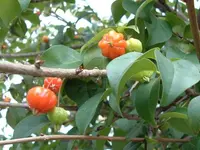
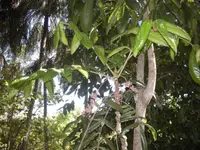
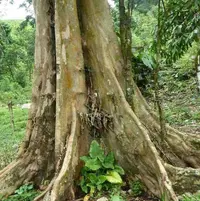
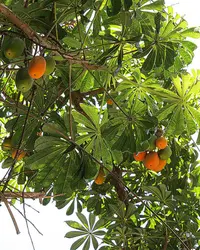
Wild papaya, Jacaratia spinosa, is a fast-growing tropical tree from Central and South America, related to the common papaya. It develops a tall, upright trunk often armed with short spines and a rounded canopy of divided, papaya-like leaves.

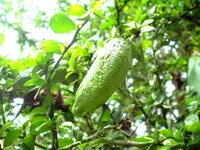
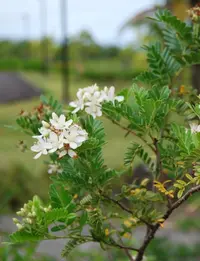
The tree is dioecious, meaning male and female flowers grow on separate plants, and it produces elongated, edible fruits in suitable climates. In cultivation it prefers warm temperatures, bright light, and well-drained soil with steady moisture, which influences how easy it is to establish. Understanding these preferences helps gardeners care for Wild Papaya in both outdoor and protected settings.

Main Plant Requirements

Care Difficulty

Moderate Care

Light Preference

Full Sun

Water Requirements

Moderate Water

Temperature Preference

Tropical / Frost Sensitive

Hardiness Zone

10–12

Soil Texture

Sandy, Loamy, Organic-rich

Soil pH

Acidic (5.5–6.5), Slightly acidic (6.5–7.0)

Soil Drainage

Well-drained

Fertilization

Minimal (feed rarely)

Get Personalized Care Plan

Scan your plant to receive care tips personalized for your specific plant

Available on iOS and Android

How to Care for the Wild Papaya

This subtropical tree needs strong light to build a sturdy trunk and support fruiting.

  • Provide 6–8 hours of direct sun daily; full sun is ideal, especially morning to early afternoon exposure.
  • Tolerates light partial shade, but prolonged shade reduces growth and flowering; choose an open site rather than under dense canopies for caring for Wild Papaya.
  • In hot, dry climates, protect young plants from intense late-afternoon sun to prevent leaf scorch, especially during summer peaks.

Jacaratia spinosa prefers evenly moist but not saturated soil once established outdoors.

  • Allow the top 3–5 cm of soil to dry before deep watering, then wet the root zone thoroughly and let excess drain away.
  • In spring and summer, expect to water more often during active growth and heat; reduce frequency in cooler months when growth slows.
  • Watch for yellowing, soft leaves or sour-smelling soil as signs of overwatering; crisp, curling leaves and slow growth usually indicate underwatering.

This species grows best in warm, frost-free climates typical of subtropical to tropical regions.

  • Aim for 70–86°F (21–30°C) for strong growth; short periods up to 95°F (35°C) are tolerated if soil moisture is adequate.
  • Avoid temperatures below 40°F (4°C); light frost can damage young shoots and repeated frosts may kill small trees.
  • In cooler regions, plant in a warm, sheltered microclimate and protect from cold winds to moderate temperature swings between seasons.

This species handles a range of indoor humidity but prefers moderately moist air for best growth.

  • Aim for 40–60% humidity, similar to many warm-climate houseplants, to keep foliage and new growth healthy.
  • Tolerates short periods of drier air, but prolonged humidity below 30% can slow growth and cause leaf edge browning.
  • If air is very dry, group plants, place the Wild Papaya near a humidifier, or use a pebble tray to raise local humidity.

This species prefers a deep, well-drained, airy mix that mimics a loose tropical forest soil.

  • Use a sandy-loam style mix: 40% general potting mix, 30% coarse sand, 20% fine bark, 10% compost for structure and nutrients.
  • Ensure rapid drainage; water should flow through within seconds, leaving the mix moist but never waterlogged to protect the fleshy roots.
  • Keep pH slightly acidic to neutral, around 6.0–7.0, which supports balanced nutrient availability for Jacaratia spinosa.
  • Avoid compacted, heavy clay, high-peat, or constantly soggy substrates; add perlite or extra sand to improve aeration in dense mixes.

This species can be grown in large containers if given enough root depth and stable support.

  • Choose a tall, heavy container to anchor the developing trunk and prevent tipping as the plant gains height and biomass.
  • Provide a wide surface area of soil so structural roots can spread and brace the plant within the pot volume.
  • Use a rigid material like thick plastic or clay that resists warping, which helps keep the root ball stable as it enlarges.

Jacaratia spinosa benefits from moderate feeding in active growth but tolerates low-nutrient conditions.

  • Use a balanced NPK fertilizer (such as 10-10-10) at half strength every 4–6 weeks in spring and summer.
  • Apply a thin layer of well-rotted compost over the root zone once a year to support soil life and slow nutrient release.
  • Reduce feeding to 1 light application or none in fall and winter, when growth slows and demand is lower.
  • For Wild Papaya in containers, choose a slow-release, balanced formula and avoid overfeeding to prevent soft, weak growth.

Pruning Jacaratia spinosa is mainly used to keep a safe, stable structure and manage size.

  • Carry out structural pruning in late winter or early spring before vigorous new growth begins.
  • Remove dead, diseased, crossing, or storm-damaged branches first to maintain health and reduce breakage risk.
  • Thin crowded interior branches selectively to improve light penetration and airflow through the canopy.
  • Use clean, sharp bypass pruners or a pruning saw and make smooth cuts just outside the branch collar.

This species is usually grown in the ground, so focus on careful transplanting of young trees.

  • Transplant in late winter or early spring, once risk of hard frost has passed and soil is workable.
  • Look for signs like roots circling a container, stunted growth, or frequent wilting as cues to move a potted plant up 1 size.
  • Dig a wide planting hole, keep the root ball intact, and set the tree at the same soil level to limit shock.
  • Water deeply after planting, apply a 5–8 cm mulch layer, and shade lightly for 1–2 weeks to reduce transplant stress.

Propagation of Jacaratia spinosa is typically done from seed and is somewhat slow but reliable under warm conditions.

  • Collect ripe seeds, clean off pulp, and sow fresh in a well-drained, sterile mix in late spring or early summer.
  • Maintain temperatures around 70–80°F and consistent, light moisture to support steady germination.
  • Provide bright, indirect light and good air movement so seedlings develop sturdy stems and compact growth.
  • Transplant seedlings gently once several true leaves form, disturbing roots as little as possible.

This tropical tree is frost sensitive and needs protection in regions with cool or freezing winters.

  • In mild climates, add a 5–8 cm mulch layer around the root zone to buffer short cool spells.
  • In areas with frost, grow in large containers and move plants indoors or to a heated greenhouse for winter.
  • Indoors, provide bright light, minimal watering, and good airflow to prevent rot and pest buildup.

Care Tips

Establish strong leader

Select one central trunk while the tree is young, remove competing vertical shoots, and lightly stake if needed so the plant develops a single, stable leader that can support its heavy, spiny branches later on.

Branch spacing management

In the first 3–5 years, thin out closely spaced lateral branches and those with very narrow crotch angles, aiming for well-spaced scaffolds that reduce limb breakage under fruit load and storms.

Trunk and root protection

Maintain a weed-free mulch ring 30–60 cm around the base and avoid string trimmer or mower contact with the soft trunk to prevent wounds that attract borers and fungal infections.

Pollination support

In areas with few natural pollinators, interplant with other nectar-rich species and avoid broad-spectrum insecticides during flowering to improve fruit set when growing Wild Papaya.

Storm and wind preparation

In windy regions, use a three-point staking system for young trees and selectively shorten overly long, top-heavy branches before storm season to lower leverage and reduce the risk of uprooting or breakage.

Common Pests and Diseases

Papaya fruit fly

This pest lays eggs inside young fruits, where larvae feed on the pulp and cause internal rotting and premature fruit drop. Symptoms include small puncture marks on the fruit surface and soft, collapsing areas as larvae develop.

Solution

Collect and destroy infested and fallen fruits promptly to break the life cycle, and use fine mesh bags or netting around developing fruits to prevent egg‑laying. In outdoor plantings, reduce nearby wild Caricaceae hosts, and where allowed, deploy species‑specific bait traps placed away from the plant to attract and kill adult flies.

Papaya aphids

These insects cluster on tender shoots and the undersides of leaves, sucking sap and excreting honeydew that can lead to sooty mold growth. New growth becomes distorted, curled, and sticky, and ants may be attracted to the plant.

Solution

Dislodge colonies with a strong stream of water and prune heavily infested shoots where practical. For persistent populations, apply insecticidal soap or a light horticultural oil thoroughly to leaf undersides, repeating every 5–7 days as needed while monitoring for natural predators such as lady beetles.

Powdery mildew

This disease appears as white, powdery patches on leaves and young stems, often starting on shaded or crowded parts of the canopy. Symptoms include yellowing, leaf distortion, and premature leaf drop when infections are heavy.

Solution

Improve air circulation by thinning dense branches and avoiding overhead watering that keeps foliage damp for long periods. Remove and discard heavily infected leaves, and where needed apply a sulfur or potassium bicarbonate fungicide labeled for edible or ornamental Caricaceae, coating both upper and lower leaf surfaces.

Anthracnose

This disease causes small, water‑soaked or dark sunken spots on fruits, leaves, and young stems that may enlarge and coalesce, leading to fruit rot and leaf blight. Symptoms include blackened lesions with possible pinkish spore masses during humid weather.

Solution

Harvest fruits as they ripen and avoid leaving damaged or diseased material on or under the plant; discard or deeply bury infected fruits and prunings. Reduce leaf wetness by watering at soil level, and in humid regions use a protectant fungicide such as copper on new growth and young fruits according to label directions.

Stem borers

These insects tunnel into trunks and thicker branches, creating galleries that disrupt water flow and weaken the plant structure. Symptoms include frass (sawdust‑like material) at entry holes, localized wilting above the damage, and eventual branch dieback.

Solution

Inspect stems regularly and, when feasible, cut out and destroy infested branches below the gallery, then seal larger pruning wounds cleanly. Keep the plant vigorous through proper Jacaratia spinosa care instructions, and in areas with recurring problems consider using trunk wraps and pheromone or light traps nearby to reduce adult borer activity.

Interesting Facts

Edible but pungent trunk

The soft inner wood of the trunk is edible and traditionally eaten cooked in parts of South America, but it has a strong, radish-like flavor that comes from sulfur-containing compounds similar to those in mustard and brassicas.

Spiny defense strategy

The trunk and larger branches are covered with stout conical spines that help protect the tree from climbing herbivores in its native tropical and subtropical forests.

Dioecious flowering habit

This species is usually dioecious, meaning individual trees bear either male or female flowers, so fruit production in cultivation requires both sexes or a nearby pollen source.

Botan icon

Did you know?

The fruits of this species are hollow, pumpkin-like berries whose seeds are coated in a sweet orange pulp that is eaten by birds and mammals, making the tree an important component of natural seed dispersal networks in parts of the Atlantic Forest and other South American ecosystems.

FAQs about Wild Papaya

Growth is moderate to fast in warm, frost-free climates, often adding 30–90 cm per year once established. Rate depends heavily on heat, moisture, and soil fertility, so sheltered, well-fed plants show the strongest extension growth.

Grow Healthy Plants with Botan Care

Keep your plants happy and healthy with plant identification, disease detection, and easy care guidance.

Botan plant care app — identify plants on mobile

Explore More Plants