Snow load management
In climates with heavy, wet snowfall, gently shake or brush accumulated snow from branches after storms to reduce the risk of breakage, especially on young or multi-leader trees.


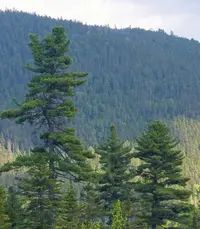
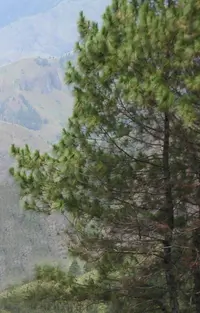
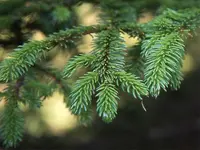
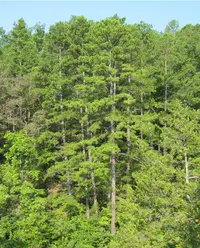
Hartweg's pine (Pinus hartwegii) is a high-mountain conifer native to Mexico and Central America, often found on volcanic slopes above the tree line. It forms a dense, rounded to irregular crown with dark green needles and heavy branches that resist strong winds and snow. Cones are sturdy and can persist on the tree, adding to its rugged appearance.
This species is slow to moderate in growth and prefers cool conditions, full sun, and well-drained, slightly acidic soil. It can be challenging outside its native climate, so it helps to learn how to care for Hartweg's Pine before planting.

Care Difficulty
Moderate Care

Light Preference
Full Sun

Water Requirements
Moderate Water

Temperature Preference
Cold Hardy

Hardiness Zone
7–9

Soil Texture
Sandy, Loamy, Rocky

Soil pH
Acidic (5.5–6.5)

Soil Drainage
Well-drained

Fertilization
Minimal (feed rarely)
Scan your plant to receive care tips personalized for your specific plant
Available on iOS and Android
This high-mountain pine needs strong, direct light to stay dense and healthy.
This species prefers evenly moist but not saturated soil, especially while establishing.
This pine is adapted to cool, high-elevation conditions and shows strong cold tolerance.
This high-elevation pine tolerates low humidity and usually does not need humidity management in cultivation.
Pinus hartwegii prefers lean, well-aerated mineral soils with fast drainage.
This species can be grown in containers for many years if root space and drainage are carefully managed.
This high-elevation pine grows well in modest soils and usually needs only light feeding in managed landscapes.
Pruning Pinus hartwegii focuses on safety, structure, and removal of compromised wood rather than shaping.
This mountain pine is usually grown in the ground; transplant only when necessary to limit stress.
Reproduction of Pinus hartwegii is mainly done from seed and is slow but reliable with proper handling.
This species is naturally cold hardy at high elevations and usually needs minimal winter care in suitable climates.

Plant Health Check
Not sure what's wrong with your plant? Check your plant's health inside the app.
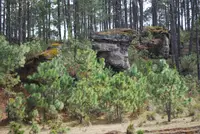
This high-elevation pine often forms the upper tree line in Mexican and Central American mountains, growing just below the limit where trees can survive continuous cold and wind exposure.
Although native to the tropics, it tolerates repeated frost and even light snow on volcanoes above 3,000 m, an adaptation unusual among pines so close to the equator.
It commonly colonizes rocky volcanic soils on peaks such as Popocatépetl and Iztaccíhuatl, stabilizing loose substrates and providing structure for high-mountain forest communities.

Pinus hartwegii is considered one of the highest-altitude pine species in the world, with natural populations recorded above 4,000 m on Mexican volcanoes where few other tree species can survive.
This species grows slowly to moderately, often adding 15–30 cm in height per year under good conditions. Growth is faster in deep, well-drained, slightly acidic soil and cooler high-elevation climates similar to its natural range.
Keep your plants happy and healthy with plant identification, disease detection, and easy care guidance.