Trunk training
Stake young trees loosely on the windward side for the first 2–3 years to encourage a straight central leader while still allowing slight movement that strengthens the trunk.

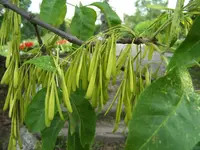
Green ash, Fraxinus pennsylvanica, is a medium to large deciduous tree commonly used in streetscapes, parks, and large gardens. It tends to develop a rounded to oval crown with strong, upright branches and compound leaves that turn yellow in autumn.
This species is native to North America, where it grows along rivers, floodplains, and moist lowlands. It is adaptable to many soils and urban conditions, which historically made it popular in landscapes.
Modern planting is more limited due to vulnerability to emerald ash borer, so long-term success depends on local pest pressure and management. In suitable regions, care for green ash focuses on providing full sun, moderately moist soil, and regular monitoring for pests and canopy decline.

Care Difficulty
Moderate Care

Light Preference
Full Sun

Water Requirements
Moderate Water

Temperature Preference
Cold Hardy

Hardiness Zone
3–9

Soil Texture
Sandy, Loamy, Clay

Soil pH
Acidic (5.5–6.5), Slightly acidic (6.5–7.0)

Soil Drainage
Moist but well-drained

Fertilization
Minimal (feed rarely)
Scan your plant to receive care tips personalized for your specific plant
Available on iOS and Android
Fraxinus pennsylvanica performs best in open sites with strong, direct light for healthy canopy development.
Fraxinus pennsylvanica prefers evenly moist, well‑drained soil once established, especially during active growth.
This hardy species tolerates a wide temperature range but grows best in moderate seasonal conditions.
Humidity is rarely a concern for Fraxinus pennsylvanica grown outdoors in its usual range.
Fraxinus pennsylvanica prefers deep, moderately moist, well-structured mineral soils.
This species is generally unsuited to long-term container growing and is better planted in open ground.
This species usually grows well in average soil, but targeted feeding can support establishment and stressed trees.
Pruning Fraxinus pennsylvanica focuses on structural strength and removal of problem wood.
This tree is usually grown in the ground, so care centers on timely transplanting from nursery containers.
Propagation of Fraxinus pennsylvanica is mainly done from seed under controlled conditions.
Established Fraxinus pennsylvanica trees are cold hardy and usually require minimal winter care.

Plant Health Check
Not sure what's wrong with your plant? Check your plant's health inside the app.
Green ash naturally dominates riverbanks and floodplains in much of North America because its seedlings tolerate periodic flooding and can establish quickly on disturbed, alluvial soils.
Compared with many native trees, green ash shows relatively high tolerance to road salt and urban soil salinity, which historically made it a common choice for street and parking-lot plantings.
Leaves on green ash can vary from 5–9 leaflets and often differ in shape between vigorous shoots and shaded interior branches, which has contributed to past confusion with related ash species in field identification.

In many parts of its native range, green ash has suffered mortality rates over 99% in infested stands due to the invasive emerald ash borer (Agrilus planipennis), making it one of the most dramatically impacted North American tree species by a single introduced insect.
This species is generally fast-growing, often adding 30–60 cm of height per year in suitable conditions. Growth slows with age, poor soil, drought, or severe pruning, and can be faster in deep, moist, fertile ground.
Keep your plants happy and healthy with plant identification, disease detection, and easy care guidance.