Rotate For Symmetry
Turn the container 90° every 4–6 weeks so light reaches all sides of the caudex and canopy, which helps maintain a balanced, upright form instead of leaning toward the brightest window.

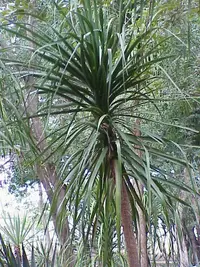
The Mexican ponytail, Beaucarnea pliabilis, is a semi-succulent tree-like plant known for its swollen base and long, narrow, arching leaves. It often develops a sculptural trunk that makes it a striking accent plant indoors or on patios in warm climates.
This species is native to dry tropical regions of Mexico and Central America, where it stores water in its thickened base to survive drought. Because of this adaptation, it is generally slow-growing and forgiving of occasional missed watering.
In cultivation, it prefers bright light, well-drained soil, and careful watering, which makes it relatively straightforward to care for Mexican ponytail in typical home conditions.

Care Difficulty
Easy Care

Light Preference
Full Sun

Water Requirements
Low Water

Temperature Preference
Tropical / Frost Sensitive

Hardiness Zone
10–12

Soil Texture
Sandy, Loamy, Rocky

Soil pH
Slightly acidic (6.5–7.0), Neutral (7.0)

Soil Drainage
Well-drained

Fertilization
Minimal (feed rarely)
Scan your plant to receive care tips personalized for your specific plant
Available on iOS and Android
This species thrives in bright, warm conditions that mimic open, dry woodlands.
This drought-tolerant species stores moisture in its swollen base and prefers infrequent, thorough watering.
This plant prefers warm, stable conditions and is sensitive to frost.
This species tolerates a wide humidity range and rarely needs special humidity care indoors.
This species prefers fast-draining, mineral-lean soil that mimics arid, rocky habitats.
This species is suitable for container growing and can stay in the same pot size for long periods.
This dryland tree has low nutrient demand, so fertilizing Beaucarnea pliabilis should stay light and infrequent.
Beaucarnea pliabilis needs only minimal pruning to keep it tidy and structurally sound.
This slow-growing tree is often kept in one container or site for many years, with infrequent repotting or transplanting.
Propagation of Beaucarnea pliabilis is possible but slow and usually undertaken by advanced growers rather than casual owners.
In mild climates this species is fairly tolerant of cool weather but is not suited to prolonged or severe frost.

Plant Health Check
Not sure what's wrong with your plant? Check your plant's health inside the app.
This species is native to seasonally dry forests of the Yucatán Peninsula and nearby regions, where it grows on rocky, often limestone-derived soils and endures long droughts with only brief rainy seasons.
Its swollen, bottle-like base is a caudex, a specialized stem that stores water and carbohydrates, allowing the plant to survive extended dry periods common in its native habitat.
The long, narrow leaves are more pliable than those of related species, an adaptation that lets the foliage bend with coastal and forest winds instead of tearing.

In its native range, this species can reach small tree size, forming multi-headed, branched crowns over time, which has led botanists to distinguish it from the more commonly cultivated Beaucarnea recurvata based on its larger, more openly branched growth habit and leaf flexibility.
Brown, crispy tips usually come from underwatering, very low humidity, or salt build‑up from fertilizer. Check the soil moisture, flush the pot occasionally, and reduce fertilizer strength to keep new growth cleaner and healthier.
Keep your plants happy and healthy with plant identification, disease detection, and easy care guidance.