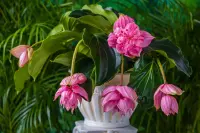
Blood of Christ Care (Columnea consanguinea)

Blood of Christ

About Blood of Christ

Blood of Christ, Columnea consanguinea, is a trailing epiphyte from Central and South American cloud forests. It typically grows on trees, forming long, hanging stems.

The plant is valued for its tubular red flowers and patterned foliage, which create a striking contrast along the cascading shoots. It works well in hanging baskets or on high shelves indoors.

In nature it experiences bright, filtered light, mild temperatures, and constant air moisture, which shapes how to care for Blood of Christ in homes. Its main challenges are sensitivity to cold, dry air, and waterlogged soil.

With stable warmth, gentle light, and a light, airy mix, it is moderately easy to maintain for growers who can provide consistent conditions.

Main Plant Requirements

Care Difficulty

Moderate Care

Light Preference

Bright Indirect Light

Water Requirements

Moderate Water

Temperature Preference

Tropical / Frost Sensitive

Hardiness Zone

11–12

Soil Texture

Loamy, Peaty, Organic-rich

Soil pH

Acidic (5.5–6.5), Slightly acidic (6.5–7.0)

Soil Drainage

Moist but well-drained

Fertilization

Light (every 4–6 weeks)

Get Personalized Care Plan

Scan your plant to receive care tips personalized for your specific plant

Available on iOS and Android

How to Care for the Blood of Christ

This cloud-forest epiphyte prefers bright, gentle light that mimics dappled forest conditions.

  • Provide 4–6 hours of bright, filtered light daily, such as light under a sheer curtain or under bright tree canopy.
  • Allow soft morning sun but protect Blood of Christ from harsh midday and afternoon sun, which can scorch leaves and fade color.
  • In winter, move plants to a brighter position or supplement with grow lights to prevent leggy stems and reduced flowering from low light.

This species prefers consistently lightly moist conditions but is sensitive to waterlogged soil.

  • Water when the top 2–3 cm of the mix feels dry, using enough water to moisten the root zone, then let excess drain away fully.
  • Reduce watering slightly in cooler, low-light seasons, but never allow the root ball to dry out completely for Columnea consanguinea.
  • Watch leaves: limp, crisp edges suggest underwatering, while yellowing, mushy stems or sour-smelling soil indicate overwatering and poor drainage.

This tropical plant thrives in stable, mild temperatures with no exposure to frost.

  • Aim for 65–80°F (18–27°C) for active growth, with the warm end of the range supporting stronger flowering.
  • Protect the plant from temperatures below 55°F (13°C); prolonged exposure near 40°F (4°C) or any frost can cause leaf drop and tissue damage.
  • In hot periods above 85°F (29°C), increase air movement, shade from intense sun, and monitor moisture to prevent heat stress and wilting.

This species needs sustained high humidity to thrive indoors.

  • Aim for 60–80% humidity; Blood of Christ responds poorly to very dry air from heating or air conditioning.
  • Crisping leaf edges, dull foliage, and stalled growth indicate humidity stress rather than watering issues.
  • Increase humidity with a room humidifier, a pebble tray under the pot, or grouping plants while keeping leaves dry from constant misting.

This epiphyte prefers a loose, airy, organic-rich mix that drains very quickly.

  • Use a soilless blend such as 40% fine orchid bark, 30% peat or coco coir, and 30% perlite for Columnea consanguinea.
  • Ensure rapid drainage so water runs through in seconds and the mix feels slightly springy, not compacted or heavy.
  • Target a mildly acidic pH around 5.5–6.5, which supports nutrient uptake in this forest understory plant.
  • Avoid dense garden soil, high-clay mixes, or pots without drainage, which lead to root suffocation and rot.

This trailing species is well suited to container and hanging basket culture.

  • Choose a wide, shallow pot to match its fibrous, surface-skimming roots and prevent unused, waterlogged lower zones.
  • Use lightweight plastic or resin containers if hanging, as the airy mix stays evenly moist without excessive weight.
  • Secure hanging baskets or high shelves firmly, since long trailing stems can shift the plant’s center of gravity as they lengthen.

Columnea consanguinea responds well to light, consistent feeding during its active growing season.

  • Use a balanced liquid fertilizer (around 10-10-10 or 20-20-20) diluted to 1/4–1/2 strength for Blood of Christ in pots.
  • Apply every 2–4 weeks in spring–summer on moist soil, not on dry roots.
  • Skip or reduce feeding to once every 6–8 weeks in fall–winter as growth slows.
  • Alternatively, use a small amount of slow-release fertilizer or fine compost at the start of the growing season.

Pruning helps Columnea consanguinea stay compact, branching, and floriferous in indoor hanging baskets.

  • Carry out light pruning after main flowering flushes in spring or early summer.
  • Remove dead, damaged, or leggy stems back to healthy nodes to encourage new shoots.
  • Thin crowded or crossing stems to improve air movement and light penetration.
  • Use clean, sharp scissors or pruners to make angled cuts just above a leaf node.

This trailing epiphyte prefers slightly snug pots and only occasional repotting to refresh the mix.

  • Plan to repot every 2–3 years, or when roots circle the pot, emerge from drainage holes, or growth slows despite good care.
  • Best timing is late winter to early spring, just before active growth resumes.
  • Move Columnea consanguinea into a pot only 2–5 cm wider, using airy, well-draining mix to limit waterlogging stress.
  • Water lightly after repotting, keep in bright but indirect light, and avoid heavy feeding for 2–3 weeks while roots re-establish.

New plants are most often produced from stem cuttings rather than seeds, which are seldom used.

  • Take 7–10 cm non-flowering stem cuttings in late spring–summer from healthy Columnea consanguinea growth.
  • Remove lower leaves, then place cuttings in moist, airy mix or perlite, keeping 70–80°F and high humidity.
  • Optional rooting hormone can speed root formation and reduce losses.
  • Provide bright, indirect light and steady moisture; transplant rooted cuttings gently once new growth appears.

This tropical species is frost-sensitive and needs mild, stable conditions during winter in temperate climates.

  • Keep temperatures around 60–70°F; avoid exposure below 50°F to prevent leaf drop and tissue damage.
  • For container plants outdoors, move indoors before the first frost and place in bright, indirect light.
  • Reduce watering in winter so the top of the mix dries slightly between waterings, but do not let it fully dry out.
  • Maintain moderate humidity and keep the plant away from drafts, heaters, and cold window glass.

Care Tips

Encourage Trailing Form

Place the pot on a shelf or in a hanging basket and periodically rotate it so the longest stems grow evenly in all directions and do not shade out younger shoots near the crown.

Pinch For More Blooms

Lightly pinch or trim soft stem tips after a flush of flowering to stimulate branching, which increases sites for future blooms without stressing the plant.

Use Support Loops

Guide long stems through open plant rings or soft hooks fixed to the pot rim so they do not kink, snap, or tangle, which helps maintain good light exposure along the whole vine.

Refresh Tired Stems

Every 1–2 years, take healthy 8–10 cm tip cuttings, root them, and replant into the original pot to replace woody, sparse older stems and keep the plant dense and floriferous.

Protect Fuzzy Leaves

When cleaning foliage or checking for pests, use a dry, soft brush instead of water or wiping, since wetting the fine leaf hairs can encourage spotting and slow drying when caring for Blood of Christ.

Common Pests and Diseases

Mealybugs

This pest feeds on tender stems and leaf undersides, leaving white, cottony clusters and causing distorted new growth and sticky honeydew on trailing shoots.

Solution

Isolate the plant, then dab visible insects with cotton swabs dipped in 70% isopropyl alcohol and rinse the foliage gently with lukewarm water. Improve air movement around the long hanging stems and repeat alcohol spot-treatments weekly until no new mealybugs appear; use an insecticidal soap labeled for indoor ornamentals if the infestation is persistent.

Spider mites

These insects thrive on Columnea foliage in dry, warm indoor air, causing fine webbing along stems, stippled leaves, and gradual leaf drop from the hanging branches.

Solution

Increase humidity around the plant, then thoroughly hose or shower the foliage to remove mites and webs, focusing on leaf undersides. Follow with an application of insecticidal soap or horticultural oil, repeating every 7–10 days for several cycles while reducing heat stress and improving ventilation for better Blood of Christ indoor care.

Botrytis blight

This disease favors dense, trailing growth in cool, humid, low-light conditions and causes soft, brown spots on leaves and flowers that develop fuzzy gray mold.

Solution

Remove and discard all affected leaves and spent flowers, then increase air circulation and avoid overhead watering so foliage dries quickly. Space vines so they are not overcrowded, water in the morning at the soil level, and use a fungicide labeled for ornamental plants if new lesions continue to appear.

Powdery mildew

This disease appears as white, powdery patches on leaves and stems, often starting on shaded inner growth, and can lead to yellowing and premature leaf drop.

Solution

Prune to open the plant’s canopy and remove heavily infected leaves, disposing of them in the trash. Improve light and airflow, avoid wetting the foliage, and if needed apply a potassium bicarbonate or sulfur-based fungicide according to label directions until new growth remains clean.

Fungus gnat larvae

These insects lay eggs in consistently moist, organic-rich potting mix; the larvae feed on fine roots and can stress the plant, especially in low light where drying is slow.

Solution

Allow the top 2–3 cm of the potting mix to dry between waterings, and use yellow sticky traps to capture adults. For persistent problems, drench the soil with a biological control such as Bacillus thuringiensis israelensis (Bti) or use a layer of coarse sand on the surface to reduce suitable breeding conditions.

Interesting Facts

Blood-patterned leaves

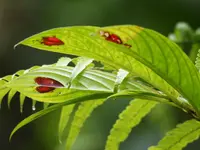
This species develops striking red markings along the veins on the underside of its leaves, which inspired the common name Blood of Christ and distinguishes it from many other Columnea species that have plain green foliage.

Hummingbird pollination link

In its native Central and South American cloud forests, the tubular red flowers are adapted for pollination by hummingbirds, which are attracted by both the bright color and the nectar held deep within the corolla.

Epiphytic rainforest habit

This plant naturally grows as an epiphyte on tree trunks and branches in humid montane forests, anchoring to bark with its roots rather than living in soil on the forest floor.

Botan icon

Did you know?

The leaf markings of this species show strong variation between populations, and some wild forms were historically misidentified or confused with other Columnea species until more detailed morphological and field studies clarified their identity.

FAQs about Blood of Christ

Lack of flowering usually relates to insufficient light intensity, low humidity, or depleted nutrients. Ensure bright, indirect light, stable warmth, and a balanced fertilizer during active growth. Avoid heavy pruning just before the main blooming period.

Grow Healthy Plants with Botan Care

Keep your plants happy and healthy with plant identification, disease detection, and easy care guidance.

Botan plant care app — identify plants on mobile

Explore More Plants