Thaumatophyllum spruceanum Care

Thaumatophyllum spruceanum

About Thaumatophyllum spruceanum

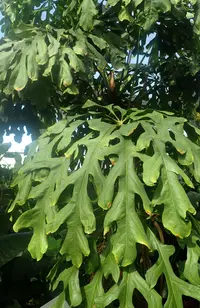
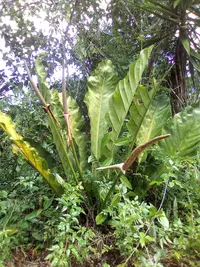
Thaumatophyllum spruceanum is a large, tropical aroid grown mainly for its dramatic foliage and architectural form. It is often kept as a statement indoor plant in bright, warm rooms. The plant develops long, deeply lobed leaves on thick, cane-like stems, giving it a bold, tree-like appearance over time. In nature, it occurs in parts of the Amazon region, where it grows in warm, humid, partially shaded forest conditions. Its size and need for stable warmth and moisture make it moderately challenging for small spaces or very dry homes. With consistent conditions and well-drained, rich soil, it is manageable for owners who want to learn how to care for Thaumatophyllum spruceanum.

Main Plant Requirements

Care Difficulty

Moderate Care

Light Preference

Bright Indirect Light

Water Requirements

Moderate Water

Temperature Preference

Tropical / Frost Sensitive

Hardiness Zone

10–12

Soil Texture

Loamy, Organic-rich

Soil pH

Acidic (5.5–6.5), Slightly acidic (6.5–7.0)

Soil Drainage

Moist but well-drained

Fertilization

Light (every 4–6 weeks)

Get Personalized Care Plan

Scan your plant to receive care tips personalized for your specific plant

Available on iOS and Android

How to Care for the Thaumatophyllum spruceanum

This species prefers bright, indirect light that mimics high, filtered forest canopy conditions.

  • Provide 6–8 hours of bright, filtered light each day, such as near an east window or under light shade outdoors; direct midday sun can scorch leaves.
  • Tolerates partial shade, but in very low light stems may stretch, leaves may shrink, and thaumatophyllum spruceanum can lose its strong, architectural form.
  • In summer, protect from harsh afternoon sun with sheer curtains or dappled tree shade; in winter, move closer to windows or supplement with a grow light to maintain intensity.

Watering should keep the root zone evenly moist but never saturated for long periods.

  • Allow the top 3–5 cm of soil to dry before watering, then soak thoroughly until excess drains away; discard standing water from saucers or cachepots.
  • Reduce watering in cooler, darker months when growth slows, relying more on feel (dry top layer, lighter pot weight) than a fixed weekly schedule.
  • Watch for overwatering signs such as yellowing lower leaves, limp petioles, and sour-smelling soil; underwatering shows as curling, dull leaves and very dry, shrinking soil away from the pot.

Stable, warm temperatures support steady growth and reduce stress for this species.

  • Aim for 70–82°F (21–28°C) for active growth; short peaks up to 86°F (30°C) are tolerated if humidity and soil moisture are adequate.
  • Keep above 60°F (16°C) whenever possible; below 55°F (13°C) tissue damage, leaf drop, and slowed recovery become more likely.
  • Protect from frost at all times, and avoid cold drafts from open windows or air conditioners as well as hot, blowing air from heaters that can desiccate foliage.

This species prefers moderately high humidity but copes with typical indoor levels if watering is consistent.

  • Aim for 50–70% humidity to support steady leaf expansion and reduce edge browning.
  • Brown, crisp margins and stalled new leaves indicate humidity stress, especially in warm, bright locations.
  • Increase humidity with localized methods such as a pebble tray under the pot or a nearby humidifier rather than misting.

Thaumatophyllum spruceanum performs best in a loose, airy, organic-rich substrate that drains quickly yet holds some moisture.

  • Use roughly 40% peat or coco coir, 30% fine bark, 20% perlite, and 10% compost for structure, drainage, and nutrients.
  • Aim for slightly acidic to neutral pH, around 6.0–7.0, to keep nutrients available and prevent leaf chlorosis.
  • Ensure the mix is crumbly and well‑aerated so roots receive oxygen and excess water moves out within minutes after watering.
  • Avoid heavy garden soil, pure compost, or mixes that stay wet and compact, which increase risk of root rot and fungus gnat issues.

This plant is well suited to container culture when the pot supports its vigorous, upright growth habit.

  • Choose a wide, heavy container to counterbalance the tall, top‑heavy stem and prevent tipping in light winds or bumps.
  • Select a pot deep enough to allow a broad, spreading root system rather than forcing roots into a tight vertical column.
  • Use a container material such as thick plastic or glazed ceramic that slows moisture loss while still allowing efficient drainage through the base holes.

Nutrient inputs support steady, leafy growth but heavy feeding is unnecessary for Thaumatophyllum spruceanum in most home conditions.

  • Use a balanced liquid fertilizer (around 10-10-10 or 20-20-20) diluted to 1/4–1/2 strength for container plants.
  • Feed every 4–6 weeks during the warm growing season when the plant is actively producing new leaves.
  • Skip or greatly reduce feeding in winter, when growth slows and excess salts can accumulate in the potting mix.
  • For outdoor or large specimens, incorporate a light layer of compost or a gentle slow-release fertilizer once in spring.

Pruning is mainly hygienic and structural, helping maintain a clean, safe form without reducing vigor.

  • Carry out light pruning in late winter or early spring before strong new growth begins.
  • Remove yellowing, dead, diseased, or damaged leaves and stems at their base with clean, sharp pruners.
  • Thin very crowded or crossing stems to improve airflow and light penetration through the canopy.
  • Limit pruning on healthy green tissue, as heavy cutting can slow growth and alter the natural architectural shape of Thaumatophyllum spruceanum.

Container and young landscape plants benefit from thoughtful repotting or transplanting to support the deep root system.

  • Check for roots circling the pot, emerging from drainage holes, or unexplained slow growth as signals to move up 1 pot size.
  • Plan repotting or transplanting in spring to early summer, when warm soil and active growth help roots re-establish.
  • Lift the plant gently, loosen circling roots with fingers, and trim only broken roots to limit stress.
  • Replant at the same soil depth in a free-draining, organic-rich medium, then water thoroughly and keep shaded for 3–7 days.

Propagation of this species is possible but slower than many houseplants, so planning and patience are important.

  • Use stem cuttings with at least 1 node and, ideally, an aerial root, taken in late spring or early summer.
  • Place cuttings in a loose, well-aerated mix, keeping temperatures around 70–80°F and humidity near 60–80%.
  • Provide bright, indirect light and avoid waterlogging to prevent rot while new roots develop.
  • Division of strong, multi-stemmed clumps is another option, separating sections with healthy roots and replanting promptly.

Cold sensitivity means some level of winter management is important, especially in regions with frost.

  • Treat it as a tropical to subtropical plant; foliage and stems are damaged near or below 32°F.
  • Move container plants indoors before nights drop below 45–50°F, giving bright, indirect light and reduced watering.
  • In mild climates, use a 5–8 cm layer of mulch around the root zone to buffer short cool spells and conserve soil warmth.

Care Tips

Provide trunk support

Install a sturdy moss pole or sealed wooden stake near the base early on and loosely tie the main stem to it, so the heavy, elongating trunk develops straight and does not topple as it gains height and leaf mass.

Manage aerial roots

Guide aerial roots into the potting mix or a nearby container of the same mix instead of cutting them off, which improves anchoring and water uptake in large specimens.

Rotate for balanced canopy

Turn the container 90° every 2–3 weeks so the plant distributes new leaves around the trunk more evenly, reducing the risk of leaning and uneven weight on one side of the pot.

Repot before toppling

Up-pot only 1 pot size when you see roots circling the bottom or the plant becoming top-heavy, and choose a wide, heavier container to stabilize the tall trunk.

Monitor petiole stress

Check long petioles regularly for creasing or cracking near their base and reduce mechanical stress by moving the plant carefully, improving support, or reducing fan drafts that make large leaves sway excessively while caring for Thaumatophyllum spruceanum.

Common Pests and Diseases

Spider mites

This pest feeds on the undersides of the large, deeply lobed leaves, causing pale stippling, fine webbing, and a dull, dusty appearance, especially in warm, dry indoor air.

Solution

Rinse foliage thoroughly with a strong but gentle stream of lukewarm water, including leaf undersides, then repeat every few days; for persistent infestations, apply insecticidal soap or a ready-to-use neem oil spray, and raise humidity while avoiding leaf crowding to support Thaumatophyllum spruceanum indoor care.

Mealybugs

These insects appear as white, cottony clusters in leaf axils, along petioles, and near aerial roots, where they suck sap and excrete sticky honeydew that can lead to sooty mold.

Solution

Isolate the plant, dab visible mealybugs with cotton swabs dipped in 70% isopropyl alcohol, then wash the plant with lukewarm water and apply insecticidal soap or horticultural oil weekly until no new insects appear, checking hidden crevices regularly.

Scale insects

This pest forms small, tan to brown shell-like bumps on stems and leaf petioles, leading to yellowing, reduced vigor, and sticky honeydew deposits on nearby surfaces.

Solution

Gently scrape or wipe off individual scales with a fingernail or soft cloth, then treat stems and petioles with horticultural oil or insecticidal soap every 7–10 days, ensuring good air circulation and avoiding excess nitrogen fertilizer that encourages soft, susceptible growth.

Bacterial leaf spot

This disease causes water-soaked, translucent lesions on leaves that may turn dark, sometimes with yellow halos, often starting where water sits on the foliage for long periods.

Solution

Remove and discard affected leaves with sterilized tools, avoid overhead watering, keep leaves dry, and improve air movement; in severe or recurring cases, reduce crowding around the plant and consider replacing heavily infected specimens to prevent spread to other aroids.

Fungal leaf blight

Symptoms include irregular brown lesions with defined edges that can coalesce and cause large sections of the leaf to die, particularly under cool, humid, and poorly ventilated conditions.

Solution

Prune and discard diseased tissue, sanitize tools, space plants to increase airflow, and water at the soil level in the morning so foliage dries quickly; for ongoing problems, use a labeled copper or sulfur-based fungicide according to directions, and avoid keeping the plant in chronically damp, stagnant air.

Interesting Facts

Trunk-forming aroid

This species develops a distinct, upright, palm-like trunk over time, unlike many philodendron relatives that remain mostly vining or clumping.

Deeply pinnatifid leaves

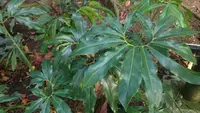
Mature plants produce long, narrow leaves that are strongly pinnatifid, meaning the blade is deeply cut almost to the midrib, giving a feather-like appearance uncommon among most popular houseplants.

Amazon floodplain native

It is naturally found along Amazonian river floodplains, where roots tolerate periodic inundation followed by drier periods, an adaptation that helps explain its tolerance of variable soil moisture in cultivation.

Botan icon

Did you know?

This species was long classified within Philodendron and only relatively recently reassigned to the genus Thaumatophyllum, reflecting modern anatomical and genetic research that separated these large, trunk-forming species from true Philodendron.

FAQs about Thaumatophyllum spruceanum

Growth is moderate. In good indoor conditions, expect roughly 10–25 cm of new stem and leaf growth per year. Cooler temperatures, low light, small pots, or nutrient-poor soil slow its expansion substantially.

Grow Healthy Plants with Botan Care

Keep your plants happy and healthy with plant identification, disease detection, and easy care guidance.

Botan plant care app — identify plants on mobile

Explore More Plants