


Use Hanging Support
Grow this plant in a hanging basket or on a high shelf so the long, segmented stems can trail freely without kinking or breaking against a pot rim.

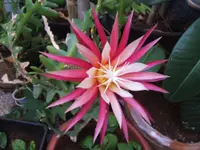
The ric rac cactus, Selenicereus anthonyanus, is an epiphytic cactus native to humid forests of southern Mexico. It often grows on trees rather than in the ground. Its long, flat, zigzagging stems create an unusual, architectural look that works well in hanging baskets or on shelves where the stems can cascade. Mature plants may produce large, fragrant night-blooming flowers under suitable conditions. This species is generally considered easy to moderate to grow, as it prefers bright filtered light, regular but not heavy watering, and a loose, airy potting mix. Learning how to care for Ric Rac cactus mainly involves balancing moisture with good drainage and avoiding harsh direct sun.

Care Difficulty
Moderate Care

Light Preference
Bright Indirect Light

Water Requirements
Moderate Water

Temperature Preference
Tropical / Frost Sensitive

Hardiness Zone
11–12

Soil Texture
Sandy, Loamy, Organic-rich

Soil pH
Acidic (5.5–6.5), Slightly acidic (6.5–7.0)

Soil Drainage
Well-drained

Fertilization
Light (every 4–6 weeks)
Scan your plant to receive care tips personalized for your specific plant
Available on iOS and Android
This forest cactus prefers bright, indirect light that mimics dappled sun under tree canopies.
Watering should mimic a moist but fast-draining forest environment rather than a true desert habitat.
This species grows best in warm, stable temperatures without frost or extreme heat swings.
This epiphytic cactus prefers moderate indoor humidity and copes with typical household air.
This species needs a very fast-draining, airy mix that mimics loose, organic forest debris on tree branches.
This cactus is well-suited to container growing due to its shallow, spreading root system and trailing stems.
This epiphytic cactus benefits from light feeding during its active growing season.
Pruning Selenicereus anthonyanus is mainly used to manage size and improve plant health.
This cactus prefers slightly snug containers and only needs repotting when truly root-bound.
New Selenicereus anthonyanus plants are most commonly produced from stem cuttings.
This tropical cactus is sensitive to frost and needs protection in colder climates.

Plant Health Check
Not sure what's wrong with your plant? Check your plant's health inside the app.
This species forms long, flat, zigzagging stems that can reach over 1 m in length and hang pendently from trees in its native Mexican cloud forests, an adaptation that helps it capture dappled light beneath the canopy.
Unlike desert cacti, it grows as an epiphyte on tree trunks and branches in humid evergreen forests, absorbing moisture and nutrients from rain, debris, and the surrounding organic matter rather than from desert soil.
Its fragrant flowers can exceed 15–20 cm across and open at night, but each individual bloom typically lasts only a single night, timed to coincide with nocturnal pollinators such as moths.

This species is believed to be naturally pollinated by nocturnal hawkmoths attracted to its pale, strongly scented night-opening flowers, a classic example of pollination syndrome where flower shape, color, and timing are tuned to a specific pollinator group.
Lack of flowers usually comes from insufficient light, no cool, slightly drier rest in fall, or too much nitrogen fertilizer. Stable conditions, moderate feeding, and a short cool period often trigger flowering in mature plants.
Keep your plants happy and healthy with plant identification, disease detection, and easy care guidance.

 POPULAR
Velvet arrowhead
Syngonium wendlandii

Creeping pilea
Pilea nummulariifolia
Vatricania
Vatricania guentheri

Gongora galeata
Gongora galeata
Dragonfruit
Selenicereus undatus
Cattleya amethystoglossa
Cattleya amethystoglossa
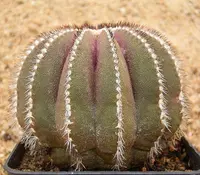
Uebelmannia pectinifera
Uebelmannia pectinifera
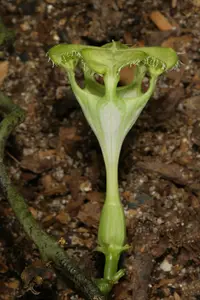
Parachute Flower
Ceropegia sandersonii