


Stabilize Tall Pseudobulbs
Use thin orchid stakes and soft clips to support tall flowering pseudobulbs, placing the stake close to the rhizome and tying loosely so the stem can flex without snapping.

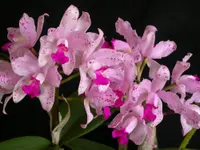
Cattleya amethystoglossa is a medium to large epiphytic orchid that usually grows on trees, forming clumps of pseudobulbs with thick, strap-like leaves. It produces tall flowering stems with multiple lavender to purple blooms, often spotted and strongly scented.
This species is native to eastern Brazil, where it experiences bright light, good air movement, and marked seasonal changes. Its showy flowers and relatively robust growth make it popular among orchid growers, but it is less forgiving of poor light and humidity than beginner houseplants.
Understanding how to care for Cattleya amethystoglossa includes providing strong filtered light, regular moisture with fast drying, and a coarse, airy orchid mix rather than standard potting soil.

Care Difficulty
Moderate Care

Light Preference
Partial Sun

Water Requirements
Moderate Water

Temperature Preference
Tropical / Frost Sensitive

Hardiness Zone
11–12

Soil Texture
Peaty, Organic-rich, Rocky

Soil pH
Acidic (5.5–6.5)

Soil Drainage
Well-drained

Fertilization
Moderate (every 2–4 weeks)
Scan your plant to receive care tips personalized for your specific plant
Available on iOS and Android
This orchid needs bright, filtered light to produce strong growth and reliable flowering.
Watering should balance moisture around the roots with plenty of air and fast drainage.
Stable intermediate to warm temperatures support healthy growth and flowering.
This orchid needs consistently moist air to support healthy pseudobulbs and flowers.
This epiphytic orchid needs a very open, fast-draining, airy growing medium instead of regular potting soil.
This species is well suited to container culture when the pot supports its upright yet spreading growth habit.
This orchid benefits from light, consistent feeding during active growth for reliable flowering.
Pruning needs are minimal and focus on hygiene rather than reshaping the orchid.
This epiphytic orchid prefers tight pots and airy media but still needs periodic repotting to stay vigorous.
Division is the standard home method for propagating this sympodial orchid.
This warm-intermediate orchid is frost-sensitive and needs sheltered conditions in winter.

Plant Health Check
Not sure what's wrong with your plant? Check your plant's health inside the app.
This species is native to eastern Brazil, where it grows on exposed rocky outcrops and inselbergs, often rooted in very shallow organic debris on granite or quartzite slabs rather than in deep forest soil.
In its native range it typically flowers in the Southern Hemisphere winter, producing tall inflorescences with multiple pale lavender to lilac flowers that release a noticeable sweet fragrance during the day.
The flowers are characterized by amethyst-purple spotting on the petals and sepals and a contrasting darker lip, a combination that makes it relatively easy to distinguish from closely related Cattleya species.

The species name amethystoglossa refers to the amethyst-like color of its lip and the tongue-like shape of this floral structure, reflecting how early botanists used both color and morphology when describing new orchid species from Brazil.
Lack of blooms usually comes from insufficient light, inadequate seasonal temperature drop at night, or underdeveloped pseudobulbs. Overpotting and heavy nitrogen fertilization also reduce flowering. Ensure mature growths, bright light, and a slight drier, cooler rest after new growth hardens.
Keep your plants happy and healthy with plant identification, disease detection, and easy care guidance.




-1-200x150.webp)