Support tall stems
Install low, discreet ring supports or short stakes early in the season so stems stay upright in wind and heavy rain without breaking or leaning onto neighboring plants.

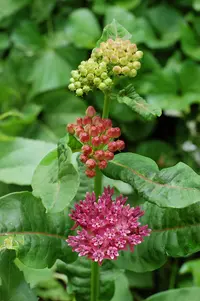
Purple milkweed, Asclepias purpurascens, is a perennial wildflower native to central and eastern North America. It typically grows in clumps with upright stems and broad, dark green leaves.
The plant bears dense clusters of rich pink to purple, star-shaped flowers that attract butterflies, especially monarchs, along with many native pollinators. It usually inhabits open woods, prairies, and sunny meadows with well-drained soils.
Asclepias purpurascens can be moderately challenging, as it dislikes disturbance and prefers stable planting sites. Gardeners who learn how to care for purple milkweed find it long-lived and rewarding in naturalistic plantings.

Care Difficulty
Easy Care

Light Preference
Full Sun

Water Requirements
Moderate Water

Temperature Preference
Cold Hardy

Hardiness Zone
3–8

Soil Texture
Sandy, Loamy, Clay

Soil pH
Acidic (5.5–6.5), Slightly acidic (6.5–7.0)

Soil Drainage
Moist but well-drained

Fertilization
Minimal (feed rarely)
Scan your plant to receive care tips personalized for your specific plant
Available on iOS and Android
This sun-loving perennial needs strong light to flower well and support monarch caterpillars.
This species prefers evenly moist, well-drained soil but dislikes standing water.
This hardy perennial tolerates a wide temperature range once established in the ground.
This species is adapted to outdoor conditions and does not have special humidity requirements in typical temperate climates.
This species grows best in deep, moderately moist, well-drained soils with stable structure.
This species can be grown in containers, but long-term performance is better in the ground due to its deep root system.
This native perennial thrives in low-nutrient soils, so purple milkweed needs only minimal fertilization.
Pruning Asclepias purpurascens is simple and mainly focused on maintaining plant health and encouraging flowering.
This milkweed develops a deep taproot, so transplanting must be timed carefully to avoid stress.
Propagation of Asclepias purpurascens is most reliable from seed, with some potential from careful division of young plants.
This species is cold hardy in much of its native range and usually needs minimal winter care in the ground.

Plant Health Check
Not sure what's wrong with your plant? Check your plant's health inside the app.
This species is a confirmed larval host for the monarch butterfly in the eastern and central United States, but in many areas it is used less frequently than common milkweed because its populations are naturally sparse and patchy.
Unlike many other milkweeds that demand full sun, this species tolerates and can even bloom in bright, open shade at woodland edges and light forest openings.
Mature plants develop deep, thick rhizomes (underground stems) that store energy and allow them to resprout after mowing, fire, or aboveground damage, helping colonies persist for many years.

Purple milkweed is considered uncommon or rare in several US states within its native range, so some conservation programs track wild populations to support regional efforts focused on growing purple milkweed for pollinator habitat restoration.
This species is highly attractive to monarch butterflies, other butterflies, native bees, and many pollinating insects. Its nectar-rich, fragrant flowers provide a reliable food source, while the foliage serves as a host plant for monarch caterpillars.
Keep your plants happy and healthy with plant identification, disease detection, and easy care guidance.