


Leaf surface cleaning
Gently rinse or mist leaves a few times each season to remove settled dust and soil particles so the plant can photosynthesize efficiently and resist foliar disease in low-light woodland conditions.

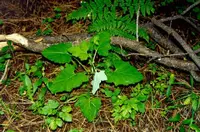
American trailplant, Adenocaulon bicolor, is a shade-loving woodland perennial native to western North America. It forms low, spreading clumps that slowly carpet the forest floor. The plant has triangular, often bicolored leaves and tall, slender stems topped with small, inconspicuous flower clusters. These flowers develop into burr-like seeds that cling to fur and clothing, helping the plant spread along trails. It suits naturalistic, woodland-style gardens that mimic cool, moist, humus-rich forest soils. Gardeners who care for American trailplant usually find it undemanding if given consistent shade and moisture and protection from hot, dry conditions.

Care Difficulty
Moderate Care

Light Preference
Partial Shade

Water Requirements
Moderate Water

Temperature Preference
Cool Climate

Hardiness Zone
4–8

Soil Texture
Loamy, Silty, Organic-rich

Soil pH
Acidic (5.5–6.5), Slightly acidic (6.5–7.0)

Soil Drainage
Moist but well-drained

Fertilization
Minimal (feed rarely)
Scan your plant to receive care tips personalized for your specific plant
Available on iOS and Android
This woodland perennial prefers dappled light that mimics open forest conditions.
This species prefers consistently moist, cool soil but not saturated conditions.
This temperate woodland plant is adapted to cool to mild outdoor conditions.
This woodland perennial prefers moderate, stable humidity and copes reasonably well with typical indoor air.
This species prefers loose, humus-rich soil that holds moisture yet drains freely.
This species can be grown in containers if the pot mimics a cool, consistently moist woodland soil profile.
This woodland perennial grows in naturally lean soils and usually needs only light feeding in gardens.
Pruning needs for Adenocaulon bicolor are minimal and focus on tidiness rather than shaping.
This species is usually grown in the ground, so transplanting is more relevant than repotting.
Adenocaulon bicolor is most practically propagated by division, with seed used mainly for larger batches.
This plant is cold hardy in much of its range and generally needs only light winter attention in garden beds.

Plant Health Check
Not sure what's wrong with your plant? Check your plant's health inside the app.
This woodland species has leaves that are dark green on top and felted white underneath, creating a strong bicolor effect that inspires its species name bicolor.
It naturally grows on the dim, moist floors of conifer and mixed forests in western North America, where it forms sparse colonies rather than dense groundcover.
Its dry fruits (achenes) have small hooked projections that can catch on fur or clothing, allowing the plant to spread through animal-assisted dispersal.

The American trailplant name comes from the way its bright white leaf undersides stand out when flipped over, so people historically used the upturned leaves to mark or follow forest paths for short periods.
This woodland species is a herbaceous perennial. The foliage dies back in winter and new shoots emerge from the root system each spring, allowing a single plant to persist for many years in suitable conditions.
Keep your plants happy and healthy with plant identification, disease detection, and easy care guidance.

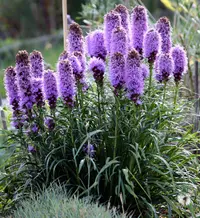
Dense blazing star
Liatris spicata
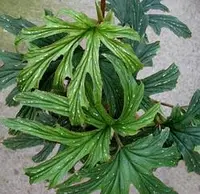
Begonia aconitifolia
Begonia aconitifolia
 POPULAR
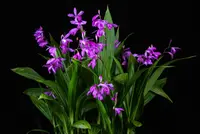
Chinese ground orchid
Bletilla striata
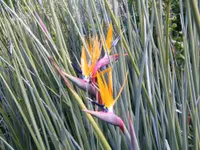
Narrow-leafed Bird of Paradise
Strelitzia juncea

Harrison's Cattleya
Cattleya harrisoniana
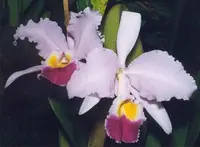
Christmas orchid
Cattleya trianae

Giant Leopard Plant
Farfugium japonicum var. giganteum
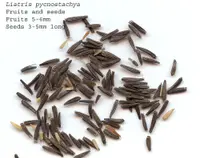
prairie blazing star
Liatris pycnostachya