Early structural staking
Install 2–3 sturdy stakes around the plant while it is still under 30–40 cm tall and loosely tie stems with soft ties to prevent wind damage and breakage as the top growth becomes heavy with flowers.

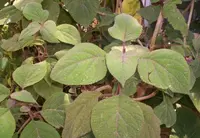
Blue mist flower, Bartlettina sordida, is a fast-growing evergreen shrub valued for its large, soft leaves and showy clusters of violet-blue flowers. It typically forms a rounded, bushy plant and can reach substantial size in mild, frost-free climates.
This species is native to cloud forests of Mexico and Central America, where it grows in moist, cool, and partially shaded conditions. It is considered moderately demanding because it dislikes frost, strong sun, and drying out.
Gardeners who care for Blue Mist Flower usually provide sheltered positions, evenly moist soil, and good air movement to support healthy growth and flowering.

Care Difficulty
Moderate Care

Light Preference
Partial Shade

Water Requirements
Keep Soil Moist

Temperature Preference
Tropical / Frost Sensitive

Hardiness Zone
9–11

Soil Texture
Loamy, Organic-rich

Soil pH
Acidic (5.5–6.5), Slightly acidic (6.5–7.0)

Soil Drainage
Moist but well-drained

Fertilization
Light (every 4–6 weeks)
Scan your plant to receive care tips personalized for your specific plant
Available on iOS and Android
Bartlettina sordida prefers bright, gentle light that mimics a high-canopy forest edge.
Bartlettina sordida prefers consistently moist but not waterlogged soil.
This plant thrives in mild, frost-free conditions similar to a sheltered subtropical garden.
This species prefers high, stable humidity and reacts quickly to dry air.
Bartlettina sordida grows best in loose, airy, organic-rich soil that drains freely yet holds some moisture.
This species is suitable for container growing when the pot is chosen to manage its large, top-heavy growth.
Bartlettina sordida benefits from modest feeding to support lush growth and flowering without over-stimulating weak, lanky stems in Blue Mist Flower indoor care.
Bartlettina sordida responds well to thoughtful pruning, which keeps the shrub compact and promotes heavier flowering.
Container-grown plants and young shrubs benefit from occasional repotting or transplanting to maintain steady growth.
Bartlettina sordida is commonly propagated from softwood or semi-ripe cuttings, with seeds used less often for home growing.
Bartlettina sordida is frost-tender and needs thoughtful winter care in most temperate climates.

Plant Health Check
Not sure what's wrong with your plant? Check your plant's health inside the app.
This species is native to cool, humid cloud forests of Mexico and Central America, where it grows as a shrub on shaded mountain slopes with frequent mist and low, filtered light.
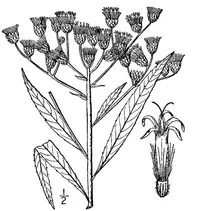
The plant produces large dome-shaped clusters of many small blue-violet florets, giving a hazy, mist-like appearance that attracts butterflies and other pollinators in its native range.
Its large, soft leaves are covered with fine hairs and release a resinous scent when touched, a trait thought to help reduce water loss and provide some protection from herbivores in its montane habitat.

Bartlettina sordida was formerly placed in the genus Eupatorium, and its reclassification followed detailed morphological and chemical studies that showed it was distinct from the true Eupatorium species, illustrating how modern plant systematics can reshape long-standing botanical groupings.
Poor flowering usually comes from insufficient light, heavy feeding with high-nitrogen fertilizer, or lack of pruning. Remove spent flower heads, avoid overfertilizing, and keep the plant slightly root-restricted to direct energy toward buds instead of lush foliage.
Keep your plants happy and healthy with plant identification, disease detection, and easy care guidance.