Rose Care (Rosa 'Sally Holmes')

Rose

About Rose

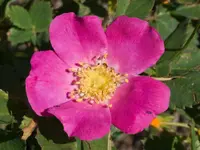
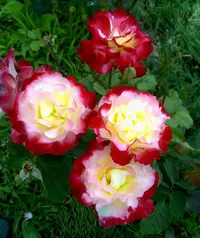
Rosa 'Sally Holmes' is a vigorous shrub rose known for its large, creamy white to pale apricot flower clusters and glossy dark green foliage. It forms a broad, arching bush that can be trained as a free-standing shrub or a short climber on supports.

This cultivar originates from modern garden breeding rather than the wild and is valued for its repeat flowering and strong disease resistance. It is considered relatively easy to grow, which makes it suitable for gardeners learning how to care for Rose in mixed borders or as a focal plant.

It prefers full sun, well-drained soil, and steady moisture, and it tolerates a range of garden conditions if extremes are avoided.

Main Plant Requirements

Care Difficulty

Moderate Care

Light Preference

Full Sun

Water Requirements

Regular Water

Temperature Preference

Cold Hardy

Hardiness Zone

5–9

Soil Texture

Loamy, Sandy, Clay

Soil pH

Acidic (5.5–6.5), Slightly acidic (6.5–7.0)

Soil Drainage

Moist but well-drained

Fertilization

Moderate (every 2–4 weeks)

Get Personalized Care Plan

Scan your plant to receive care tips personalized for your specific plant

Available on iOS and Android

How to Care for the Rose

This vigorous climbing rose flourishes with abundant direct light and tolerates some partial shade.

  • Provide 6–8 hours of direct sun daily, with morning sun and light afternoon shade ideal to protect pale blooms from scorching in very hot climates.
  • Allow light dappled shade in the hottest part of the day in zones with strong summer sun; flowering will decrease if daily sun drops below about 4 hours.
  • Site away from dense tree canopies or north walls; inadequate light leads to lanky stems, fewer clusters, and more mildew on Rose foliage.

This rose prefers consistently moist, well-drained soil rather than frequent shallow watering.

  • Water when the top 3–5 cm of soil feels dry, applying a slow, deep soak at the base so moisture reaches 20–30 cm down into the root zone.
  • In spring and summer, monitor during hot, dry spells and increase frequency; in cool, rainy or fall conditions, reduce watering to avoid waterlogged soil.
  • Watch for overwatering signs such as yellowing leaves and soft stems, and underwatering signs like drooping foliage and smaller blooms on Rosa 'Sally Holmes'.

This climbing rose performs best in mild to warm conditions and tolerates moderate cold once established.

  • Optimal growing temperatures are around 60–80°F (16–27°C), with strong flowering in stable, moderate weather and good air circulation.
  • Plants tolerate winter lows near 0–5°F (-18 to -15°C) in the ground with proper mulching, but can suffer cane dieback in prolonged deep freezes without protection.
  • During heat waves above 90°F (32°C), provide extra mulch and morning watering, as prolonged extreme heat can reduce flower size and stress the shrub.

This cultivar prefers moderate outdoor humidity but copes well with typical garden conditions.

  • Aim for 40–60% humidity; very arid, hot winds can stress new growth and buds.
  • Tolerates short dry-air spells, but repeated low humidity may cause crisp leaf edges and bud drop.
  • In very dry climates, increase local humidity by grouping plants, using mulch to retain soil moisture, and providing temporary windbreaks.

Rosa 'Sally Holmes' performs best in deep, well-structured, moisture-retentive yet free-draining soil.

  • Use a loamy structure with 40–60% garden soil, 20–30% compost, and 10–20% coarse sand or fine grit for drainage.
  • Maintain pH around 6.0–6.8; on alkaline sites, incorporate elemental sulfur or acid-leaning composts over time.
  • Improve aeration by mixing in chunky organic matter such as pine bark fines, avoiding dense, fine-textured peat-only mixes.
  • Avoid heavy, compacted clay and sites where water lingers after rain, which encourage root rot and weak growth.

This climbing rose can be grown in large containers if root depth and stability are carefully managed.

  • Choose a pot at least 45–60 cm deep to accommodate the strong root system and reduce drought stress between waterings.
  • Select a heavy, frost-resistant container material such as ceramic or thick-walled resin to stabilize tall canes in wind.
  • Anchor a sturdy trellis directly in the container so canes are supported without stressing the root ball or rim of the pot.

Rosa 'Sally Holmes' responds well to moderate feeding that supports repeat flowering without producing overly soft, pest-prone growth.

  • Use a balanced granular or slow-release fertilizer (around 10-10-10 or 12-6-6) in early spring as new growth starts.
  • Reapply slow-release or a diluted liquid feed every 4–6 weeks through midsummer, then stop by late summer.
  • Keep strength at 50–75% of label rate for container plants to avoid salt buildup and root burn.
  • Supplement with a thin layer of compost around the root zone each spring, keeping it away from the main stems.

Rosa 'Sally Holmes' benefits from structured pruning that maintains an open framework and encourages strong flowering wood.

  • Prune in late winter or very early spring before buds break, using sharp bypass pruners or loppers.
  • Remove all dead, diseased, crossing, or inward-growing stems to improve air movement and reduce fungal problems.
  • Shorten remaining canes by about 1/3, cutting above outward-facing buds to shape an open, vase-like plant.
  • Deadhead spent clusters in summer by cutting back to a strong outward leaf, which encourages additional blooms.

This rose is most often grown in the ground, so focus on careful transplanting rather than frequent repotting.

  • Transplant in early spring or fall when temperatures are mild and the plant is not in peak bloom.
  • Move plants that show poor vigor, are shaded out, or have roots circling a container and drying out quickly.
  • Prepare a hole 2–3× wider than the root ball, planting at the same depth and backfilling with native soil, not rich potting mix.
  • Water deeply after planting, mulch 5–7 cm around the root zone, and keep soil evenly moist for several weeks to limit transplant shock.

Rosa 'Sally Holmes' is typically propagated from cuttings to maintain the exact cultivar traits.

  • Use semi-ripe stem cuttings in late spring to mid-summer, selecting non-flowering shoots about 10–15 cm long.
  • Remove lower leaves, lightly wound the base, and dip in rooting hormone to increase rooting success.
  • Insert cuttings into a free-draining medium such as 50% perlite and 50% peat or coco coir, then firm gently.
  • Maintain bright, indirect light, high humidity, and a temperature around 68–75°F until roots form over several weeks.

This rose is fairly cold hardy but benefits from basic winter protection in colder regions.

  • After hard frost, mound soil or compost 10–15 cm over the crown to insulate the graft area.
  • Apply 5–8 cm of mulch around the root zone, keeping it slightly away from the main stems.
  • In very cold or exposed sites, loosely wrap canes with burlap or use a rose cone with ventilation holes.
  • For container plants, move pots to a sheltered, unheated but frost-moderated spot such as a garage or against a protected wall.

Care Tips

Fan-shaped training

Tie new canes to a fan-shaped support or trellis at 30–45° from vertical to encourage more flowering side shoots along the stems.

Staggered deadheading

On older, established plants, remove some spent clusters just below the first 5‑leaflet leaf while leaving a few to set hips, which balances continuous bloom with plant energy reserves.

Airy lower canopy

Keep the lowest 15–20 cm of the plant relatively open by removing weak inner twigs in late winter so air can move under the foliage and reduce fungal pressure near the base.

Targeted mulch ring

Maintain a 5–8 cm deep mulch ring that stops 5–7 cm short of the main stems to keep soil evenly moist while preventing bark rot at the crown.

Preventive pest scouting

Inspect the undersides of leaves and young flower clusters weekly during warm months so that any aphids, thrips, or mite issues are caught early and managed with spot treatments rather than whole-plant sprays when caring for Rose.

Common Pests and Diseases

Black spot

This disease causes round, black leaf spots with yellow halos, leading to premature defoliation, especially in humid, warm weather.

Solution

Remove and discard affected leaves, both on the plant and on the ground, and avoid overhead watering to keep foliage dry. Improve air circulation by careful pruning, then apply a preventive fungicide labeled for roses during extended wet periods as part of broader Rose care instructions.

Powdery mildew

This disease produces white, powdery growth on young leaves, stems, and buds, often causing distortion and reduced flowering in periods of warm days and cool nights.

Solution

Prune to open the plant structure, avoid dense overcrowding, and water at soil level early in the day. Remove heavily infected shoots and use a sulfur or potassium bicarbonate-based fungicide according to label directions when conditions favor mildew.

Rose rust

This disease shows as bright orange or rust-colored pustules on leaf undersides and stems, and can cause leaf yellowing and drop if unmanaged.

Solution

Promptly remove and destroy affected leaves and stems, including fallen debris, and keep the plant well spaced for good airflow. In regions where rust recurs, use a rotating program of rose-safe fungicides and avoid overhead irrigation that keeps foliage wet for long periods.

Aphids

These insects cluster on tender shoots and buds, sucking sap and causing leaf curling, distorted buds, and sticky honeydew that can attract sooty mold.

Solution

Dislodge colonies with a strong stream of water, then encourage or introduce beneficial insects such as lady beetles where possible. For persistent infestations, use insecticidal soap or a light horticultural oil, applied thoroughly to shoot tips and bud clusters according to label instructions.

Rose sawfly larvae

This pest appears as small green larvae on leaf undersides, skeletonizing foliage so only the leaf veins remain and giving the plant a scorched look.

Solution

Inspect leaves regularly in spring and early summer, hand-pick larvae, and prune off heavily infested shoots. If damage continues, apply a targeted contact insecticide such as insecticidal soap or spinosad, making sure to coat the undersides of leaves where larvae feed.

Interesting Facts

Single-petaled impression

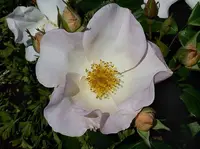
Although often described as a floribunda, this cultivar typically has only 4–8 petals per flower, giving each large bloom a simple, almost wild-rose appearance despite its modern breeding background.

Color-shifting blooms

Individual flowers usually open in a warm, buff or apricot-tinged cream and then fade to nearly pure white, so a single cluster often shows multiple cream-to-white tones at once.

Exceptional cluster size

This rose is known for producing very large trusses of blooms, sometimes with dozens of flowers on a single inflorescence, creating a hydrangea-like effect when in peak flush.

Botan icon

Did you know?

Rosa 'Sally Holmes' received the Royal Horticultural Society Award of Garden Merit and has been noted by trial programs for outstanding disease resistance and reliable performance even in relatively cool, maritime climates.

FAQs about Rose

Poor flowering often comes from insufficient sun, depleted soil nutrients, or heavy old wood dominating the plant. Regular deadheading, balanced fertilization, and periodic renewal pruning help sustain repeat blooms through the season when growing Rose.

Grow Healthy Plants with Botan Care

Keep your plants happy and healthy with plant identification, disease detection, and easy care guidance.

Botan plant care app — identify plants on mobile

Explore More Plants