Install sturdy trellis
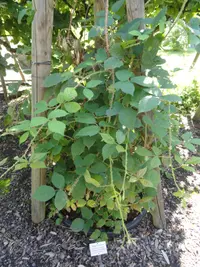
Set up a robust trellis or wire system before the cane growth surge in spring so you can tie in new canes loosely as they extend, which keeps fruiting wood well spaced and improves air flow through the canopy.

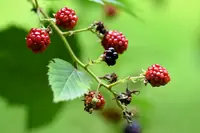
Loganberry (Rubus × loganobaccus) is a vigorous bramble, a hybrid between raspberry and blackberry. It forms arching canes with thorny stems and deep red, elongated berries. It is usually grown in temperate gardens rather than found wild, though it may naturalize in mild climates. Plants are long-lived perennials that spread gradually from their base. The berries are juicy and flavorful, and the plant is generally robust, but it needs support, regular pruning, and space, which can affect how easy it feels to manage. It prefers sun, evenly moist but well-drained soil, and some wind protection, so understanding how to care for loganberry focuses mainly on training and controlling its strong growth.

Care Difficulty
Moderate Care

Light Preference
Full Sun

Water Requirements
Regular Water

Temperature Preference
Cold Hardy

Hardiness Zone
5–10

Soil Texture
Sandy, Loamy, Organic-rich

Soil pH
Acidic (5.5–6.5), Slightly acidic (6.5–7.0)

Soil Drainage
Moist but well-drained

Fertilization
Minimal (feed rarely)
Scan your plant to receive care tips personalized for your specific plant
Available on iOS and Android
This hybrid bramble fruits best with plenty of direct sun but tolerates some shade, especially in hotter regions.
This shrub prefers consistently moist, well-drained soil rather than strict watering schedules.
This cane fruit thrives in cool to warm temperate climates with distinct winters and mild summers.
Humidity is not a critical factor for Rubus × loganobaccus, which adapts well to typical outdoor conditions.
Rubus × loganobaccus prefers deep, moisture-retentive yet freely draining soil to support vigorous cane and root growth.
This species can be grown in containers if the pot is large and managed for stability and drainage.
Rubus × loganobaccus responds well to moderate feeding in nutrient-poor soils but many established plants crop acceptably without extra fertilizer.
Pruning is essential for maintaining productive, manageable Rubus × loganobaccus canes.
This bramble is usually grown in the ground, so management focuses on site planting and occasional transplanting rather than frequent repotting.
Rubus × loganobaccus is commonly renewed by vegetative methods that clone desired fruiting traits.
Mature plants are fairly cold hardy but benefit from basic winter preparation, especially in colder regions and containers.

Plant Health Check
Not sure what's wrong with your plant? Check your plant's health inside the app.
This plant is a complex hybrid between a raspberry (Rubus idaeus) and a blackberry (Rubus ursinus), first raised in the late 19th century by American horticulturist James Harvey Logan in California.
It is triploid, meaning it carries three sets of chromosomes, which makes it largely sterile and dependent on vegetative propagation such as tip layering or cuttings rather than seed.
The fruits combine structural traits from both parents, with an elongated shape and deep wine-red color, and a flavor often described as sharper and more aromatic than most cultivated blackberries.

The original seedling that became the loganberry arose accidentally in J. H. Logan’s garden among berry seedlings grown near cross-pollinating raspberries and blackberries, and this single chance hybrid later gave rise to a whole group of related hybrid berries such as tayberry and boysenberry.
This species spreads by vigorous canes and underground suckers, forming large thickets over time. It is not usually as aggressive as some blackberries, but regular pruning and root sucker removal are important to keep it contained.
Keep your plants happy and healthy with plant identification, disease detection, and easy care guidance.