Early form training
In the first 3–5 years, select 3–5 well-spaced scaffold branches and remove steeply upright or crossing shoots to build a strong open canopy that supports future fruit load without splitting.

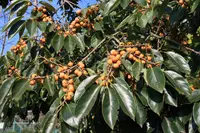
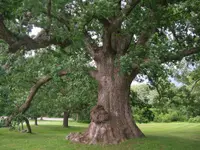
Date plum, Diospyros lotus, is a small deciduous fruit tree in the persimmon family, valued for its sweet, plum-sized berries. It has glossy green leaves, small pale flowers, and develops an attractive yellow to orange autumn color.
In nature it grows from southeastern Europe through the Caucasus to parts of Asia, often in warm, temperate regions. The tree is generally adaptable and can be moderately easy to grow if given sun, well-drained soil, and steady moisture while young.
Understanding how to care for date plum mostly involves providing enough light, avoiding waterlogged conditions, and allowing space for its upright, branching crown to develop over time.

Care Difficulty
Moderate Care

Light Preference
Full Sun

Water Requirements
Moderate Water

Temperature Preference
Cold Hardy

Hardiness Zone
6–9

Soil Texture
Sandy, Loamy, Clay

Soil pH
Slightly acidic (6.5–7.0), Neutral (7.0)

Soil Drainage
Well-drained

Fertilization
Minimal (feed rarely)
Scan your plant to receive care tips personalized for your specific plant
Available on iOS and Android
This deciduous fruit tree prefers ample sun for strong growth and fruiting.
This species prefers evenly moist, well-drained soil, especially while establishing.
This hardy tree tolerates a wide temperature range but performs best in moderate conditions.
Humidity is not a major factor for Diospyros lotus, but very dry air can cause minor stress in containers.
Diospyros lotus prefers moderately fertile, well-structured soil with reliable drainage.
This species can be grown in containers, especially in its early years or in cooler climates.
Diospyros lotus benefits from light, balanced feeding but often grows acceptably in fertile ground without extra input.
Pruning supports a healthy framework and fruiting wood in Diospyros lotus when done at the right time.
Diospyros lotus is usually grown outdoors and responds best to careful transplanting while dormant.
Diospyros lotus is most often propagated from seed, with some use of grafting for named selections.
This hardy species usually needs minimal winter care once established in suitable climates.

Plant Health Check
Not sure what's wrong with your plant? Check your plant's health inside the app.
Diospyros lotus was historically cultivated along the Silk Road, especially in the Caucasus and Central Asia, where its small sweet fruits were dried and traded as a portable energy-rich food.
This species is one of the most cold-hardy persimmons, tolerating winter temperatures that would damage many other Diospyros species, which makes growing date plum possible in regions with relatively harsh winters.
Diospyros lotus is widely used as a rootstock for grafting other persimmon species, such as Diospyros kaki, because it provides strong anchorage, good adaptability to different soils, and increased cold tolerance.

Archaeobotanical evidence shows that Diospyros lotus seeds and fruit remains have been found in ancient settlements in the Near East, indicating that humans have been cultivating and consuming this species for several thousand years.
Growth is moderate. Young trees typically add 30–60 cm per year under good light, moisture, and soil conditions. In cooler or drier sites, growth slows. Regular watering and balanced nutrition help maintain steady extension growth when growing date plum.
Keep your plants happy and healthy with plant identification, disease detection, and easy care guidance.