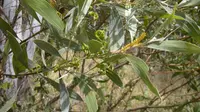
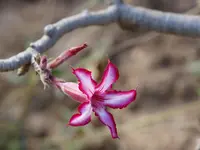
Rain tree Care (Samanea saman)

Also known as: Monkey pod tree, Monkeypod

About Rain tree

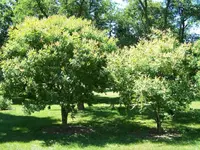
Rain tree (Samanea saman) is a fast-growing tropical shade tree, known for its wide, umbrella-shaped crown and fine, feathery foliage. It is typically grown outdoors, reaching large sizes that make it suitable for spacious gardens, parks, and streetscapes rather than small yards.

This species is native to Central and South America but is now common in many warm, frost-free regions worldwide. It produces pink-and-white powderpuff flowers and flat seed pods that add seasonal interest.

Rain tree prefers warm temperatures, full sun, and well-drained soil with moderate moisture. Its toughness, drought tolerance once established, and relatively low maintenance make it manageable for experienced gardeners who understand how to care for Rain tree in suitable climates.

Main Plant Requirements

Care Difficulty

Moderate Care

Light Preference

Full Sun

Water Requirements

Moderate Water

Temperature Preference

Tropical / Frost Sensitive

Hardiness Zone

10–12

Soil Texture

Sandy, Loamy, Organic-rich

Soil pH

Slightly acidic (6.5–7.0), Neutral (7.0)

Soil Drainage

Moist but well-drained

Fertilization

Minimal (feed rarely)

Get Personalized Care Plan

Scan your plant to receive care tips personalized for your specific plant

Available on iOS and Android

How to Care for the Rain tree

This fast-growing tropical tree needs strong light to develop a full, healthy canopy.

  • Provide 6–8 hours of direct sun daily; young trees benefit from full morning sun with light afternoon shade in very hot regions.
  • Rain tree tolerates bright partial shade but becomes more open and sparse, with slower growth and fewer flowers in low light.
  • Avoid sudden exposure changes; gradually increase sun after cloudy periods to reduce leaf scorch, especially during hot, dry seasons.

This species prefers consistent moisture but does poorly in standing water.

  • In well-drained ground, water deeply when the top 5–8 cm of soil feels dry, letting water soak to the full root zone rather than giving light surface sprinklings.
  • During hot, dry seasons increase frequency, while in cooler or rainy periods reduce watering so soil stays slightly moist, not saturated around Samanea saman.
  • Watch for yellowing, dropping leaves and sour soil smell as signs of overwatering, and crisp, curling leaves or early leaf drop as underwatering clues.

This tropical tree performs best in consistently warm, frost-free conditions.

  • Optimal growth occurs around 70–90°F (21–32°C), with vigorous canopy expansion and flowering in warm, humid climates.
  • Samanea saman tolerates brief dips to about 40°F (4°C) but growth slows sharply; repeated exposure near this level stresses young trees.
  • It is highly sensitive to frost and extended cold below 40°F (4°C), while mature trees handle dry heat up to about 100°F (38°C) if soil moisture is maintained.

This species tolerates a broad humidity range but grows best with moderately moist air.

  • Aim for 40–60% humidity, which is usually adequate for Rain tree without special equipment.
  • Brown, crisp leaflet edges or slow leaf expansion can indicate air that is too dry for developing foliage.
  • Increase humidity locally by grouping plants, placing containers near but not above a shallow pebble tray, or positioning them away from heating vents and strong drafts.

This species prefers deep, loose, well‑drained soil that still holds some moisture.

  • Use a loamy mix with noticeable structure, such as 2 parts composted organic matter, 1 part coarse sand, and 1 part fine bark or perlite for Samanea saman.
  • Ensure rapid drainage so water does not stand around the roots, which are sensitive to waterlogging and prolonged saturation.
  • Keep soil pH roughly neutral to slightly acidic, around 6.0–7.0, since strongly alkaline conditions can reduce nutrient availability.
  • Improve aeration by avoiding compaction, incorporating coarse particles, and never planting in heavy, unamended clay that stays sticky after rain.

This tree can be grown in containers when kept pruned and root‑restricted.

  • Choose a wide, heavy container to counterbalance the spreading canopy and reduce the risk of the pot tipping in wind.
  • Select a pot material with some weight, such as thick ceramic, which improves stability and slightly evens out moisture fluctuations.
  • Use a deep container that allows a strong taproot to develop early, then naturally taper moisture deeper in the profile to discourage surface‑heavy root growth.

Samanea saman benefits from light, balanced feeding but can grow in modest soils once established.

  • Use a balanced liquid or granular fertilizer (around 10-10-10 NPK) or well-rotted compost in spring and early summer.
  • Feed outdoor trees 1–2 times per growing season; container plants may take monthly diluted feeds.
  • Apply fertilizers at half the label strength to avoid excess salt buildup in the root zone.
  • Stop feeding in late summer to early fall so the Rain tree can slow growth before cooler conditions.

Samanea saman responds well to thoughtful structural pruning, especially when young.

  • Carry out main pruning in late winter to early spring before active growth begins.
  • Remove dead, diseased, or storm-damaged wood first, then thin crowded or crossing branches.
  • Shorten overly vigorous shoots to guide canopy spread and maintain strong, balanced scaffold branches.
  • Use sharp, clean bypass pruners or loppers and make smooth cuts just outside the branch collar.

Young Samanea saman trees are usually transplanted from nursery containers to a permanent outdoor site.

  • Plan major transplanting for late winter to early spring when growth is slower and temperatures are mild.
  • Look for roots circling the pot, slowed growth, or frequent wilting as signs a container plant needs a larger space.
  • Move up only 1–2 pot sizes or into a well-prepared ground hole with loose, well-drained soil.
  • Water deeply before and after moving, keep the root ball intact, and shade the canopy temporarily to reduce stress.

Samanea saman is most often propagated from seeds, which need some preparation for good germination.

  • Collect mature pods, remove seeds, and scarify the hard coat by nicking or briefly soaking in hot (not boiling) water.
  • Sow seeds in warm conditions around 75–85°F in a free-draining mix, just barely covered.
  • Keep the medium evenly moist and provide bright light to support strong seedling development.
  • Transplant seedlings once they have several true leaves, handling roots gently to limit transplant shock.

Samanea saman is a tropical to subtropical tree that is not frost hardy and needs protection in cooler climates.

  • In regions with frost, grow in containers so plants can be moved indoors or into a greenhouse for winter.
  • Maintain indoor temperatures above 55–60°F and provide as much light as possible to reduce leaf drop.
  • For in-ground trees in marginal climates, mulch the root zone 5–8 cm deep to moderate soil temperature.

Care Tips

Wind‑firm training

In the first 3–5 years, selectively tip‑prune overly long, horizontal branches and encourage a balanced scaffold so the tree can better resist wind and prevent limb breakage as the crown becomes broad and heavy.

Root spread management

Plant far from foundations, paved areas, and underground pipes, and lightly root‑prune outward-growing surface roots on young trees only, to direct major roots deeper and reduce future lifting of hardscape.

Branch weight reduction

On older specimens, periodically thin the inner canopy and lightly reduce very heavy lateral limbs instead of removing them completely, which lowers leverage on branch unions and reduces the risk of sudden limb drop.

Pasture and shade planning

If used as a shade tree in grazing areas, allow generous spacing from fences, structures, and other trees so falling pods and branches do not cause damage and livestock can move freely under the canopy.

Pod and litter management

In urban or garden settings, schedule regular raking of pods and leaf litter and consider a groundcover or mulch zone beneath the canopy to make caring for Rain tree cleaner and to reduce slipping hazards on wet pods.

Common Pests and Diseases

Leaf webworm

This pest is the larval stage of small moths that feed on foliage and create silken webs around leaflets and branch tips. Symptoms include skeletonized leaves, webbing, and clusters of frass (caterpillar droppings).

Solution

Prune and destroy webbed, infested branch tips as soon as damage appears, then monitor for new webs. For heavier infestations, use a biological control such as Bacillus thuringiensis (Bt) applied to young larvae on leaves, and encourage birds and predatory insects by maintaining diverse vegetation around the tree.

Scale insects

These insects attach to twigs and leaves as small bumps, sucking sap and excreting honeydew that can lead to black sooty mold. Symptoms include sticky leaves, stunted new growth, and decline of heavily infested branches.

Solution

Trim and discard badly infested twigs and rinse accessible foliage with a strong but controlled stream of water to remove some scales and honeydew. For persistent problems, apply horticultural oil during the growing season to thoroughly coat infested areas, repeating as needed according to label directions while avoiding application in extreme heat.

Powdery mildew

This disease produces white to gray powdery patches on leaf surfaces, often starting on young foliage in shaded or crowded canopies. Symptoms include distorted leaflets, premature yellowing, and early leaf drop in severe cases.

Solution

Improve light and airflow through the canopy by selective pruning and avoiding overcrowding from nearby vegetation, and avoid overhead watering that keeps foliage damp in the evening. When disease pressure is high, use a labeled fungicide or potassium bicarbonate product on affected foliage, starting early in the season and repeating as directed until new growth appears clean.

Leaf spot complex

This disease group includes several fungi that cause brown, tan, or purplish spots on leaflets, sometimes with yellow halos and minor defoliation during wet, humid weather. Symptoms include scattered spotting that may coalesce into larger dead patches on foliage.

Solution

Collect and remove fallen leaves from under the canopy to reduce sources of fungal spores and limit splash dispersal in rain or irrigation. In areas with recurring severe outbreaks, apply a preventive foliar fungicide at the start of wet seasons and ensure the tree is not stressed by drought or poor nutrition, as healthy foliage is more tolerant of infection.

Nutrient-related chlorosis

Symptoms include yellowing leaves with greener veins, reduced canopy density, and slow growth, often linked to micronutrient imbalance or high soil pH that limits nutrient availability. This physiological problem makes the tree more vulnerable to pests and diseases over time.

Solution

Test soil pH and nutrient levels, then correct underlying issues by adjusting pH if possible and applying a balanced slow-release fertilizer plus chelated micronutrients such as iron and manganese where deficient. Maintain an organic mulch layer over the root zone, keep mechanical damage away from roots and trunk, and water deeply but infrequently in dry periods to support balanced uptake, which supports overall Samanea saman plant care.

Interesting Facts

Nighttime leaf folding

Its compound leaves fold together and droop at night or during heavy rain, a movement called nyctinasty that reduces water loss and protects leaflets from damage.

Nitrogen-fixing partner

The roots host symbiotic bacteria in nodules that convert atmospheric nitrogen into usable forms in the soil, improving fertility and supporting surrounding plants in pasture and agroforestry systems.

Broad, umbrella canopy

Mature trees form an extremely wide, low, umbrella-shaped crown that can shade a large area, which is why it is widely planted along roads, in schoolyards, and in open parks in tropical regions.

Botan icon

Did you know?

This species produces abundant nectar in extrafloral nectaries on its flower stalks, attracting ants that in turn help defend the tree from herbivorous insects, forming a well-studied example of plant–insect mutualism.

FAQs about Rain tree

This species is generally fast-growing in warm climates, often adding 60–120 cm in height per year when young. Growth slows as it matures. Adequate water, space, and nutrients support vigorous development, especially when first establishing.

Grow Healthy Plants with Botan Care

Keep your plants happy and healthy with plant identification, disease detection, and easy care guidance.

Botan plant care app — identify plants on mobile

Explore More Plants