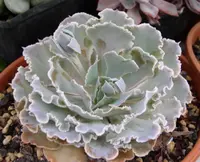
impala lily Care (Adenium multiflorum)

Also known as: Sabie star, kudu lily, Desert-Rose, Elephant-Foot, Sabi-Star, Save-Star, Star-Of-The-Sabi
impala lily

About impala lily

Impala lily, Adenium multiflorum, is a succulent shrub that forms a swollen water-storing base called a caudex and a short, branching crown. It produces showy, funnel-shaped flowers in white, pink, or red tones, often before the leaves fully emerge.

This species is native to dry regions of southern Africa, where it grows in rocky, well-drained sites and copes with seasonal drought. It suits growers who can provide strong light, sharp drainage, and careful watering, as overwatering is the main challenge in how to care for impala lily.

Main Plant Requirements

Care Difficulty

Moderate Care

Light Preference

Full Sun

Water Requirements

Low Water

Temperature Preference

Tropical / Frost Sensitive

Hardiness Zone

10–12

Soil Texture

Sandy, Loamy, Rocky

Soil pH

Slightly acidic (6.5–7.0), Neutral (7.0)

Soil Drainage

Well-drained

Fertilization

Light (every 4–6 weeks)

Get Personalized Care Plan

Scan your plant to receive care tips personalized for your specific plant

Available on iOS and Android

How to Care for the impala lily

This sun-loving succulent needs strong light to flower and maintain a compact form.

  • Provide 6–8 hours of direct sun daily; full morning sun with some light afternoon shade suits impala lily in hot climates.
  • Outdoors, choose an exposed, unshaded spot; indoors, place at a south- or west-facing window with minimal obstructions.
  • If stems stretch, leaves darken dull green, or flowering decreases, increase light; in intense summer sun, use light shade cloth to prevent leaf scorch.

This species stores water in its swollen stem, so careful, infrequent watering is essential.

  • Water only when the top 3–5 cm of soil are completely dry; in warm growing seasons, this may mean deep watering every 5–10 days in very free-draining soil.
  • Reduce watering sharply in cool seasons or during leaf drop, giving just enough to prevent full shriveling of the caudex on Adenium multiflorum.
  • Use fast-draining, gritty soil and avoid water standing in saucers; yellowing, mushy roots or stem collapse indicate overwatering, while dull, wrinkled stems signal underwatering.

This desert-adapted shrub prefers warm conditions and reacts poorly to cold or frost.

  • Ideal growing temperatures are 70–90°F (21–32°C), which support active growth and flowering during the warmer months.
  • Protect the plant from cold; growth slows below 60°F (16°C), and tissue damage can occur below 40°F (4°C), especially if soil is wet.
  • Never expose it to frost; move plants under cover when nights approach 40–45°F (4–7°C), and in heat waves above 100°F (38°C) provide airflow and brief light shade.

This species prefers dry, warm air and usually does not need extra humidity indoors.

  • Aim for 30–50% humidity, similar to most heated homes, for stable growth of impala lily.
  • Dry air is tolerated well; problems appear more from excess moisture than from low humidity.
  • If air is very humid, increase airflow with a fan and avoid crowding plants to prevent fungal issues.

This succulent shrub needs very fast-draining, airy soil to prevent root rot.

  • Use a gritty, sandy mix such as 50–70% mineral components (coarse sand, pumice, perlite) with 30–50% lean cactus potting mix.
  • Target a slightly acidic to neutral pH of about 6.0–7.0 for Adenium multiflorum.
  • Ensure large particles dominate the mix so water runs through in seconds and roots receive strong aeration.
  • Avoid dense, peat-heavy or clayey soils that stay wet, as these quickly cause root and caudex rot.

This species is very suitable for container growing due to its caudex and compact root system.

  • Choose a wide, shallow pot to support the swollen caudex while limiting deep, water-holding soil columns.
  • Use unglazed terracotta if extra evaporation is needed in humid or cooler climates to reduce moisture retention.
  • Place the pot where it cannot tip easily, as the heavy caudex and branching canopy can make the plant top-heavy.

Adenium multiflorum benefits from light, controlled feeding to support flowering without stressing its caudex.

  • Use a balanced liquid fertilizer (around 10-10-10) at 1/4–1/2 strength, formulated for succulents if possible.
  • Feed every 4–6 weeks during the warm, active growing season when the plant is producing leaves and buds.
  • Stop fertilizing in winter dormancy; dry, cool rest improves health and flowering the following season.
  • For caring for impala lily, avoid rich compost and heavy slow-release pellets that can cause soft, weak growth.

Thoughtful pruning keeps Adenium multiflorum compact, branching well, and flowering more evenly.

  • Prune in late winter to early spring, just before active growth, so wounds heal quickly.
  • Remove dead, diseased, or damaged stems first, then thin very crowded branches to improve light and air flow.
  • Shorten overly long, leggy shoots to encourage low, branched growth and more flowering tips.
  • Use clean, sharp pruning shears; make smooth cuts above a node and avoid cutting into the thick caudex.

Container-grown plants benefit from occasional repotting to refresh soil and accommodate the thickening caudex.

  • Repot every 2–3 years or when roots circle the pot, growth slows, or the root ball lifts from the container.
  • Plan repotting for late spring to early summer when growth is active and recovery is fastest.
  • Use a shallow, slightly wider pot and very fast-draining mix; keep roots intact and avoid breaking the caudex.
  • After repotting, water lightly at first, then resume normal watering once the plant shows new growth.

Adenium multiflorum is commonly propagated from seeds and semi-hardwood cuttings under warm, bright conditions.

  • Sow fresh seeds in late spring in a sterile, fast-draining mix kept at 75–85°F with bright, indirect light.
  • Maintain lightly moist, not wet, substrate until germination, then increase light to prevent weak, stretched seedlings.
  • For cuttings, take firm, healthy tips, allow the latex sap to dry and the base to callus for several days.
  • Root cuttings in a gritty, barely moist medium with bottom warmth and high light, avoiding excess humidity to prevent rot.

This species is frost sensitive and needs dry, cool, but not freezing conditions in winter.

  • In regions below 40°F, grow Adenium multiflorum in containers so plants can move indoors for winter.
  • Provide a bright, cool room around 50–60°F and keep soil mostly dry, watering only lightly once the caudex begins to soften.
  • Outdoors in mild climates, use a very free-draining site and a light, dry mulch to keep roots from staying cold and wet.

Care Tips

Caudex Shaping

Rotate the pot by 90° every 2–3 weeks during active growth to encourage an evenly swollen caudex and prevent the plant from leaning toward the light source.

Flowering Rest Period

Allow a cool, dry rest with almost no water for 6–8 weeks in late fall or winter to promote stronger bud set and heavier flowering in the next warm season.

Root Collar Protection

When repotting, keep the top of the caudex slightly above the soil line and use a gritty top dressing so the stem base stays dry and less prone to rot.

Targeted Pest Checks

Inspect leaf bases, branch forks, and caudex crevices every 2–3 weeks for mealybugs or spider mites and treat early with a cotton swab dipped in isopropyl alcohol before infestations spread.

Branching Encouragement

After the plant has finished a flush of growth, pinch or prune just above a node on leggy branches to stimulate multiple new shoots and create a compact, multi-branched form that simplifies caring for impala lily.

Common Pests and Diseases

Oleander aphids

These insects are bright yellow aphids that cluster on tender stems and flower buds, sucking sap and causing distortion, sticky honeydew, and sooty mold growth.

Solution

Wipe or spray colonies off with a strong stream of water, then treat remaining aphids with insecticidal soap or a light horticultural oil, repeating weekly until populations drop; limit high-nitrogen fertilizer, which encourages soft, aphid-prone growth.

Spider mites

This pest appears as tiny red or brown specks on leaves, causing fine webbing, stippling, and a dull, dusty look, especially in hot, dry conditions.

Solution

Rinse foliage thoroughly, including leaf undersides, to remove mites, then maintain slightly higher humidity around the plant and use insecticidal soap or neem oil on both sides of the leaves every 5–7 days until new growth appears clean.

Mealybugs

These insects form white, cottony masses in leaf axils, on roots, and around the caudex, weakening the plant and sometimes causing leaf drop.

Solution

Dab visible insects with cotton swabs dipped in 70% isopropyl alcohol, inspect the caudex and roots if infestation is heavy, and follow up with 2–3 rounds of insecticidal soap or systemic insect granules labeled for succulents while isolating the plant from others.

Stem and caudex rot

This disease causes soft, dark, water-soaked areas on stems or the swollen caudex, often following overwatering, cold, or mechanical damage, and can progress rapidly.

Solution

Cut away all affected tissue with sterilized tools until only firm, healthy tissue remains, allow wounds to dry and callus in a warm, airy spot, then replant in a very fast-draining mix and adjust watering to thorough but infrequent, especially in cool seasons.

Leaf spot disease

Symptoms include small brown or black spots on leaves that may enlarge, sometimes with yellow halos, often triggered by prolonged surface moisture and poor air movement.

Solution

Remove and discard affected leaves, improve airflow and avoid wetting foliage, then apply a copper-based or other broad-spectrum fungicide labeled for ornamentals if spotting continues, focusing on keeping leaves dry and spacing the plant away from overcrowded neighbors to support healthier Adenium multiflorum care.

Interesting Facts

Winter flowering strategy

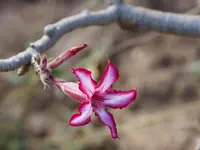
This species often flowers on almost leafless stems at the end of the dry winter, which makes its pale to deep pink, red-edged blooms highly visible to pollinators against a sparse savanna background.

Natural caudex adaptation

It develops a swollen, woody caudex that stores water and nutrients, an adaptation that allows the plant to survive long dry periods in its native southeastern African habitats.

Toxic but protected sap

All parts, especially the milky latex sap, contain cardiac glycosides that are toxic to humans and livestock, which helps protect the plant from herbivory in the wild.

Botan icon

Did you know?

In parts of southern Africa, traditional hunters historically used the latex of this species as a component of arrow poisons, taking advantage of its potent cardiac-active compounds, although this practice is now restricted or regulated in many areas.

FAQs about impala lily

Lack of flowering usually comes from insufficient light, cool temperatures during the growing season, or heavy, high‑nitrogen feeding. A pronounced dry rest in cooler months and bright, warm conditions afterward strongly support blooming and overall Adenium multiflorum care.

Grow Healthy Plants with Botan Care

Keep your plants happy and healthy with plant identification, disease detection, and easy care guidance.

Botan plant care app — identify plants on mobile

Explore More Plants