Provide wind shelter
Site the plant where taller shrubs or a permeable windbreak protect it from strong, drying winds, which helps preserve leaf integrity and reduces stress on young wood.

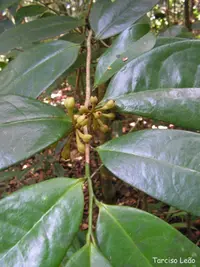
Anaxagorea dolichocarpa is a lesser-known small tree or shrub in the custard apple family, typically found in lowland tropical forests. It has simple, elongated leaves and small, pale flowers that develop into elongated, segmented fruits. Native to parts of tropical South America, it usually grows as an understory plant, adapted to warm, humid, shaded environments. It is rarely cultivated, and its specific horticultural requirements are not well documented, which can make it challenging for casual growers. In general, to care for Anaxagorea dolichocarpa, provide consistently moist, well-drained soil and protection from strong, direct sun.

Care Difficulty
Moderate Care

Light Preference
Partial Shade

Water Requirements
Moderate Water

Temperature Preference
Tropical / Frost Sensitive

Hardiness Zone
Unknown

Soil Texture
Loamy, Sandy, Organic-rich

Soil pH
Acidic (5.5–6.5)

Soil Drainage
Moist but well-drained

Fertilization
Minimal (feed rarely)
Scan your plant to receive care tips personalized for your specific plant
Available on iOS and Android
This understory tropical tree prefers bright, filtered light that mimics light beneath a forest canopy.
This species prefers consistently moist but not saturated soil, similar to a well-drained rainforest floor.
This tropical tree thrives in warm, stable conditions and is sensitive to cold and frost.
This species prefers consistently humid air typical of lowland tropical forests.
Soil for Anaxagorea dolichocarpa should be loose, moisture-retentive, and well aerated.
This shrub can adapt to container growing when root space and drainage are carefully managed.
This tropical tree grows in low-nutrient forest soils and usually needs only light feeding in cultivation.
Anaxagorea dolichocarpa needs only light structural pruning to remove damaged material and maintain a stable form.
This species is usually grown in the ground, with transplanting most successful while plants are still young and small.
Propagation of Anaxagorea dolichocarpa is usually done by seed and is considered slow and somewhat specialized.
This tropical tree is not frost hardy and needs careful winter management in cooler climates.

Plant Health Check
Not sure what's wrong with your plant? Check your plant's health inside the app.
This species belongs to one of the earliest diverging lineages of flowering plants, so its floral structure is often studied to understand how early angiosperm flowers were organized and how they evolved.
The species name dolichocarpa refers to its notably elongated carpels (the female reproductive parts of the flower), which give the developing fruit a characteristic narrow, stretched appearance compared with related species.
This plant is native to lowland Neotropical forests, where it typically grows in warm, humid habitats under a relatively closed canopy, making it of interest in studies of early angiosperms in tropical ecosystems.
Growth is generally slow to moderate. In warm, humid climates with consistently moist, well‑drained soil, this species elongates steadily but not rapidly, forming a small tree over many years rather than quickly filling a space.
Keep your plants happy and healthy with plant identification, disease detection, and easy care guidance.