Manage sharp spines
Install a rigid barrier ring (heavy plastic or hardware cloth) around the base when small, so you can weed and work the soil without contacting the very sharp leaf and trunk spines.

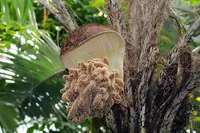
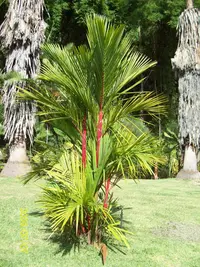
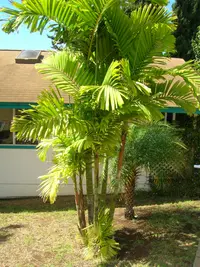
Chocho palm, Astrocaryum mexicanum, is a slow-growing understory palm native to humid forests of Mexico and Central America. It naturally forms dense clumps with slender, upright stems. The plant has arching, feathery fronds and sharp spines along the trunk and leaf stalks, which give it a distinctive but somewhat challenging character for handling. In cultivation it is usually grown for its tropical, architectural foliage rather than for its fruits. It prefers warm, shaded to semi-shaded locations with consistent moisture and well-drained, organic-rich soil. Understanding how to care for chocho palm starts with respecting its spines and slower growth rate.

Care Difficulty
Hard Care

Light Preference
Partial Shade

Water Requirements
Regular Water

Temperature Preference
Tropical / Frost Sensitive

Hardiness Zone
10–11

Soil Texture
Loamy, Sandy, Organic-rich

Soil pH
Acidic (5.5–6.5), Slightly acidic (6.5–7.0)

Soil Drainage
Moist but well-drained

Fertilization
Minimal (feed rarely)
Scan your plant to receive care tips personalized for your specific plant
Available on iOS and Android
This understory palm prefers bright, filtered light that mimics dappled forest shade.
This species prefers consistently moist but not waterlogged soil around its deep root system.
This palm thrives in warm, stable conditions typical of lowland tropical forests.
This palm prefers consistently humid air to match its native understory habitat.
Astrocaryum mexicanum needs deep, well-aerated, moisture-retentive yet fast-draining soil.
This species can be grown in large containers when given ample root depth and stable support.
Astrocaryum mexicanum benefits from light, consistent nutrition but is sensitive to overfeeding.
Astrocaryum mexicanum requires minimal pruning focused on safety and hygiene rather than shaping.
This palm is slow growing and dislikes disturbance, so transplant only when clearly needed.
Propagation of Astrocaryum mexicanum is done almost exclusively from seed and is slow and specialized.
This tropical palm is frost sensitive and needs protection in regions with cool or cold winters.

Plant Health Check
Not sure what's wrong with your plant? Check your plant's health inside the app.
In its native Neotropical forests, this palm often shelters small mammals such as the Mexican hairy dwarf porcupine, which hide from predators among its dense, sharp spines.
This species is adapted to deep shade in lowland tropical forests, growing naturally as an understory palm beneath a closed tree canopy rather than in open sun.
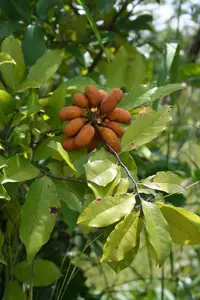
The fruits contain very hard, stony seeds with an oily endosperm, and local communities have traditionally used these seeds as a minor food resource or for small artisanal products.

Archaeobotanical evidence from pre-Columbian sites in Mesoamerica indicates that this palm was used by ancient human populations, showing a long history of interaction between people and this species in its native range.
Yellowing fronds often indicate natural aging on the lowest leaves, but widespread yellowing usually points to nutrient deficiency, chronic overwatering, or compacted soil. Check drainage, adjust watering, and consider a balanced, slow-release palm fertilizer to restore color.
Keep your plants happy and healthy with plant identification, disease detection, and easy care guidance.