Sturdy trellis choice
Use a rigid 1.8–2.4 m trellis, netting, or wire fence with strong verticals, and install it before sowing so the vines can climb cleanly without tangling neighboring plants or collapsing supports.

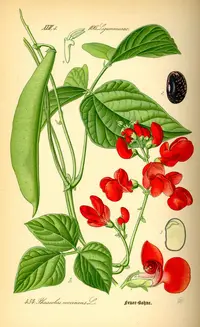
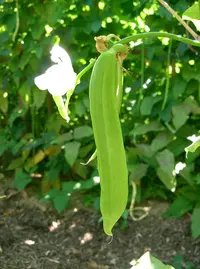
Scarlet runner (Phaseolus coccineus) is a vigorous climbing bean grown both for its edible pods and its striking ornamental display. It is a herbaceous perennial in mild climates but usually grown as an annual.
Plants produce long twining vines with showy red or bicolored flowers, followed by large, mottled seeds. They naturally occur in the highlands of Central America and Mexico but are widely cultivated in temperate gardens.
This species is fast-growing and relatively easy to manage if it has strong support, regular moisture, and reasonably fertile, well-drained soil. Gardeners who understand how to care for scarlet runner often use it to quickly cover trellises, fences, and arches.
Scarlet runner beans prefer full sun in cooler climates and light afternoon shade where summers are hot, along with consistent soil moisture for best flowering and pod set.

Care Difficulty
Moderate Care

Light Preference
Full Sun

Water Requirements
Regular Water

Temperature Preference
Tropical / Frost Sensitive

Hardiness Zone
7–11

Soil Texture
Sandy, Loamy, Organic-rich

Soil pH
Acidic (5.5–6.5), Slightly acidic (6.5–7.0)

Soil Drainage
Moist but well-drained

Fertilization
Light (every 4–6 weeks)
Scan your plant to receive care tips personalized for your specific plant
Available on iOS and Android
This climbing bean prefers strong light to fuel fast growth and flowering.
This species needs consistent soil moisture but reacts poorly to waterlogged conditions.
This warm-season climber grows best in mild, frost-free conditions.
This species tolerates a wide humidity range and rarely needs special humidity management outdoors.
This species prefers fertile, loose, well-drained soil that holds moisture but does not stay waterlogged.
This species can grow successfully in containers when given ample root depth and strong vertical support.
Phaseolus coccineus benefits from modest feeding to support vigorous vines and flowering without excessive foliage.
Phaseolus coccineus responds well to light, functional pruning that keeps vines productive and manageable.
Scarlet runner is usually direct-sown or transplanted outdoors rather than long-term potted, so focus on gentle transplanting of young plants.
This species is most commonly propagated from seed, which gives fast, reliable new plants each season.
Phaseolus coccineus is usually grown as a warm-season annual, so winter care focuses on frost management and optional root survival.

Plant Health Check
Not sure what's wrong with your plant? Check your plant's health inside the app.
Scarlet runner bean is a true perennial in frost-free conditions, forming a tuberous root system that can resprout for multiple years, unlike most common beans that are strictly annual.
Its bright red, nectar-rich flowers are adapted for bird pollination and are especially attractive to hummingbirds, which act as key pollinators in many regions where the plant is grown ornamentally.
This species is unusual among beans because the young pods, fresh green seeds, and dry mature seeds are all edible when properly cooked, and even the flowers are used as edible garnishes in some cuisines.

Native to the cool, mountainous regions of Central America, scarlet runner bean has been cultivated since pre-Columbian times and was one of the first American legumes to become a popular ornamental and food crop in European gardens after its introduction in the 17th century.
This species is a twining climber that wraps its stems around supports rather than sprawling as a ground cover. Given a trellis, fence, or strings, it can quickly cover vertical structures and create a dense seasonal screen.
Keep your plants happy and healthy with plant identification, disease detection, and easy care guidance.