Strong vertical support
Install a sturdy trellis or wires at sowing time and train vines early, as mature stems become thick and heavy and can damage weak supports or nearby plants.

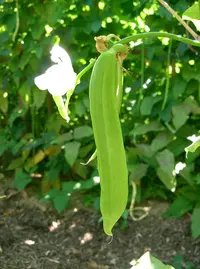
Sword jackbean, Canavalia gladiata, is a vigorous tropical climbing legume grown mainly for its large pods and beans. It is usually cultivated as an annual, though it is a perennial in frost-free climates.
The plant has thick, twining stems, trifoliate leaves, and showy pink to purplish flowers that develop into long, heavy pods. It naturally occurs in tropical Asia and Africa but is now grown in many warm regions.
Its strong growth habit, tolerance of heat, and ability to fix nitrogen make it relatively undemanding in suitable climates. Gardeners who learn how to care for sword jackbean usually find it manageable in full sun, moderate moisture, and well-drained soil.

Care Difficulty
Moderate Care

Light Preference
Full Sun

Water Requirements
Regular Water

Temperature Preference
Tropical / Frost Sensitive

Hardiness Zone
10–12

Soil Texture
Sandy, Loamy, Organic-rich

Soil pH
Acidic (5.5–6.5), Slightly acidic (6.5–7.0)

Soil Drainage
Moist but well-drained

Fertilization
Light (every 4–6 weeks)
Scan your plant to receive care tips personalized for your specific plant
Available on iOS and Android
Canavalia gladiata needs strong sun to produce vigorous vines and pods.
This plant prefers evenly moist, well-drained soil rather than constant saturation.
This warm-season legume thrives only in consistently mild to hot conditions.
Humidity is rarely critical for Canavalia gladiata in typical outdoor growing conditions.
This species prefers loose, well-drained soil that still holds moderate moisture for steady growth.
This species can be grown in containers if the pot and support are matched to its vigorous vining habit.
Canavalia gladiata responds well to moderate feeding during its warm-season growth.
Pruning Canavalia gladiata is mainly used to manage vigor and keep vines within bounds.
This vigorous vine is usually grown as an outdoor annual, so transplanting timing matters more than pot size changes.
Canavalia gladiata is most commonly grown from seed, which offers reliable establishment.
This tropical vine is frost-sensitive and usually grown as a warm-season annual in temperate regions.

Plant Health Check
Not sure what's wrong with your plant? Check your plant's health inside the app.
Sword jackbean produces very long, flattened pods that can exceed 30–40 cm, and in some regions the immature pods and seeds are traditionally cooked and eaten after thorough boiling to remove natural toxins.
Like many legumes, this species forms root nodules with Rhizobium bacteria that convert atmospheric nitrogen into plant-available forms, which can improve soil fertility when the crop residues are returned to the ground.
The plant shows notable tolerance to saline and marginal soils and is cultivated in some tropical coastal areas where more sensitive food legumes fail, contributing to local food and fodder systems.

In parts of Asia and Africa, sword jackbean has been grown as a living support for climbing crops and as a green manure, because its vigorous vines provide dense shade that suppresses weeds while its biomass can be incorporated into the soil to add organic matter and nitrogen.
This species is a vigorous warm-season vine, often reaching 2–4 m in a single growing season under good conditions. Growth accelerates in consistently warm weather, fertile soil, and with reliable moisture, then slows once temperatures cool.
Keep your plants happy and healthy with plant identification, disease detection, and easy care guidance.