Bluebell creeper Care (Billardiera heterophylla)

Also known as: Western Australian Bluebell Creeper
Bluebell creeper

About Bluebell creeper

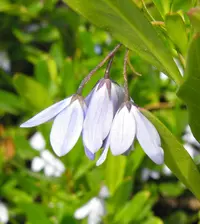
Bluebell creeper (Billardiera heterophylla) is a twining evergreen shrub or vine valued for its small bell-shaped flowers in soft blue to purple tones. It often scrambles through other plants or along supports, creating a light, airy effect rather than a dense screen.

This species is native to southwestern Australia but is grown in mild climates in many regions for its ornamental flowering display and decorative berries. In some areas it can self-seed and spread, so gardeners should monitor it.

It is generally undemanding, which makes it fairly easy to grow once established. To care for Bluebell creeper, provide a free-draining soil, moderate moisture, and a spot with bright light and some protection from harsh conditions.

Main Plant Requirements

Care Difficulty

Moderate Care

Light Preference

Partial Sun

Water Requirements

Moderate Water

Temperature Preference

Warm Climate

Hardiness Zone

9–11

Soil Texture

Sandy, Loamy, Organic-rich

Soil pH

Acidic (5.5–6.5), Slightly acidic (6.5–7.0)

Soil Drainage

Well-drained

Fertilization

Minimal (feed rarely)

Get Personalized Care Plan

Scan your plant to receive care tips personalized for your specific plant

Available on iOS and Android

How to Care for the Bluebell creeper

This twining shrub prefers bright, gentle light that avoids harsh extremes.

  • Provide 4–6 hours of morning sun with light afternoon shade; east-facing exposure suits Bluebell creeper well in most climates.
  • Tolerates partial shade, but flowering decreases if it receives less than about 3–4 hours of direct or strong filtered light each day.
  • In hot summers, protect from intense sun between 11 a.m. and 3 p.m. to prevent leaf scorch, especially against walls or reflective surfaces.

This plant favors steady moisture in well-drained soil, without staying soggy.

  • Water when the top 3–5 cm of soil feels dry, aiming for soil that stays slightly moist but never waterlogged.
  • Increase watering during active growth and flowering, then reduce slightly in cooler months while still preventing the root zone from fully drying out.
  • Watch for yellowing, soft leaves or a sour soil smell as signs of overwatering, and for limp, dull foliage and dry, pulling-away soil as signs of underwatering in Billardiera heterophylla.

This species prefers mild, frost-free conditions with protection from temperature extremes.

  • Aim for 60–77°F (16–25°C) for reliable growth and flowering during the main growing season.
  • Tolerates brief drops to about 28–30°F (-2 to -1°C), but repeated frosts can damage stems and reduce next season’s blooms.
  • In hot climates, growth may slow above 90°F (32°C); provide mulch, afternoon shade, and consistent moisture during heat waves to limit stress.

Humidity needs are moderate, so focus on avoiding very dry indoor air for this species.

  • Aim for 40–60% relative humidity to keep foliage and flower buds from drying at the tips.
  • Dry heated rooms can cause curled, crispy leaf edges and bud drop as signs of humidity stress.
  • Increase humidity by grouping plants together or placing the pot on a pebble tray with water, without submerging the base.

Billardiera heterophylla prefers loose, well-aerated soil that drains freely yet retains some moisture.

  • Use a mix of 50–60% loam or peat-free potting mix with 20–30% coarse sand and 10–20% fine bark or perlite for structure and air spaces.
  • Ensure fast drainage so water does not pool around the roots, which are prone to rot in heavy, compacted ground.
  • Aim for slightly acidic to neutral pH around 6.0–7.0, avoiding strongly alkaline soil that can reduce nutrient availability.
  • Improve clay or dense soil by incorporating coarse sand and fine gravel to increase porosity and prevent waterlogging.

This species adapts well to container growing when given stable support and controlled moisture.

  • Choose a deep, relatively narrow pot so the root system anchors the vine without making the container excessively heavy.
  • Use a heavier material such as ceramic or stone when training stems upward, which helps prevent the pot from tipping in wind.
  • Secure a trellis or obelisk firmly within the container so climbing stems do not lever the root ball loose as they gain weight.

Billardiera heterophylla benefits from light, consistent feeding during the active growing season in containers or nutrient-poor soils.

  • Use a balanced liquid fertilizer (around 10-10-10) at 1/2 strength every 4–6 weeks in spring and summer.
  • Alternatively, apply a slow-release granular fertilizer in early spring, following label rates for small shrubs or vines.
  • Incorporate a thin layer of mature compost on the soil surface once per year to support soil structure and microbes.
  • Stop feeding in fall and winter to avoid forcing soft growth that is more vulnerable to cold and pests.

Pruning helps keep Billardiera heterophylla compact, flowering well, and within bounds.

  • Carry out main pruning in late winter or very early spring before strong new growth starts.
  • Remove dead, damaged, or crossing stems first, then thin congested sections to improve light and airflow.
  • Shorten excessively long shoots to maintain desired size and encourage branching for more flowering sites.
  • Use clean, sharp hand pruners, making angled cuts just above healthy buds or side branches.

This vine is often grown in the ground, but container-grown Billardiera heterophylla needs occasional repotting or transplanting.

  • Check for roots circling the pot drainage holes, dry-out quickly after watering, or slowed growth as signs it needs more space.
  • Plan repotting or transplanting for early spring or early fall when temperatures are mild and the plant is not stressed.
  • Expect to move container plants to a pot 1–2 in wider every 2–3 years, using a free-draining, slightly acidic mix.
  • Water thoroughly before and after moving, keep roots shaded, and avoid heavy pruning at the same time to limit transplant shock.

Billardiera heterophylla is most often propagated by seeds or semi-ripe stem cuttings.

  • Collect ripe berries, clean the seeds, and sow them in a moist, free-draining seed mix in spring with gentle bottom warmth (68–75°F).
  • Take semi-ripe cuttings in late summer, 7–10 cm long, remove lower leaves, and dip bases in rooting hormone.
  • Insert cuttings into a sterile, well-drained medium, then maintain high humidity and bright, indirect light until roots form.
  • Transplant rooted cuttings or seedlings carefully into small pots, keeping moisture steady and avoiding full sun for the first few weeks.

In mild climates this vine needs little winter attention, but colder areas require some basic Bluebell creeper indoor care or protection.

  • Billardiera heterophylla tolerates light frosts but may suffer damage below about 25°F, especially when young.
  • Apply a 5–8 cm mulch layer around the root zone in late fall, keeping it slightly away from the main stem.
  • In regions with hard freezes, grow in containers and overwinter plants indoors in a cool, bright, frost-free spot.
  • Avoid heavy pruning or high-nitrogen feeding late in the season so new growth can harden before winter sets in.

Care Tips

Provide climbing support

Install thin trellis wires, mesh, or a fence for the twining stems to grip, and guide new shoots by loosely tying them with soft ties so the plant forms a stable vertical screen instead of tangling on itself.

Control spread carefully

In mild climates, place root barriers or grow it in large containers and deadhead spent flowers before berries ripen to limit unwanted seeding and keep the plant from becoming invasive in the landscape.

Renovate old growth

Every 2–3 years, remove a few of the oldest, woody stems at the base in late winter to encourage fresh, flowering shoots and keep the vine from becoming congested and bare-legged.

Support fruit load

When branches carry many developing berries, add extra ties or a cross-piece to the support so stems do not snap under the weight and fruit clusters hang freely with good air flow.

Monitor for hidden pests

Check the undersides of leaves and inside dense foliage for scale insects and caterpillars, and if found, prune out the worst-affected sections and treat remaining growth with an appropriate horticultural oil to keep caring for Bluebell creeper manageable.

Common Pests and Diseases

Scale insects

This pest attaches to stems and leaf undersides, sucking sap and causing yellowing, leaf drop, and weakened growth. Symptoms include small, rounded or oval bumps that may be brown, gray, or off‑white and often produce sticky honeydew on nearby surfaces.

Solution

Prune heavily infested shoots, then wipe remaining colonies with cotton pads dipped in 70% isopropyl alcohol or insecticidal soap, repeating every 7–10 days until new growth is clean. Improve plant vigor with correct watering and light, and for outdoor plants encourage natural predators such as lady beetles by avoiding broad‑spectrum chemicals.

Aphids

These insects cluster on soft shoot tips, flower buds, and the undersides of young leaves, feeding on sap and distorting new growth. Symptoms include curled or puckered leaves, sticky honeydew, and sometimes sooty mold developing on coated surfaces.

Solution

Spray affected shoots thoroughly with a strong stream of water to dislodge colonies, then apply insecticidal soap or a light horticultural oil to all tender growth, repeating weekly until no new colonies appear. Removing heavily infested shoot tips and avoiding excess nitrogen fertilizer helps reduce reinfestation when growing Bluebell creeper.

Sooty mold

This disease is a superficial fungal growth that develops on the sugary honeydew excreted by sap‑feeding insects like aphids and scale. Symptoms include black, soot‑like coating on leaves and stems that can reduce photosynthesis and make foliage look dirty or dull.

Solution

Control the underlying insect problem first, then gently wipe or rinse affected foliage with water and a mild soap solution to remove the fungal layer. Improve light and airflow around the plant by thinning congested stems so leaves dry faster after rain or irrigation.

Leaf spot

This disease causes small tan, brown, or dark purple spots on leaves that may enlarge, merge, and sometimes lead to premature leaf drop under humid conditions. Symptoms include irregular lesions often with a darker border and, in severe cases, thinning of the plant canopy.

Solution

Remove and dispose of affected leaves and any fallen debris around the base to reduce reinfection. Water at soil level rather than overhead, improve airflow by light pruning, and if spots continue to spread in damp weather, use a labeled copper or chlorothalonil fungicide according to local guidelines.

Interesting Facts

Blue to purple shift

The tubular flowers open a pale bluish color and gradually deepen to rich violet or purple as they age, a pigment change that helps signal pollinators toward the freshest, most rewarding blooms.

Australian sand specialist

This species is native to southwestern Australia, where it naturally grows in coastal sandplains and open woodland, anchoring loose, nutrient-poor sandy soils with its fine, fibrous root system.

Bird-dispersed berries

The plant produces elongated, fleshy berries that turn yellowish to purplish when ripe and are eaten by birds, which then disperse the seeds in their droppings, aiding its spread into new areas.

Botan icon

Did you know?

Outside its native range in southwestern Australia, this species has become an environmental weed in parts of South Australia, Victoria, and New Zealand, where bird-dispersed seeds and its scrambling growth habit allow it to invade native vegetation and smother smaller plants.

FAQs about Bluebell creeper

In mild, frost-free climates this species can spread vigorously by seed and stems, especially in light, well-drained soils. In several regions it is listed as invasive, so check local guidelines and remove unwanted seedlings promptly.

Grow Healthy Plants with Botan Care

Keep your plants happy and healthy with plant identification, disease detection, and easy care guidance.

Botan plant care app — identify plants on mobile

Explore More Plants