whorled heath Care (Erica verticillata)

Also known as: Whorl Heath
whorled heath

About whorled heath

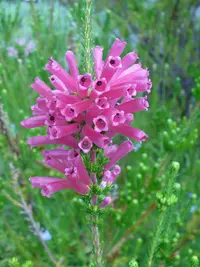
Erica verticillata is an evergreen shrub from the Cape Flats in South Africa, belonging to the heath family. It forms upright, bushy clumps with many fine, twiggy branches. The plant carries narrow needle-like leaves and showy tubular flowers, usually pink, arranged in dense whorls along the stems. In habitat it grows in nutrient-poor, sandy, acidic soils and is adapted to a Mediterranean-type climate with winter rainfall and dry summers. It can be challenging outside mild, frost-free regions, as it dislikes heavy soils and prolonged wet or very cold conditions. Those who want to learn how to care for Erica verticillata should focus on good drainage, consistent light, and avoiding root disturbance.

Main Plant Requirements

Care Difficulty

Hard Care

Light Preference

Full Sun

Water Requirements

Moderate Water

Temperature Preference

Tropical / Frost Sensitive

Hardiness Zone

10–11

Soil Texture

Sandy, Loamy, Peaty

Soil pH

Strongly acidic (4.5–5.5), Acidic (5.5–6.5)

Soil Drainage

Well-drained

Fertilization

Minimal (feed rarely)

Get Personalized Care Plan

Scan your plant to receive care tips personalized for your specific plant

Available on iOS and Android

How to Care for the whorled heath

This shrub thrives in bright, open positions with abundant sun in mild climates.

  • Provide 6–8 hours of direct sun daily; in hotter inland areas, give morning sun with light afternoon shade to protect fine foliage.
  • Plant Erica verticillata in an unshaded, south- or west-facing bed outdoors; avoid dense tree cover that limits flowering and causes leggy, weak shoots.
  • In very hot summers, monitor for leaf scorch on the sunniest side and use low shrubs or temporary shade cloth to soften intense mid-afternoon sun.

This heath prefers evenly moist, sharply drained, acidic soil and reacts quickly to extremes in watering.

  • Water when the top 2–3 cm of sandy soil feel dry; in most temperate climates this means monitoring every few days in summer and less often in winter rains.
  • Ensure excellent drainage with sandy, low-clay soil or a raised bed; persistent puddling, sour smell, or blackened roots indicate overwatering and root rot risk.
  • Watch foliage for cues: dull, crisp shoot tips signal underwatering, while yellowing leaves and sudden dieback of entire small branches often point to excess moisture.

This fynbos shrub performs best in mild, frost-free conditions with cool to warm temperatures.

  • Aim for 60–75°F (16–24°C) for active growth; flowering and overall vigor are strongest in this stable, moderate range.
  • Erica verticillata tolerates brief dips to about 28–30°F (-2 to -1°C), but repeated or hard frosts can kill young shoots, so protect plants during cold snaps.
  • In hot summers above 86°F (30°C), ensure airflow and slightly moist soil; prolonged heat combined with drought stress leads to twig dieback and weaker flowering.

This species prefers moderately moist air and reacts quickly to very dry conditions.

  • Aim for 40–60% humidity, as Erica verticillata comes from a mild, maritime climate and dislikes extremely dry indoor air.
  • Dry tips on fine leaves and increased spider mite activity indicate humidity stress rather than underwatering.
  • Use grouped pots, a nearby open tray with water and stones, or a cool-mist humidifier instead of misting directly onto flowers and foliage.

This heath requires sharply drained, acidic, low-nutrient soil to stay healthy and long-lived.

  • Provide a sandy, open mix such as 50% coarse sand or fine grit with 50% ericaceous or peat-based substrate for structure and moisture balance.
  • Keep pH distinctly acidic, around 4.5–5.5, since neutral or alkaline soils quickly cause chlorosis and decline.
  • Ensure very fast drainage by using raised beds, mounded planting, or adding extra grit if water lingers longer than a few minutes after watering.
  • Avoid heavy loam, clay, high-manure composts, or moisture-retentive mixes that stay wet and suffocate the fine roots.

This species can be grown in containers if the pot strongly favors drainage and root aeration.

  • Choose a tall, narrow container to give the fine root system depth while limiting excess wet substrate around the sides.
  • Use unglazed terracotta in windy, sunny spots to reduce waterlogging and add weight so the shrubby top growth does not tip over.
  • Stand the pot on feet or spacers so drainage holes never sit flat on a hard surface, allowing rapid runoff after rain or irrigation.

This species benefits from light, targeted feeding in containers but often needs little fertilizer in open, nutrient-poor soil.

  • Use a low-phosphorus, acid-forming fertilizer or slow-release product labeled for heathers or azaleas, not a general high-P balanced NPK.
  • Feed container-grown Erica verticillata every 4–6 weeks in spring–summer at 1/2–1/4 the label strength.
  • Avoid manure-rich compost; instead, top-dress with a thin layer of fine, low-lime organic material like pine bark or leaf mold.
  • Stop feeding in fall and winter to allow growth to harden and reduce the risk of cold and salt stress.

Light pruning maintains shape and flowering performance without exhausting this fine-textured shrub.

  • Prune in late winter or immediately after main flowering so new shoots have the full season to develop.
  • Remove dead, diseased, or storm-damaged stems at the base using clean, sharp hand pruners.
  • Thin congested interior shoots lightly to improve air flow and keep Erica verticillata compact and upright.
  • Avoid cutting back into old, brown wood with no green shoots, as this heather-type shrub may not reshoot from bare stems.

This species resents heavy disturbance, so repotting or transplanting should be infrequent, careful, and well-timed.

  • Look for roots circling the pot, slow growth, or rapid drying of the mix as signs a container plant needs a larger pot.
  • Plan any repotting or transplanting for late winter to early spring, before strong new growth and heat stress.
  • Repot only every 2–3 years, shifting to a slightly larger container with acidic, very well-drained, low-lime mix.
  • Minimize root disturbance by keeping the root ball intact, watering thoroughly before and after, and shading from intense sun for 7–10 days.

Erica verticillata is usually propagated vegetatively to maintain desired forms and ensure survival of this rare species.

  • Take semi-ripe cuttings in late summer, 5–8 cm long, from non-flowering shoots with healthy, firm growth.
  • Remove lower leaves, dip the base in rooting hormone, and insert into a sharply drained, acidic medium such as 50% perlite and 50% fine bark or peat alternative.
  • Provide gentle bottom heat around 68–72°F, bright but indirect light, and high humidity while avoiding waterlogging.
  • Seed propagation is possible but slow and variable; smoke treatment or smoke-primed seed may improve germination of this fynbos shrub.

This shrub is not reliably hardy in cold climates and needs protection from prolonged frost and saturated winter soils.

  • In mild, frost-light regions, plant in raised, sharply drained soil and use a 3–5 cm mulch of pine bark around the root zone.
  • Avoid wet, heavy winter soils, which increase root rot risk more than cool air temperatures alone.
  • In colder areas, grow Erica verticillata in containers and move to a bright, frost-free, well-ventilated space for winter.

Care Tips

Wind exposure management

Site plants where they receive good air movement but are protected from constant strong winds, for example behind a low, open fence or windbreak hedge, to reduce branch breakage and desiccation of fine needle-like leaves.

Low-phosphate practice

Use only fertilizers and soil amendments labeled as low or zero phosphate and avoid manure-based products, which helps protect the sensitive fine roots typical of fynbos heaths.

Mulch with inert materials

Apply a thin 2–3 cm layer of washed coarse sand, fine gravel, or pine bark around the base instead of rich organic mulches, keeping it a few cm away from stems to suppress weeds while maintaining the lean, well-aerated conditions this species prefers.

Regenerative cutting schedule

Plan rejuvenation cuts in a 2–3 year cycle by removing one-third of the oldest, woodiest stems at ground level after flowering, which encourages a constant supply of vigorous new shoots without shocking the plant.

Targeted pest scouting

Inspect shoot tips and flower clusters every 1–2 weeks in warm weather using a hand lens if available, and remove early aphid or scale infestations with a strong water spray or horticultural soap before they spread through the fine branching structure.

Common Pests and Diseases

Phytophthora root and collar rot

This disease causes progressive dieback, wilting, and death of branches, often starting at the collar where stem meets soil. Symptoms include brown, water-soaked root tissue and dark cankers at the stem base.

Solution

Remove and destroy affected plants, improve drainage, and avoid waterlogged or compacted soil; Erica verticillata care in cultivation always requires very free-draining, acidic growing media. Disinfect pots and tools, reduce watering frequency, and if allowed in your area, drench nearby plants preventively with a phosphonate (phosphorous acid) product according to label directions.

Botrytis blight

This disease produces soft, brown lesions on flowers and young shoots, often covered by grey, fuzzy mould in humid or poorly ventilated conditions. Symptoms include rapid browning and collapse of flower spikes and fine stems.

Solution

Remove and discard all affected flowers and stems, then improve air movement around plants and avoid wetting foliage when watering. Space plants generously, keep humidity moderate, and use a labeled fungicide for grey mould if cultural changes are not sufficient.

Erica gall midge

This pest causes distorted, swollen shoot tips and tight clusters of stunted leaves due to larval feeding inside young tissue. Symptoms include bushy, tufted growth at the ends of stems and failure of normal flowering on affected shoots.

Solution

Prune out and destroy all galled shoot tips as soon as they are noticed, cutting well below visible damage. Maintain good plant vigor, avoid heavy nitrogen fertilization that promotes soft new growth, and use a systemic insecticide labeled for gall midges if infestations are severe and persistent.

Aphids

These insects feed on soft shoot tips and flower buds, causing curling leaves, sticky honeydew, and reduced flowering. This pest can also promote sooty mould growth on the honeydew, making foliage appear blackened.

Solution

Wash colonies off gently with a strong stream of water, then inspect regularly and repeat as needed. For persistent infestations, use insecticidal soap or a light horticultural oil, ensuring thorough coverage of young shoots and the undersides of leaves.

Red spider mites

This pest thrives in hot, dry conditions and sucks sap from fine foliage, leading to dull, greyed, or bronzed leaves and premature needle drop. Symptoms include fine webbing between stems and a dusty appearance on close inspection.

Solution

Increase humidity around plants, rinse foliage thoroughly with water to knock mites off, and remove heavily damaged stems. If populations remain high, apply a miticide or horticultural oil labeled for spider mites, targeting the undersides of leaves and repeating according to product instructions.

Interesting Facts

Once thought extinct

Erica verticillata was declared extinct in the wild in the mid‑20th century after its natural populations around Cape Town disappeared due to habitat loss and invasive plants. It was later rediscovered in cultivation in European botanical collections, which allowed conservationists to reintroduce it to restored habitats.

Fynbos fire specialist

This species comes from South African fynbos, a fire-prone shrubland, and its life cycle is closely linked to periodic wildfires. Fire opens space, recycles nutrients, and stimulates the seed bank in the soil, supporting growing Erica verticillata in its natural range.

Pollinated by sunbirds

The tubular pink flowers are adapted for pollination by long-billed sunbirds, which feed on nectar while transferring pollen between plants. The flower shape and orientation match the birds’ beaks and feeding behavior, an example of coevolution between plant and pollinator.

Botan icon

Did you know?

Erica verticillata is considered a flagship species for South African plant conservation, and coordinated efforts by several botanical gardens worldwide were required to track surviving plants, verify their identity using herbarium specimens and botanical records, and build a genetically diverse living collection for ongoing reintroduction projects.

FAQs about whorled heath

This species usually flowers in late winter to spring, sometimes extending into early summer in mild climates. It produces dense spikes of tubular pink flowers that are highly ornamental and visible from a distance.

Grow Healthy Plants with Botan Care

Keep your plants happy and healthy with plant identification, disease detection, and easy care guidance.

Botan plant care app — identify plants on mobile

Explore More Plants