Crape Myrtle Care (Lagerstroemia indica 'Tuscarora')

Crape Myrtle

About Crape Myrtle

Lagerstroemia indica 'Tuscarora' is a deciduous flowering shrub or small tree, valued for its long summer bloom and smooth, patterned bark. It is often used as an ornamental feature in gardens, streetscapes, and small urban yards.

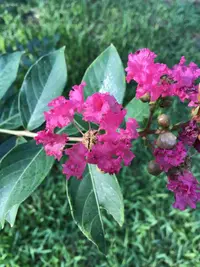
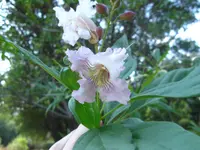
This cultivar produces coral-pink flower clusters and develops good fall color, with an upright, multi-stemmed growth habit. It originates from species native to warm regions of Asia but is now widely grown in many temperate parts of the United States.

The plant is generally considered easy to grow, as it tolerates heat, short dry periods, and typical urban conditions when planted in well-drained soil. Basic knowledge of how to care for Crape Myrtle helps it flower more reliably and maintain a balanced shape over time.

Main Plant Requirements

Care Difficulty

Easy Care

Light Preference

Full Sun

Water Requirements

Moderate Water

Temperature Preference

Cold Hardy

Hardiness Zone

6–9

Soil Texture

Sandy, Loamy, Clay

Soil pH

Acidic (5.5–6.5), Slightly acidic (6.5–7.0)

Soil Drainage

Well-drained

Fertilization

Minimal (feed rarely)

Get Personalized Care Plan

Scan your plant to receive care tips personalized for your specific plant

Available on iOS and Android

How to Care for the Crape Myrtle

Lagerstroemia indica 'Tuscarora' performs best in strong, direct sun for abundant flowering and compact growth.

  • Provide 6–8 hours of full sun daily; morning and midday sun promote dense foliage and rich flower color on this Crape Myrtle.
  • It tolerates light partial shade (3–4 hours sun), but expect fewer blooms and more open, leggy growth.
  • In hot regions, some light afternoon shade can reduce leaf scorch, while winter sun exposure helps ripen wood and improve cold resilience.

Lagerstroemia indica 'Tuscarora' prefers evenly moist, well-drained soil, especially during its first 1–2 growing seasons.

  • Water when the top 3–5 cm of soil feels dry, applying a slow, deep soak so moisture reaches the root zone without leaving puddles.
  • Reduce watering frequency once established; drought stress shows as drooping, curling, or browning leaf edges, while yellowing leaves and dieback suggest excess moisture.
  • Ensure fast drainage with loamy or sandy soil; avoid standing water around the root crown, particularly in cool or rainy periods.

This plant thrives in warm summers and cool to cold winters, tolerating a wide temperature range once established.

  • Active growth and best flowering occur around 70–90°F (21–32°C); extended periods above 95°F (35°C) may shorten bloom life if soil is dry.
  • Lagerstroemia indica 'Tuscarora' is hardy to about 0°F (−18°C); lower temperatures can cause dieback to the ground, with regrowth from the base in spring.
  • After leaf drop, the plant tolerates freezing winter temperatures, but late-spring frosts below 30°F (−1°C) can damage new shoots, so avoid pruning too early.

This deciduous shrub tolerates a wide humidity range and usually does not need special humidity control outdoors.

  • Performs well in 30–60% humidity typical of most temperate outdoor climates.
  • Handles dry air and brief hot, low-humidity periods if soil moisture is consistent.
  • Humidity stress shows as marginal leaf scorch and early leaf drop during hot, windy spells rather than in cool conditions.

This shrub grows best in well-structured, fast-draining mineral soils that still hold some moisture.

  • Aim for a loamy or sandy-loam soil with moderate organic matter to support strong root development.
  • Target a slightly acidic to neutral pH of about 6.0–7.0 for Lagerstroemia indica 'Tuscarora'.
  • For planting beds or large containers, mix native soil with 20–30% compost and 10–20% coarse sand or perlite to improve aeration and drainage.
  • Avoid heavy, compacted clay or sites that stay waterlogged after rain, which encourage root rot and poor flowering.

This species is suitable for container growing when given sufficient root volume and stability.

  • Choose a deep, wide, heavy pot to counter the shrub’s top-weight and reduce tipping in wind.
  • Select thick-walled terracotta or similar porous material to moderate moisture and temperature swings around the roots.
  • Raise the container on feet or bricks so drainage holes stay clear and excess water can escape quickly after irrigation or rain.

This deciduous shrub or small tree benefits from modest, targeted feeding to support flowering and healthy growth.

  • Use a balanced slow-release fertilizer (around 10-10-10) or well-rotted compost in early spring as new growth starts.
  • Apply fertilizer once in spring and, in longer growing seasons, a light second dose in early summer for caring for Crape Myrtle.
  • Avoid high-nitrogen products that push leafy growth at the expense of flowers; follow label rates or use at 1/2 strength for container plants.
  • Stop feeding by late summer and do not fertilize during fall and winter dormancy to allow wood to harden.

Thoughtful pruning helps Lagerstroemia indica 'Tuscarora' maintain a strong framework and abundant blooms.

  • Prune in late winter to very early spring while the plant is leafless and before new growth begins.
  • Remove dead, diseased, crossing, or inward-growing branches using clean, sharp bypass pruners or loppers.
  • Thin crowded interior stems to open the canopy, improving light and air flow, which supports better flowering.
  • Shorten overly long shoots to shape the plant, but avoid cutting main trunks back to knobby stubs.

This cultivar is most often grown in the ground, so transplanting timing and method matter more than frequent repotting.

  • Transplant in late winter or early spring while dormant, aiming for mild weather and moist but not waterlogged soil.
  • Look for signs such as circling roots, slow growth, or the root ball drying out quickly if the plant is in a container.
  • Move up only 1–2 pot sizes or replant into a slightly wider planting hole, keeping the root flare at soil level.
  • Water deeply after transplanting, then keep soil evenly moist for several weeks to limit transplant shock and support new roots.

Propagation of this hybrid crape myrtle is usually done vegetatively to maintain the exact Tuscarora characteristics.

  • Use softwood or semi-ripe cuttings in late spring to mid-summer, taken from non-flowering shoots 10–15 cm long.
  • Remove lower leaves, dip the cut end in rooting hormone, and insert into a well-draining mix such as perlite and peat or fine bark.
  • Maintain warm conditions around 70–75°F, high humidity, and bright, indirect light until roots form.
  • Seeds are less reliable for true-to-type plants and are mainly used for breeding rather than home propagation.

This crape myrtle is moderately cold hardy but benefits from some attention in colder regions.

  • In-ground plants tolerate frost in suitable zones, though top growth may die back in colder winters while roots survive.
  • Apply a 5–8 cm layer of mulch around the root zone in late fall, keeping it slightly away from the trunk.
  • In very cold climates, wrap young stems with breathable fabric or burlap to reduce freeze damage.
  • Move container-grown plants to an unheated garage or sheltered area where temperatures generally stay above 20–25°F.

Care Tips

Trunk training

During the first 2–3 years, select 3–5 strong stems as permanent trunks and remove low or crossing shoots in late winter to build a stable, vase-shaped framework that resists storm damage.

Bark enhancement

Once trunks are at least 5–7 cm thick, lightly thin inner twiggy growth each late winter so more light reaches the stems, which encourages stronger color contrast and more attractive exfoliating bark.

Sucker control

Check the base of the plant and root zone every 4–6 weeks in the growing season and cleanly remove suckers at ground level to prevent them from stealing energy from the main framework.

Flower cluster support

If very heavy flower clusters cause new shoots to bend, discreetly stake or tie those shoots to sturdier branches for the season so they do not split, then remove supports once wood has hardened.

Winter wind protection

In colder areas near the edge of hardiness, install a low, breathable windbreak on the north or west side and apply a 5–8 cm mulch layer over the root zone in late fall to reduce freeze–thaw stress when growing Crape Myrtle.

Everything About Crape Myrtle

Common Pests and Diseases

Powdery mildew

This disease causes white to gray, powdery patches on young leaves, shoots, and flower buds, often leading to distorted new growth. Symptoms include reduced flowering and an overall dull appearance, especially in humid, shaded conditions.

Solution

Prune to open the canopy and improve airflow, and avoid overhead watering that keeps foliage damp. Remove heavily infected shoots, then apply a sulfur or myclobutanil-based fungicide labeled for powdery mildew on crape myrtle, following all label directions carefully.

Crape myrtle bark scale

This pest forms white to gray, felt-like bumps clustered on stems and trunks, often accompanied by sticky honeydew and black sooty mold on bark and nearby surfaces. This scale can weaken plants over time and reduce flowering.

Solution

Gently scrub trunks and larger branches with a soft brush and mild soapy water to remove encrusted scale, then rinse well. Combine this with a targeted systemic insecticide labeled for bark scale applied as a soil drench in spring, and encourage natural predators by avoiding broad-spectrum insecticides during peak lady beetle activity.

Aphids

These insects cluster on tender new growth and leaf undersides, sucking sap and causing curled, distorted leaves and sticky honeydew that can lead to sooty mold. Heavy infestations reduce vigor and flower display.

Solution

Spray infested shoots with a firm stream of water to dislodge aphids, repeating as needed. For persistent problems, use insecticidal soap or a horticultural oil applied thoroughly to leaf undersides and young stems, and reduce excess nitrogen fertilization that encourages soft, aphid-prone growth.

Sooty mold

This disease appears as a black, soot-like coating on leaves, stems, and bark, growing on honeydew excreted by aphids, bark scale, or other sap-feeding insects. Symptoms include dulled, sticky foliage and reduced photosynthesis, but the fungus itself stays on plant surfaces rather than inside tissues.

Solution

Address the underlying sap-feeding insects first with appropriate control methods so new honeydew stops accumulating. Gently wash affected leaves and stems with water or a mild soapy solution to remove the black coating, and thin dense areas of growth to improve light penetration and drying.

Leaf spot (Cercospora)

This disease causes small, circular brown to purplish spots on leaves, often leading to yellowing and premature leaf drop from the lower canopy upward in warm, wet weather. Plant health is usually not fatal but aesthetics and flowering quality can decline.

Solution

Rake and discard fallen leaves, avoid overhead irrigation, and space plants to improve airflow, which reduces leaf wetness duration. In landscapes with recurring issues, apply a labeled ornamental fungicide (such as those containing chlorothalonil or myclobutanil) starting in late spring and repeat as directed during wet periods as part of broader Lagerstroemia indica 'Tuscarora' plant care.

Interesting Facts

Distinct coral-pink blooms

This cultivar is notable for its strong coral-pink flower clusters that keep good color even in high summer sun, unlike some older selections that fade quickly to pale pink.

Indian-series hybrid origin

The plant was bred by the U.S. National Arboretum as part of the Indian-series crape myrtles, combining Lagerstroemia indica with the Japanese species L. fauriei to gain stronger disease resistance and improved cold hardiness.

Tiered vase-shaped habit

It develops a naturally upright, vase-shaped crown with layered, horizontal branching, which gives a tiered architectural look that is more pronounced and consistent than in many seedling crape myrtles.

Botan icon

Did you know?

Tuscarora was one of the first widely distributed Indian-series hybrids to combine reliable powdery mildew resistance with vibrant non-white flowers, and its performance in diverse trial sites helped shift nursery production in the U.S. toward disease-resistant crape myrtle cultivars.

FAQs about Crape Myrtle

Poor flowering often comes from insufficient light, excessive nitrogen fertilizer, or heavy pruning at the wrong time. Older, shaded wood blooms less. Check that the site is bright, avoid overfertilizing, and prune only to remove weak or crossing branches.

Grow Healthy Plants with Botan Care

Keep your plants happy and healthy with plant identification, disease detection, and easy care guidance.

Botan plant care app — identify plants on mobile

Explore More Plants