Guadalupe cypress Care (Hesperocyparis guadalupensis)

Guadalupe cypress

About Guadalupe cypress

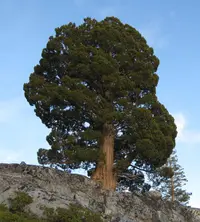
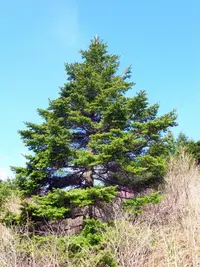
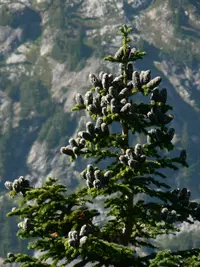
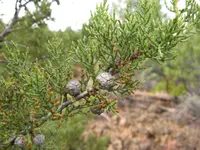
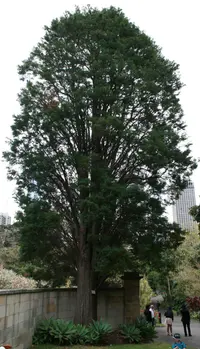
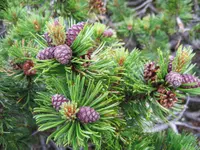
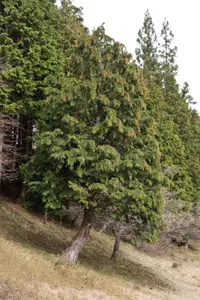
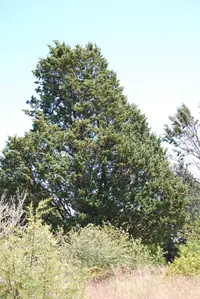
Guadalupe cypress, Hesperocyparis guadalupensis, is a rare coniferous tree native to Guadalupe Island off the coast of Baja California, Mexico. It forms a narrow, upright crown with dense, scale-like foliage and small, rounded cones.

In gardens it is mainly used as a specimen or wind-tolerant screen in mild, dry climates. Growth is relatively fast when young but it remains more compact than many larger cypresses.

This species prefers full sun, dry to moderately moist conditions, and well-drained, often rocky or sandy soil. Once established, it shows good drought and wind resistance, so learning how to care for Guadalupe cypress focuses mainly on choosing the right site and avoiding excess water.

Main Plant Requirements

Care Difficulty

Moderate Care

Light Preference

Full Sun

Water Requirements

Low Water

Temperature Preference

Warm Climate

Hardiness Zone

8–10

Soil Texture

Sandy, Loamy, Rocky

Soil pH

Slightly acidic (6.5–7.0), Neutral (7.0)

Soil Drainage

Well-drained

Fertilization

Minimal (feed rarely)

Get Personalized Care Plan

Scan your plant to receive care tips personalized for your specific plant

Available on iOS and Android

How to Care for the Guadalupe cypress

This species prefers bright, open conditions and performs best in full sun.

  • Provide 6–8 hours of direct sun daily; Guadalupe cypress tolerates light afternoon shade in very hot climates.
  • Choose a site with unshaded southern or western exposure; young trees benefit from some protection from intense reflective heat.
  • In low light, growth becomes sparse and thin; in very strong, reflected summer sun, monitor foliage for browning tips and adjust exposure if possible.

This drought-tolerant conifer prefers infrequent, deep watering once established.

  • Allow the top 5–8 cm of soil to dry before watering; in well-drained ground, deep soak, then let the soil dry almost completely.
  • During the first 1–2 years, water when lower foliage starts to lose sheen or branch tips feel slightly limp, then reduce frequency as roots deepen.
  • Ensure fast-draining, gritty soil; yellowing leaves and twig dieback can indicate chronic overwatering, while widespread browning from the tips inward suggests prolonged drought stress.

This species is adapted to mild, dry climates with moderate winter cold.

  • Optimal growth occurs around 60–80°F (16–27°C); stable conditions during the main growing season support dense, even foliage.
  • Mature trees tolerate brief drops to about 10–15°F (-12 to -9°C), but young plants benefit from protection during hard frosts and cold, drying winds.
  • Heat tolerance is good up to about 95°F (35°C) if soil is not waterlogged; in prolonged heat waves, conserve soil moisture with mulch and avoid root disturbance.

Humidity is usually not a limiting factor for Guadalupe cypress in typical outdoor conditions.

Hesperocyparis guadalupensis prefers dry, mineral soils that drain very quickly.

  • Use a sandy or gravelly loam with at least 50–70% coarse mineral material such as pumice, grit, or sharp sand.
  • Maintain slightly alkaline to neutral pH around 7.0–8.0, avoiding strongly acidic mixes rich in peat.
  • Improve drainage and aeration by blending small gravel or crushed lava rock through the full soil depth, not just on top.
  • Avoid compacted, clay-heavy, or water-retentive organic mixes that stay wet for more than 1–2 days after irrigation.

This species can be grown in containers, mainly for young plants or dwarf selections outdoors.

  • Choose a tall, heavy container that resists tipping as the plant becomes woody and top-heavy.
  • Select thick-walled clay or concrete pots to moderate moisture swings and protect roots from heat.
  • Raise the container on feet or bricks so drainage holes release water freely and roots do not sit in runoff.

This drought-adapted conifer needs only light feeding in nutrient-poor soils.

  • Use a balanced slow-release fertilizer (around 10-10-10) or a thin layer of compost in early spring for outdoor Guadalupe cypress.
  • Apply once per year during active growth; avoid midsummer and late fall applications.
  • Use 1/2-strength rates on young or container plants to prevent salt stress in the roots.
  • Skip fertilizing in winter dormancy and when growth is strong and foliage is a healthy blue-green.

Hesperocyparis guadalupensis benefits from light, precise pruning to maintain structure and health.

  • Prune in late winter or very early spring before strong new growth starts.
  • Remove dead, diseased, crossing, or storm-damaged branches with sharp bypass pruners or loppers.
  • Limit cuts to small branches; avoid cutting back into old, leafless wood that may not reshoot.
  • Use selective thinning to keep a natural conical form and good light penetration into the canopy.

This species is usually grown in the ground, so focus on careful transplanting rather than frequent repotting.

  • Transplant young trees in late winter or early spring while soil is workable and before vigorous growth.
  • Look for circling roots in containers, slowed growth, or plants toppling in wind as signs a larger size is needed.
  • Move up only 1–2 pot sizes, gently loosen circling roots, and plant at the same soil depth as before.
  • Water deeply after planting and maintain even moisture for 2–3 months to reduce transplant shock.

Hesperocyparis guadalupensis is usually propagated by seed or semi-hardwood cuttings under controlled conditions.

  • Collect ripe cones, extract seeds, and cold stratify for 30–60 days at about 35–40°F for better germination.
  • Sow seeds in a very well-drained, sandy mix and keep slightly moist in bright, indirect light.
  • Take semi-hardwood cuttings in late summer, use rooting hormone, and place in a humid, well-aerated medium.
  • Maintain bottom heat around 68–72°F and good air circulation to limit fungal problems while roots develop.

Mature plants are moderately cold hardy but young Hesperocyparis guadalupensis benefit from some winter attention in colder regions.

  • In climates below about 10–15°F, site plants in a sheltered location with good air flow.
  • Apply 5–8 cm of mulch around the root zone, keeping it slightly away from the trunk to limit rot.
  • For young or container plants, wrap the pot or move containers to an unheated, bright, frost-free area.

Care Tips

Wind-hardening young trees

Stake newly planted trees only if necessary, then gradually loosen and remove stakes over 1–2 years so the trunk flexes in the wind and develops the strong taper needed for exposed sites.

Salt and alkalinity checks

On coastal or arid sites, test soil salinity and pH every 1–2 years and, if readings creep up, apply deep, infrequent flushing irrigations and add gypsum where appropriate to prevent root stress and foliage browning.

Mulch ring management

Maintain a 5–8 cm deep ring of coarse wood-chip mulch around the root zone, keeping it 5–8 cm away from the trunk to reduce soil temperature swings, suppress weeds, and protect roots from mower and string trimmer damage.

Canopy spacing planning

When planting multiple trees, space them 3–4 m apart and remove crossing or rubbing branches early so each tree develops a separate, well-lit crown that is less prone to disease and storm breakage.

Fire-wise maintenance

In fire-prone regions, regularly remove dead interior twigs and lower dry branches, and maintain a clear, nonflammable zone at the base of the tree as part of responsible, low-risk growing Guadalupe cypress.

Common Pests and Diseases

Cypress aphids

This pest feeds on young shoots and foliage, causing yellowing, needle drop, and a general thinning of the canopy. Symptoms include sticky honeydew on twigs and sooty mold growing on the sugary deposits.

Solution

Prune out heavily infested shoot tips and dispose of them in the trash, then hose down foliage to knock off remaining aphids. For ongoing issues, use a targeted insecticidal soap or horticultural oil, applied thoroughly to twigs and undersides of foliage during mild weather, and encourage natural predators such as lady beetles by avoiding broad-spectrum insecticides nearby.

Cypress bark beetles

These insects tunnel under the bark of stressed trees, producing reddish boring dust and resin bleeding at entry holes. Symptoms include sudden browning and death of individual branches or, in heavy attacks, whole-tree decline.

Solution

Remove and destroy severely infested branches or whole trees promptly to reduce beetle breeding sites. Reduce stress by avoiding overwatering, prevent mechanical trunk damage, maintain adequate spacing for airflow, and in high-risk areas consult a local arborist about timing and need for preventive trunk sprays with a labeled pyrethroid product before peak beetle flight periods.

Seiridium canker

This disease causes sunken, resin-soaked cankers on stems and branches, often leading to dieback that starts in scattered branches and progresses over time. Symptoms include yellowing and browning of foliage beyond the canker and oozing resin on affected bark.

Solution

Prune out infected branches 20–30 cm below visible cankers during dry weather, sterilizing tools between cuts with 70% alcohol. Improve tree vigor by avoiding drought stress, preventing overhead irrigation that wets foliage, and maintaining good spacing for airflow; in landscape settings, fungicides are usually less effective than sanitation and stress reduction.

Botryosphaeria canker

This disease infects weakened branches through wounds, causing elongated, dark cankers and progressive dieback of affected stems. Symptoms include scattered brown branch tips and a thin, open crown, often following drought or heat stress.

Solution

Cut out affected branches below the canker margin and discard them, disinfecting pruning tools between cuts. Minimize stress by providing deep but infrequent irrigation during dry periods, mulching the root zone to moderate soil temperature, and avoiding trunk injuries from lawn equipment; this integrated approach forms the core of Hesperocyparis guadalupensis care instructions for canker-prone sites.

Cypress tip blight

This disease attacks young shoot tips, leading to browning and death of the outer foliage, while inner foliage may remain green for some time. Symptoms include scattered brown tips, often starting on the lower or inner branches and slowly moving outward.

Solution

Remove and destroy blighted tips and small branches during dry weather, and rake up fallen debris around the base of the tree. Improve airflow by avoiding overcrowding, reduce overhead watering, and in high-value landscape specimens consider a professionally applied fungicide program timed to new shoot growth if cultural measures alone do not stop progression.

Interesting Facts

Critically localized habitat

This species is naturally restricted to Guadalupe Island off the Pacific coast of Baja California, where it grows in a small high-elevation area influenced by cool maritime clouds and fog.

Fog-dependent moisture capture

On its native island, this cypress intercepts fog with its fine foliage, allowing water droplets to condense and drip to the ground, which helps sustain both the trees and the surrounding plant community in an otherwise dry climate.

Taxonomic reclassification history

Formerly treated in the genus Cupressus, this species was moved to Hesperocyparis after molecular studies showed it belongs in a distinct New World cypress lineage, a key reference point for Hesperocyparis guadalupensis care instructions in modern literature.

Botan icon

Did you know?

Guadalupe cypress played a central role in the ecological recovery of Guadalupe Island after the removal of feral goats, as surviving remnant trees became seed sources for extensive restoration plantings that helped re-establish native forest structure.

FAQs about Guadalupe cypress

This species is evergreen, keeping its fine, scale-like foliage year-round rather than shedding leaves seasonally. Older inner foliage and shaded branches may brown and drop, but the overall canopy stays green in normal conditions.

Grow Healthy Plants with Botan Care

Keep your plants happy and healthy with plant identification, disease detection, and easy care guidance.

Botan plant care app — identify plants on mobile

Explore More Plants