Windfirm training
In the first 5–7 years, selectively shorten or remove only a few competing side branches on the windward side each year to encourage a slightly tapered, windfirm crown rather than a top‑heavy outline.


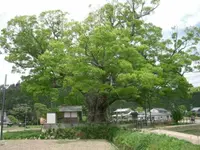
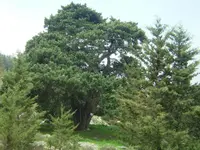
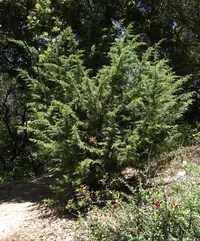
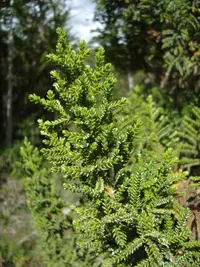
Finnish spruce, Picea × fennica, is a hardy coniferous tree commonly used in northern landscapes and shelterbelts. It is a natural hybrid between Norway spruce and Siberian spruce. The tree forms a dense, conical crown with strong branches and short, dark green needles that hold well through winter.
It is native to and widely planted across northern Europe, especially in cold and humid regions. The species is generally robust and wind tolerant but can suffer in hot, dry sites, which affects how easy it is to establish. It prefers cool climates, consistent moisture, and well-drained, slightly acidic soil, which guides how to care for finnish spruce in gardens and windbreaks.

Care Difficulty
Moderate Care

Light Preference
Full Sun

Water Requirements
Moderate Water

Temperature Preference
Cold Hardy

Hardiness Zone
2–6

Soil Texture
Sandy, Loamy, Clay

Soil pH
Strongly acidic (4.5–5.5), Acidic (5.5–6.5)

Soil Drainage
Moist but well-drained

Fertilization
Minimal (feed rarely)
Scan your plant to receive care tips personalized for your specific plant
Available on iOS and Android
This hardy spruce grows best in cool climates with consistent outdoor light.
This spruce prefers evenly moist, cool soil that never stays saturated.
This cold-hardy spruce thrives in cool to cold outdoor climates with distinct seasons.
This conifer prefers cool air with moderate humidity and copes fairly well with outdoor fluctuations.
This species grows best in deep, cool, moist but well-drained ground with stable structure.
This large tree is only moderately suitable for container growing and usually for temporary or dwarf forms.
This hybrid spruce grows well in average soil and benefits from light, targeted feeding rather than heavy fertilization.
Picea × fennica needs only minimal pruning to maintain health and a natural form.
This spruce is usually grown in the ground, with transplanting focused on young trees before they become established.
Picea × fennica is usually propagated professionally and is slow and challenging for home growers.
This cold-hardy spruce generally needs little winter care once established in the landscape.

Plant Health Check
Not sure what's wrong with your plant? Check your plant's health inside the app.
This tree is a natural and artificial hybrid between Norway spruce (Picea abies) and Siberian spruce (Picea obovata), combining traits from both parents in cone shape, needle form, and cold tolerance.
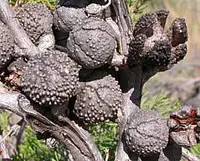
Its needles and cones show intermediate and variable features, such as slightly shorter, more rigid needles than typical Norway spruce and cones that can resemble either parent, which often makes field identification challenging even for specialists.
The hybrid occurs across a broad zone from Fennoscandia into northwestern Russia, especially where the ranges of its parent species overlap, and can form extensive mixed populations in boreal forests.

In Finland and parts of Fennoscandia, this hybrid spruce has been widely used in forestry because it often grows faster and shows better hardiness in cold, continental climates than either of its parent species alone.
This species has a moderate growth rate, typically adding 25–45 cm per year in suitable conditions. Growth is faster in deep, cool, moist but well-drained soils and cooler climates, and slows in compacted, dry, or urban sites.
Keep your plants happy and healthy with plant identification, disease detection, and easy care guidance.