Early leader training
In the first 3–5 years, choose a single strong central leader and remove competing uprights during the dry season to build a stable timber-quality structure and reduce future storm damage risk.

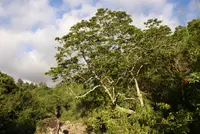
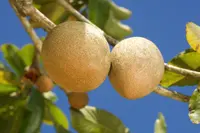
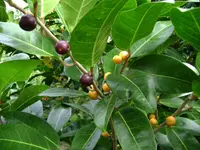
Bulletwood (Manilkara bidentata) is a large, slow-growing evergreen tree known for its very dense, hard timber and long lifespan. In nature it often forms a tall, straight trunk with a rounded, glossy canopy. Native to tropical forests of the Caribbean and northern South America, it prefers warm, humid climates and does not tolerate frost. The tree produces small, fragrant flowers and dark, edible fruits that attract wildlife. Its slow growth and eventual size make it better suited to spacious outdoor sites than to small gardens or containers. Those who want to care for bulletwood should know it favors consistent moisture, well-drained soil, and bright light in tropical or subtropical conditions.

Care Difficulty
Moderate Care

Light Preference
Full Sun

Water Requirements
Regular Water

Temperature Preference
Tropical / Frost Sensitive

Hardiness Zone
11–12

Soil Texture
Sandy, Loamy, Organic-rich

Soil pH
Acidic (5.5–6.5), Slightly acidic (6.5–7.0)

Soil Drainage
Moist but well-drained

Fertilization
Minimal (feed rarely)
Scan your plant to receive care tips personalized for your specific plant
Available on iOS and Android
This tropical canopy tree needs strong, consistent light to grow dense foliage and quality wood.
This species prefers evenly moist, deep soil but reacts poorly to waterlogging.
This lowland tropical tree thrives in warm, frost-free climates year-round.
This species prefers warm, moderately humid air but copes with short dry spells.
Manilkara bidentata prefers deep, moisture-retentive but draining soil that does not stay saturated.
This species can be grown in large containers when kept pruned and managed as a specimen tree.
Manilkara bidentata benefits from light, steady nutrition rather than heavy feeding.
Pruning Manilkara bidentata is mainly done to maintain structure and remove problem wood.
This large tropical tree is usually transplanted from nursery containers to the ground rather than long-term potted.
Manilkara bidentata is typically propagated from seeds or semi-hardwood cuttings under controlled conditions.
This tropical species has low frost tolerance and needs protection in climates cooler than USDA zone 10.

Plant Health Check
Not sure what's wrong with your plant? Check your plant's health inside the app.
This species produces a dense, rubbery latex called balata that was historically used as a natural industrial material for items such as machine belts and golf ball covers due to its toughness and elasticity.
The wood is very hard, heavy, and fine-grained, with high resistance to decay and wear, so it has been valued for applications like heavy construction, shipbuilding, and tools in tropical regions.
In its native Caribbean and northern South American forests, this tree forms part of the upper canopy, providing food and habitat for many animals through its small, fleshy fruits and dense evergreen foliage.

Well-preserved wooden artifacts from pre-Columbian Caribbean cultures show that Indigenous peoples selectively used this species’ durable wood for items such as tools and ceremonial objects, indicating its long-standing practical and cultural importance in the region.
Growth is slow to moderate. Young trees may add about 20–40 cm per year under warm, moist, fertile conditions. As the canopy develops, annual height gain often decreases while trunk diameter and crown density increase steadily.
Keep your plants happy and healthy with plant identification, disease detection, and easy care guidance.

-1-200x133.webp)