Greek strawberry-tree Care (Arbutus andrachne)

Greek strawberry-tree

About Greek strawberry-tree

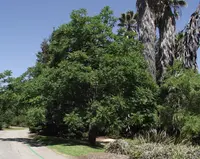
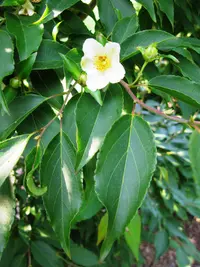
The Greek strawberry-tree, Arbutus andrachne, is an evergreen small tree or large shrub grown mainly for its peeling, cinnamon-colored bark and neat rounded crown. It has leathery, glossy green leaves and clusters of small white to greenish flowers, followed by decorative but usually not commercially eaten red fruits.

This species is native to the eastern Mediterranean, where it grows on rocky slopes and dry woodland edges. It prefers sunny, well-drained sites and tolerates heat and drought once established, which makes it suitable for low-maintenance gardens.

Gardeners who learn how to care for Greek strawberry-tree usually find it reliable in mild climates, provided the soil is not waterlogged and winter temperatures are not too harsh.

Main Plant Requirements

Care Difficulty

Moderate Care

Light Preference

Full Sun

Water Requirements

Low Water

Temperature Preference

Warm Climate

Hardiness Zone

7–9

Soil Texture

Sandy, Loamy, Rocky

Soil pH

Slightly acidic (6.5–7.0), Neutral (7.0)

Soil Drainage

Well-drained

Fertilization

Minimal (feed rarely)

Get Personalized Care Plan

Scan your plant to receive care tips personalized for your specific plant

Available on iOS and Android

How to Care for the Greek strawberry-tree

Arbutus andrachne thrives in bright, open sites with plenty of direct sun once established.

  • Provide 6–8 hours of direct sun daily; in hot inland areas, aim for morning sun with light afternoon shade to reduce leaf scorch.
  • Young plants tolerate partial shade, but dense shade reduces flowering, fruiting, and the characteristic bark color of the Greek strawberry-tree.
  • In summer, protect from reflected heat off walls or paving, and in winter ensure at least a few hours of unobstructed sun for healthy growth.

This drought-tolerant tree prefers infrequent, deep watering in sharply drained soil.

  • Allow the top 5–8 cm of soil to dry before watering, then water slowly so it soaks 20–30 cm deep, encouraging a strong root system.
  • Reduce watering in fall and winter, especially in regions with regular rain; increase only during extended dry, hot spells if foliage begins to droop or curl.
  • Use fast-draining, gritty soil or a sloped site to prevent standing water; yellowing leaves, soft stems, or persistent wetness indicate overwatering in Arbutus andrachne.

This Mediterranean tree prefers warm, dry summers and mild, relatively frost-free winters.

  • Optimal growth occurs around 65–80°F (18–27°C), with good tolerance of typical warm-summer conditions if soil drainage is excellent.
  • Mature plants withstand brief drops to about 15–20°F (-9 to -6°C), but young trees are more vulnerable and benefit from protection during hard freezes.
  • In very hot weather above 95°F (35°C), provide mulch to keep roots cooler and avoid reflected heat, while in colder regions site the tree in a sheltered, south-facing position.

This Mediterranean species handles low atmospheric moisture and usually does not need humidity management.

This shrub prefers mineral, well-drained ground that does not stay wet for long.

  • Use a sandy or gravelly loam with moderate organic matter, mimicking rocky Mediterranean slopes.
  • Ensure very fast drainage by combining roughly 50–60% coarse sand or grit with 40–50% loam and a small amount of compost.
  • Keep pH slightly acidic to neutral, around 6.0–7.5, as Arbutus andrachne dislikes strongly alkaline substrates.
  • Avoid heavy clay, compacted areas, or any site where water pools after rain, since persistent wetness promotes root disease.

This species can be grown in large containers when given stable, fast-draining conditions.

  • Choose a deep, heavy pot to support the developing woody trunk and prevent tipping in strong wind.
  • Use a gritty, low-organic mix so the root zone dries predictably between waterings, reducing root rot risk.
  • Raise the container on pot feet or bricks so drainage holes stay clear and runoff escapes freely.

Arbutus andrachne benefits from light, targeted feeding but is adapted to relatively poor soils.

  • Apply a balanced slow-release fertilizer (around 10-10-10) in early spring at half the label rate, lightly worked into the topsoil.
  • In lean or sandy soils, supplement once in mid-summer with compost or a mild organic fertilizer to support steady growth.
  • Avoid high-nitrogen products that push soft, weak shoots; aim for compact, sturdy growth instead.
  • Do not feed in late fall or winter, as the tree is semi-dormant and excess nutrients can cause frost-tender new growth.

Pruning Arbutus andrachne is mainly done to refine structure and remove problem wood, not to control size aggressively.

  • Carry out structural pruning in late winter or very early spring before active growth starts.
  • Remove dead, diseased, crossing, or rubbing branches first, then thin congested interior shoots to improve airflow.
  • Use clean, sharp bypass pruners or a pruning saw, making smooth cuts just outside the branch collar.
  • Light shaping can reveal the decorative bark, but avoid heavy cuts that may stress the tree and reduce flowering.

This species is usually grown in the ground; transplant young plants carefully, as older Arbutus andrachne resent disturbance.

  • Plan transplanting for late winter or early spring, before new growth, to reduce water stress and encourage quick rooting.
  • Look for signs like slow top growth and roots circling the planting hole or container if grown temporarily in pots.
  • Lift with a generous root ball, keep roots shaded and moist, and replant at the same depth in well-drained, slightly acidic soil.
  • Water deeply after planting, then maintain even moisture for the first growing season while avoiding waterlogging to support establishment.

New Arbutus andrachne plants are most often raised from seed, with semi-ripe cuttings used by more advanced growers.

  • Collect ripe seeds from fruits, clean them, and provide a cool stratification period of 2–3 months to improve germination.
  • Sow in a sharply drained, slightly acidic mix, keeping it just moist and in bright, indirect light; germination can be slow.
  • Take semi-ripe cuttings in late summer, 7–10 cm long, with a heel of older wood and remove most leaves.
  • Place cuttings in a free-draining medium, use rooting hormone, and maintain high humidity and bottom warmth around 70°F.

Established Arbutus andrachne is moderately cold hardy and often needs only minimal winter attention in mild climates.

  • Tolerates light frosts but may suffer leaf or twig damage below about 15–20°F, especially when young.
  • Apply a 5–8 cm mulch over the root zone in late fall, keeping it away from the trunk to stabilize soil temperature.
  • For young or container plants, shelter from drying winter winds and move pots to a protected, unheated but frost-sheltered spot.

Care Tips

Trunk bark care

Avoid damaging the smooth trunk with string trimmers, mower impacts, or tight ties, since wounds on the decorative peeling bark heal slowly and can invite canker diseases.

Controlled crown lifting

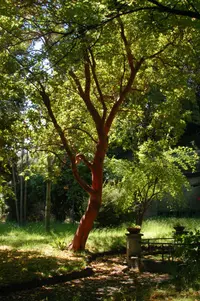
As the tree matures, selectively remove only a few low branches every 2–3 years to gradually lift the crown and improve airflow without exposing the roots or creating large pruning wounds.

Deep root establishment

During the first 2–3 years, apply a wide, shallow mulch ring and water at the dripline rather than near the trunk to encourage a broad, deep root system that will later improve drought resilience.

Calcareous soil adaptation

In mildly alkaline or calcareous soils, incorporate coarse grit and well-rotted compost into the planting area over several seasons rather than trying to acidify the entire site, which helps roots adapt while maintaining drainage.

Landscape pest monitoring

Inspect new flushes of leaves and young bark a few times each growing season for leaf spot, scale insects, or borers, and remove and dispose of affected twigs early as part of caring for Greek strawberry-tree before infestations spread.

Common Pests and Diseases

Leaf spot

This disease causes small circular to irregular brown spots that may merge, leading to larger dead areas on leaves and occasional early leaf drop.

Solution

Remove and discard heavily spotted leaves, avoid overhead watering, and keep the canopy thinned for better airflow; in wet springs, a copper-based fungicide labeled for ornamental trees can be applied according to label directions to reduce spread.

Powdery mildew

This disease produces a white to gray powdery coating on young leaves and shoots, sometimes causing distortion and reduced vigor.

Solution

Improve air circulation by selective pruning, avoid excessive nitrogen fertilization that stimulates soft new growth, and treat persistent cases with a sulfur or potassium bicarbonate product labeled for powdery mildew on ornamental trees, applied in cool, dry conditions.

Leaf gall (Exobasidium)

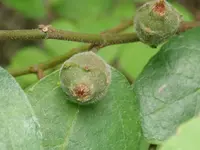
This disease causes thickened, swollen, pale green to whitish galls on young leaves and sometimes on shoots, which later turn brown and dry out.

Solution

Prune out and destroy affected leaves and shoots as soon as galls are noticed, avoid overhead irrigation that keeps foliage wet, and maintain good spacing and airflow; fungicide treatments are rarely needed if infected material is removed promptly.

Arbutus canker and dieback

Symptoms include sunken, cracked lesions on branches or trunk, oozing sap, and progressive dieback of twigs and limbs, often following stress such as drought or mechanical damage.

Solution

Cut back affected branches well into healthy wood, disinfect pruning tools between cuts, avoid trunk injuries and soil compaction around the root zone, and keep the tree on a moderate, consistent watering schedule to reduce stress that predisposes it to infection.

Scale insects

These insects appear as small, dome-shaped or flat bumps on stems and sometimes leaves, feeding on sap and causing yellowing, leaf drop, and sticky honeydew that can lead to sooty mold on the smooth bark and foliage.

Solution

For light infestations, gently scrub stems with a soft brush and soapy water or remove scales by hand; for heavier infestations, apply a dormant or horticultural oil thoroughly to bark and twigs during the recommended season to smother scales, repeating as needed according to label instructions as part of broader Arbutus andrachne care instructions.

Interesting Facts

Peeling cinnamon bark

The tree develops smooth, reddish bark that peels in thin curls to reveal fresh, pale green or orange bark beneath, giving a two-toned trunk appearance. This exfoliating bark process occurs gradually throughout the year and is especially noticeable in older specimens.

Winter flowering habit

Flowering typically occurs in late winter to early spring in its native eastern Mediterranean range, when many other trees are still dormant. The small, urn-shaped white to pinkish flowers are pollinated by insects active during mild winter periods in that climate.

Mediterranean drought specialist

This species is well adapted to rocky, limestone-based slopes and seasonally dry conditions in the eastern Mediterranean. Its thick, evergreen leaves and deep root system allow it to tolerate long, hot, dry summers typical of that region.

Botan icon

Did you know?

Arbutus andrachne is known to hybridize naturally with Arbutus unedo in overlapping ranges, producing the ornamental hybrid Arbutus × andrachnoides, which shows intermediate traits such as mixed bark coloration and fruit characteristics.

FAQs about Greek strawberry-tree

Lack of flowers often comes from heavy pruning at the wrong time, nutrient-rich or very dry soil, or too much shade. This species flowers best when pruned lightly after blooming and kept in stable, moderate conditions.

Grow Healthy Plants with Botan Care

Keep your plants happy and healthy with plant identification, disease detection, and easy care guidance.

Botan plant care app — identify plants on mobile

Explore More Plants