Root disturbance control
Avoid disturbing the root zone when planting or weeding around the plant, as Proteaceae roots are sensitive; use shallow hand weeding and mulch instead of cultivation to protect fine feeder roots.

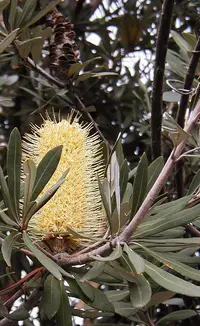
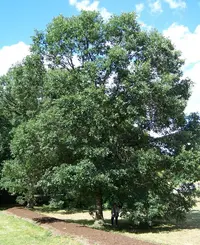
Coast banksia, Banksia integrifolia, is an evergreen tree or large shrub native to coastal regions of eastern Australia. It is often grown for its distinctive cylinder-shaped flower spikes and decorative seed cones. The plant typically has leathery, narrow leaves with pale undersides, forming a dense, wind-resistant canopy. It suits informal gardens, coastal landscapes, and habitat plantings. This species is generally robust and long-lived, but it dislikes heavy, waterlogged, or very rich soils, which can make it more challenging in some gardens. It usually prefers full sun, well-drained sandy soil, and low to moderate moisture, so understanding how to care for coast banksia helps it establish successfully.

Care Difficulty
Moderate Care

Light Preference
Full Sun

Water Requirements
Low Water

Temperature Preference
Warm Climate

Hardiness Zone
9–11

Soil Texture
Sandy, Loamy, Rocky

Soil pH
Acidic (5.5–6.5), Slightly acidic (6.5–7.0)

Soil Drainage
Well-drained

Fertilization
Minimal (feed rarely)
Scan your plant to receive care tips personalized for your specific plant
Available on iOS and Android
This species prefers bright, open conditions similar to its native coastal habitat.
This plant is adapted to low to moderate moisture and dislikes prolonged wet conditions.
This coastal species handles a wide temperature range but prefers mild, frost-light climates.
Humidity is rarely critical for this coastal shrub, which tolerates a wide range of air moisture indoors and outdoors.
This species needs very free-draining, low-nutrient soil to avoid root decline.
This shrub can be grown in containers for several years if the pot is chosen and managed carefully for its deep, woody root system.
This coastal native grows in low-nutrient soils and needs only light feeding in containers or poor garden soils.
Thoughtful pruning keeps Banksia integrifolia compact, safe, and flowering well in gardens and streetscapes.
This species is mainly grown in the ground, so management focuses on careful transplanting rather than frequent repotting.
Banksia integrifolia is usually propagated by seed, with cuttings used less often and requiring strict conditions.
Established plants in mild coastal climates need little winter attention, but young or container-grown specimens benefit from some protection.

Plant Health Check
Not sure what's wrong with your plant? Check your plant's health inside the app.
This species naturally grows right behind Australian ocean beaches and tolerates direct salt spray and sandy, nutrient-poor soils that damage or kill many other trees.
Its long, pale-yellow flower spikes produce nectar that is particularly important for nocturnal nectar feeders such as sugar gliders and some moths, especially during cooler months.
The woody cones can remain closed on the plant for many years, only releasing winged seeds gradually or after stress events such as branch death or pruning, a strategy that helps it recolonize disturbed coastal sites.

Early European botanists in Australia noted that Indigenous peoples sometimes used the nectar-rich flower spikes of this species as a natural sweet drink, either by sucking the nectar directly or soaking the flower heads in water to make a mildly sweet infusion.
Poor flowering is often linked to heavy fertiliser, rich soil, or excessive watering, which reduce stress cues needed for bud formation. Older wood flowers best, so avoid hard pruning and ensure strong light and good drainage for reliable blooms.
Keep your plants happy and healthy with plant identification, disease detection, and easy care guidance.