Wind exposure management
Site plants where they experience steady air movement but are shielded from the very strongest prevailing winds, using low windbreaks or rocks to prevent root rock and branch breakage while maintaining good airflow.

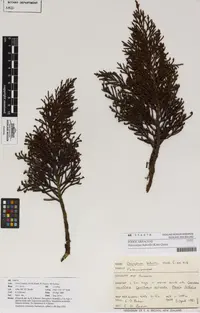
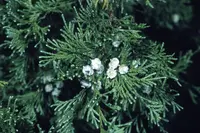
Bog pine (Halocarpus bidwillii) is a small, slow-growing conifer native to high-altitude bogs and scrubland in New Zealand. It often forms compact, irregular shrubs with fine, scale-like foliage and a naturally wind-sculpted look.
This species is adapted to cold, wet, nutrient-poor conditions, which makes it quite hardy but also sensitive to prolonged drought and very dry air. In cultivation, it prefers cool conditions, consistent moisture, and sharply drained, acidic soil.
Because it grows slowly and keeps a tidy shape, many growers care for Bog Pine as a specialty container or rock garden plant rather than a typical landscape tree.

Care Difficulty
Moderate Care

Light Preference
Full Sun

Water Requirements
Low Water

Temperature Preference
Cold Hardy

Hardiness Zone
7–9

Soil Texture
Sandy, Loamy, Rocky

Soil pH
Strongly acidic (4.5–5.5), Acidic (5.5–6.5)

Soil Drainage
Well-drained

Fertilization
Minimal (feed rarely)
Scan your plant to receive care tips personalized for your specific plant
Available on iOS and Android
Halocarpus bidwillii thrives in cool, bright conditions with moderate direct sun.
This species prefers evenly moist, well-drained soil and is sensitive to prolonged saturation.
This cold-hardy conifer is adapted to cool climates but still benefits from stable temperatures.
This species is tolerant of a wide humidity range and rarely needs special humidity management.
Halocarpus bidwillii prefers lean, sharply drained, slightly acidic soil that does not stay wet after rainfall or watering.
This shrub can be grown in containers if the pot and medium are chosen to keep the root zone cool, stable, and very well drained.
Halocarpus bidwillii grows naturally in low-nutrient soils and needs only modest feeding in cultivation.
Pruning Halocarpus bidwillii is usually light and focused on maintaining a healthy, compact form.
Bog Pine is most often grown in the ground, so transplanting is more relevant than container repotting.
Propagation of Halocarpus bidwillii is possible but slow and best suited to patient growers.
This species is cold hardy in many temperate regions and usually needs minimal winter care once established.

Plant Health Check
Not sure what's wrong with your plant? Check your plant's health inside the app.
This conifer is naturally restricted to high-altitude peat bogs and frost-prone heathlands in New Zealand, where it withstands cold, waterlogged, acidic soils that kill many other woody plants.
In exposed alpine habitats it often forms very low, dense cushions only a few cm high, an adaptation that reduces wind damage and moisture loss in harsh conditions.
The fine-grained wood is strongly resinous and slow to decay, which helps branches and stems persist in wet, cool bog environments long after growth has slowed.

Genetic and fossil evidence shows that this small, tough shrub belongs to an ancient Southern Hemisphere conifer lineage within Podocarpaceae, linking it evolutionarily to relatives in other Gondwanan fragments such as Australia and South America.
This species is naturally slow-growing. In garden conditions it typically adds 2–6 cm per year, sometimes less in exposed, nutrient-poor sites. Patience is important when trying to grow Halocarpus bidwillii as a long-term structural shrub.
Keep your plants happy and healthy with plant identification, disease detection, and easy care guidance.