miracle fruit Care (Synsepalum dulcificum)

Also known as: miraculous berry
miracle fruit

About miracle fruit

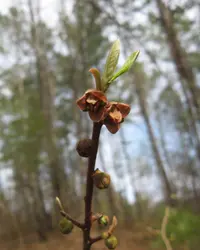
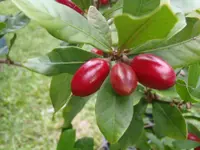
Miracle fruit, Synsepalum dulcificum, is a small evergreen shrub native to West Africa. It is best known for its red, berry-like fruits that temporarily make sour foods taste sweet.

The plant has glossy, leathery leaves and a compact, bushy growth habit, making it suitable for container growing in warm climates or indoors. Flowers are small and white, followed by clusters of oval red fruits.

Miracle fruit prefers acidic, well-drained soil, consistent moisture, and bright, filtered light. These specific needs mean care for miracle fruit can be moderately challenging for beginners, especially in dry or cool homes.

Main Plant Requirements

Care Difficulty

Hard Care

Light Preference

Partial Shade

Water Requirements

Keep Soil Moist

Temperature Preference

Tropical / Frost Sensitive

Hardiness Zone

10–11

Soil Texture

Sandy, Loamy, Organic-rich

Soil pH

Strongly acidic (4.5–5.5), Acidic (5.5–6.5)

Soil Drainage

Moist but well-drained

Fertilization

Light (every 4–6 weeks)

Get Personalized Care Plan

Scan your plant to receive care tips personalized for your specific plant

Available on iOS and Android

How to Care for the miracle fruit

This plant prefers bright, gentle light that mimics the edges of tropical forest shade.

  • Provide 4–6 hours of bright, indirect light daily, such as dappled shade under taller plants or a lightly filtered south or east exposure.
  • Allow some direct morning sun but protect miracle fruit from harsh midday and afternoon sun, which can scorch leaves and cause brown, crispy edges.
  • In summer, increase shade or use 30–50% shade cloth; in winter, maximize light by avoiding deep shade and pruning overhead branches if possible.

This species prefers evenly moist, well-drained, slightly acidic soil without long dry or soggy periods.

  • Water when the top 2–4 cm of soil feels dry, aiming for consistently damp but not saturated soil around the root zone.
  • Ensure soil drains freely; yellowing, soft leaves or a sour smell indicate overwatering, while dull, curling leaves and dry, hard soil suggest underwatering.
  • Reduce watering volume and frequency in cooler months, but never allow the root ball of Synsepalum dulcificum to dry out completely for more than a short time.

Steady, warm conditions support strong growth and reliable fruiting for this tropical shrub.

  • Aim for 70–85°F (21–29°C) for best growth; the plant slows noticeably below about 65°F (18°C).
  • Protect from cold; it is damaged around 40°F (4°C) and can die near 32°F (0°C), so avoid any frost exposure or cold wind pockets.
  • Tolerates short heat waves up to about 95°F (35°C) if soil moisture is stable and light is filtered, but prolonged extreme heat can cause leaf scorch and fruit drop.

This species needs fairly high humidity to grow and fruit well in most homes.

  • Aim for 50–70% humidity; growth slows and leaf tips brown if kept much drier.
  • In dry indoor air, group plants, use a pebble tray under the pot, or run a small humidifier nearby.
  • Crisping leaf edges, stalled new growth, and persistent leaf curl show miracle fruit is under humidity stress.

This plant prefers acidic, airy, consistently moist soil that drains freely.

  • Use a loose, organic-rich mix such as 50% peat or coco coir, 25% fine pine bark, and 25% perlite or coarse sand.
  • Keep pH around 4.5–5.8; avoid lime, as Synsepalum dulcificum is sensitive to alkaline conditions and will yellow in high pH.
  • Ensure fast drainage so water runs through in seconds but leaves the root zone lightly moist, not waterlogged or bone dry the next day.
  • Improve aeration by avoiding compaction, using chunky bark pieces, and never pressing the mix down hard when potting.

This species is well suited to container cultivation when moisture and stability are managed carefully.

  • Choose a tall, narrow pot shape to give the relatively deep root system room while limiting excess surface evaporation.
  • Select a slightly heavier pot material, such as thick terracotta or ceramic, to keep the plant stable as the woody stems elongate.
  • Ensure drainage holes remain fully open and empty saucers quickly so the fine feeder roots do not sit in stagnant water.

Synsepalum dulcificum benefits from light, consistent feeding in warm months but is sensitive to excess salts.

  • Use a mild, balanced liquid fertilizer (around 10-10-10) or organic compost tea at 1/4–1/2 strength during active growth.
  • Feed every 4–6 weeks in spring and summer, ensuring the soil is already moist before application.
  • Choose slow-release, acid-forming pellets sparingly for container-grown miracle fruit, avoiding high-phosphorus blends.
  • Stop or greatly reduce feeding in fall and winter when growth slows, to prevent weak, elongated shoots.

Pruning Synsepalum dulcificum is mainly used to maintain a compact, productive shrub.

  • Best time for structural pruning is late winter to early spring, before strong new growth starts.
  • Remove dead, diseased, or crossing branches first, then thin crowded interior shoots for better light and airflow.
  • Use clean, sharp bypass pruners to make small, angled cuts just above outward-facing buds.
  • Light tip-trimming after fruiting helps refine shape and encourages denser branching and future flowering wood.

Container-grown Synsepalum dulcificum appreciates careful, infrequent repotting to avoid root disturbance.

  • Plan to repot every 2–3 years in late spring when roots circle the pot, growth slows, or watering becomes difficult.
  • Choose only 1 pot size larger with good drainage and an acidic, well-drained mix, such as peat, pine bark, and perlite.
  • Gently loosen outer roots, remove dead or rotten sections, and keep the root ball as intact as possible.
  • Water thoroughly after repotting, keep in bright shade for 5–7 days, and avoid fertilizing for 2–3 weeks to limit stress.

Synsepalum dulcificum is most reliably multiplied from fresh seed, though germination can be slow.

  • Sow fresh, cleaned seeds in late spring to early summer, as viability drops quickly once dried.
  • Use a sterile, acidic seed mix, keep it evenly moist, and maintain warm temperatures around 75–85°F.
  • Provide bright, indirect light and high humidity; seedlings may take several weeks or months to emerge.
  • Semi-ripe cuttings are possible but difficult, requiring rooting hormone, bottom heat, and a high-humidity enclosure.

This tropical shrub needs careful winter management wherever temperatures fall near freezing.

  • Synsepalum dulcificum is frost-sensitive and can be damaged near 32°F, with severe injury below about 28°F.
  • Move container plants indoors or into a heated greenhouse before the first frost, giving bright, indirect light.
  • For in-ground plants in mild climates, add a 5–8 cm organic mulch layer around the root zone, keeping it off the trunk.
  • Reduce watering in cool conditions, ensuring soil drains well to limit root rot during low-light months.

Care Tips

Use rainwater

Collect and store rainwater or use reverse-osmosis water in a covered container to avoid mineral buildup that can damage fine feeder roots over time.

Salt stress prevention

If tap water is the only option, flush the pot thoroughly every 6–8 weeks by running clean water through the substrate for several minutes to leach accumulated salts from fertilizers and hard water.

Acidity spot-checks

Use simple soil pH test strips every few months in several spots of the pot to ensure the mix stays in the mildly acidic range and to catch pH drift before leaves start yellowing.

Gentle root training

When potting up, lightly loosen only the outer 1–2 cm of the root ball instead of aggressively teasing roots, which reduces transplant shock in this shallow-rooted species.

Fruit set support

For indoor plants with limited insect activity, gently tap or shake flowering branches once a day during bloom to help distribute pollen and improve fruit set when growing miracle fruit.

Common Pests and Diseases

Spider mites

This pest thrives on miracle fruit grown in warm, dry indoor air and on stressed plants, causing tiny yellow speckling and fine webbing on the undersides of leaves. Symptoms include dull, stippled foliage and gradual leaf drop if populations become heavy.

Solution

Rinse foliage thoroughly with a strong but gentle stream of lukewarm water, including the underside of leaves, then increase humidity to 50–70% and reduce heat stress. For persistent infestations, apply insecticidal soap or a horticultural oil labeled for edible plants every 5–7 days, ensuring full coverage while keeping the plant out of direct sun until leaves dry.

Scale insects

These insects attach firmly to stems and leaf midribs, appearing as small brown or tan bumps that excrete sticky honeydew. Symptoms include slow growth, leaf yellowing, sooty mold on leaves, and reduced fruiting in mature plants.

Solution

Gently scrape or wipe individual scales off using a cotton swab dipped in isopropyl alcohol, then wash the plant with water and mild insecticidal soap. Improve light and airflow, monitor closely, and repeat spot treatments weekly until no new scales appear, as part of longer-term Synsepalum dulcificum plant care.

Anthracnose leaf spot

This disease is favored by high humidity and poor air circulation, causing irregular dark brown spots with yellow halos on leaves and sometimes lesions on young stems. Symptoms include premature leaf drop and general thinning of the canopy if not addressed.

Solution

Promptly remove and discard affected leaves, avoid overhead watering, and improve spacing and airflow around the plant. If the problem persists, use a copper-based fungicide labeled for fruiting plants, applying according to label directions and focusing on new growth during warm, wet periods.

Algal leaf spot

This disease, caused by parasitic algae on moist surfaces, produces small, raised, circular green to reddish patches on leaves and sometimes on young stems. Symptoms include rough, corky spots and cosmetic damage that can weaken foliage over time.

Solution

Prune and discard heavily spotted leaves, reduce leaf wetness by watering at soil level, and increase light and air movement. In severe or recurring cases, apply a copper-based fungicide with algicidal activity, treating both leaf surfaces and young stems as directed on the product label.

Mealybugs

These insects gather in leaf axils, on tender shoots, and at roots in containers, producing white, cottony masses and sticky honeydew. Symptoms include distorted new growth, yellowing leaves, and reduced vigor, especially on indoor or greenhouse plants.

Solution

Wipe visible insects with cotton swabs dipped in isopropyl alcohol, then wash foliage with a solution of insecticidal soap, repeating every 7–10 days until no new mealybugs appear. Inspect the root ball of potted plants for root mealybugs and, if present, repot into fresh substrate after rinsing roots and discarding infested soil.

Interesting Facts

Unique taste-modifying protein

The berries contain miraculin, a glycoprotein that binds to sweet taste receptors and, in acidic conditions, makes sour foods like lemon or vinegar taste sweet for about 30–60 minutes.

Native West African understory shrub

This species evolved in the shaded, acidic soils of West African forests, where it grows as an understory shrub and produces small red berries that are eaten locally and sometimes used to improve the flavor of otherwise sour staple foods.

Pollination and fruiting pattern

The plant produces small, fragrant, star-shaped white flowers that can appear multiple times a year in warm climates, and these develop into oblong red berries with a single large seed inside.

Botan icon

Did you know?

In the 1960s and 1970s, miraculin from this species was seriously explored as a potential low-calorie sweetener alternative, but commercial development stalled largely due to regulatory, economic, and intellectual property challenges rather than biological limitations.

FAQs about miracle fruit

Lack of flowering usually relates to stress: recent repotting, low humidity, nutrient imbalance, or irregular care. Stable warm conditions, consistent moisture without waterlogging, and balanced feeding help restore energy so the plant can set buds again.

Grow Healthy Plants with Botan Care

Keep your plants happy and healthy with plant identification, disease detection, and easy care guidance.


Botan plant care app — identify plants on mobile

Explore More Plants