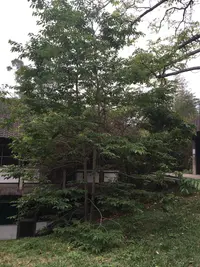
Microdesmia arborea Care

Microdesmia arborea

About Microdesmia arborea

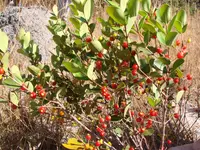
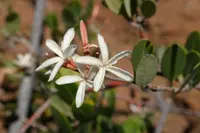
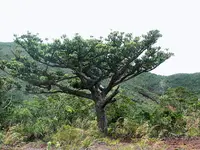
Microdesmia arborea is a small to medium woody shrub or tree from tropical Central and South America, often found in warm, humid forests. It usually forms a dense crown with simple, evergreen leaves and small, inconspicuous flowers, followed by modest fruit that mainly interests wildlife rather than people.

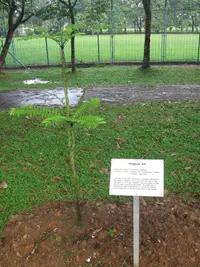
In cultivation, it is still uncommon and mainly grown by collectors or in botanical gardens. Its preference for consistently warm temperatures and moisture makes it better suited to tropical or protected greenhouse conditions than to typical home interiors.

Those who want to care for Microdesmia arborea should be prepared to provide bright, filtered light, evenly moist but well-drained soil, and protection from cold or very dry air.

Main Plant Requirements

Care Difficulty

Moderate Care

Light Preference

Partial Shade

Water Requirements

Moderate Water

Temperature Preference

Warm Climate

Hardiness Zone

Unknown

Soil Texture

Loamy, Sandy, Organic-rich

Soil pH

Acidic (5.5–6.5), Slightly acidic (6.5–7.0)

Soil Drainage

Well-drained

Fertilization

Minimal (feed rarely)

Get Personalized Care Plan

Scan your plant to receive care tips personalized for your specific plant

Available on iOS and Android

How to Care for the Microdesmia arborea

This shrub prefers bright, filtered light that mimics light woodland edges.

  • Provide 4–6 hours of bright, indirect light or light dappled sun, with gentle morning sun and protection from harsh midday and afternoon rays.
  • Tolerates partial shade, but flowering and dense growth decline if it receives less than about 3–4 hours of bright light per day.
  • Watch leaves for sun stress: pale, crisp, or scorched patches indicate too much direct sun, while long, weak shoots and sparse foliage signal insufficient light.

Watering should keep the root zone evenly moist but never saturated.

  • Before watering, let the top 3–5 cm of soil dry; then water slowly so moisture reaches the deeper root zone without pooling on the surface.
  • In warm growing seasons, expect more frequent watering as the top layer dries faster; reduce frequency in cooler months when growth slows.
  • Leaves yellowing from the base with soft stems suggest overwatering, while dull, slightly curling leaves and dry soil throughout the root area indicate underwatering.

This species prefers warm, frost-free conditions with stable temperatures.

  • Aim for 65–82°F (18–28°C) for active growth; cooler spells down to about 55°F (13°C) are tolerated but slow development.
  • Protect from frost, as tissue damage can occur near 32°F (0°C); prolonged exposure below 28°F (-2°C) can kill young plants.
  • During hot periods above 90°F (32°C), provide extra shade and soil moisture to limit heat stress, especially for Microdesmia arborea in exposed sites.

This species benefits from moderate to high, stable humidity for best foliage and growth.

  • Aim for 50–70% humidity, using a room humidifier or pebble tray if indoor air is consistently dry.
  • Leaves curling, browning at edges, or developing crispy tips indicate humidity stress.
  • Keep the plant away from heating vents or strong drafts that lower local humidity quickly.

Microdesmia arborea prefers slightly acidic, moist but sharply drained soil with high organic content.

  • Use a loamy mix of roughly 50% composted organic matter, 30% coarse sand, and 20% perlite or fine bark for structure and drainage.
  • Target pH around 6.0–6.5; incorporate peat or pine bark to acidify alkaline mixes slightly.
  • Ensure the mix stays aerated by including coarse particles that prevent compaction and allow roots to access oxygen easily.
  • Avoid heavy clay, waterlogged spots, or pure sand, which either suffocate roots or dry out too rapidly.

This species can adapt to container growing when provided with a deep, stable pot and controlled moisture.

  • Choose a container slightly deeper than wide to accommodate its potentially vigorous, downward-growing root system and prevent tipping.
  • Use a heavy, non-flimsy pot material so wind or uneven growth does not destabilize the container outdoors.
  • Elevate the pot on feet or bricks so drainage holes stay clear and excess water escapes quickly after rainfall or irrigation.

This species grows reasonably well in modest soils, but targeted feeding supports steady growth in containers or poor ground.

  • Use a balanced, slow-release fertilizer (around 10-10-10) or well-rotted compost at the start of the growing season.
  • Feed potted Microdesmia arborea every 6–8 weeks in spring–summer, using fertilizer at 1/2 strength.
  • Avoid feeding in late fall–winter to prevent soft, cold-sensitive growth.
  • Water before and after fertilizing to reduce root burn and improve nutrient uptake.

Pruning is mainly used to maintain structure and remove weak growth on this small tree or shrub.

  • Carry out light pruning in late winter or very early spring before active growth begins.
  • Remove dead, diseased, crossing, or inward-growing branches to improve airflow and reduce pest issues.
  • Shorten overly long shoots to shape the canopy and manage size without heavy cuts.
  • Use sharp, clean bypass pruners and make cuts just above outward-facing buds or branch junctions.

This species is usually grown in the ground, so focus on careful transplanting rather than frequent repotting.

  • Transplant in late winter or early spring while growth is slow and temperatures are mild.
  • Look for slow growth, roots circling the container, or water running straight through as signs a potted plant needs a larger pot.
  • Move up only 1 pot size, use a well-drained mix, and keep the original root ball intact to limit shock.
  • Water thoroughly after planting, then keep soil evenly moist and shaded for 1–2 weeks to help roots re-establish.

Propagation is possible but tends to be slow, so it is usually done by seed or semi-ripe cuttings.

  • Collect ripe seeds, clean them, and sow fresh in a free-draining mix kept at 70–80°F with steady moisture.
  • Take semi-ripe cuttings in late spring–summer, 8–12 cm long, with 2–3 nodes.
  • Remove lower leaves, dip the cut base in rooting hormone, and place in a humid, bright, indirect-light environment.
  • Maintain bottom warmth if possible and avoid waterlogging to reduce rot during the long rooting phase.

This plant prefers mild, frost-free climates and benefits from basic winter protection in colder areas.

  • In regions below about 30°F, site plants in a sheltered position near walls or overstory trees.
  • Apply a 5–8 cm mulch layer around the root zone in late fall, keeping it away from the trunk.
  • Move container plants indoors or into an unheated greenhouse before the first hard frost.

Care Tips

Early structural training

While young, select 1–3 strong stems and lightly stake or tie them to a bamboo cane to establish a clear framework that supports later woody growth and reduces storm damage as the plant matures.

Mulch root zone

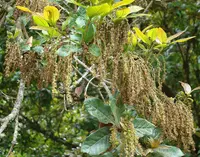
Apply a 5–8 cm layer of composted bark or leaf mold around the root zone, keeping it 5 cm away from the trunk, to stabilize soil moisture, protect fine feeder roots, and reduce weed competition.

Wind and exposure management

In exposed sites, use a temporary windbreak net or plant on the sheltered side of a fence so new shoots and flower buds are not desiccated or snapped by strong prevailing winds.

Targeted pest monitoring

Inspect the undersides of leaves and young shoots every 2–3 weeks for scale insects and mites, and if found, prune out localized infestations or treat with horticultural oil according to label directions before populations build up.

Seasonal nutrient top-up

At the start of the warm growing season, lightly top-dress the root area with 1–2 cm of well-rotted compost and gently scratch it into the soil surface to provide a slow, balanced nutrient boost that supports flowering and fruit set when growing Microdesmia arborea.

Common Pests and Diseases

Scale insects

This pest feeds on stems and leaf undersides, causing yellowing, stunted growth, and sticky honeydew that can lead to sooty mold on Microdesmia arborea in warm, sheltered sites.

Solution

Wipe or gently scrub stems and leaves with a cotton pad or soft brush dipped in a mild soap-and-water solution, then rinse with clean water; for heavier infestations, use a horticultural oil spray labeled for ornamental shrubs, making sure to coat stems and leaf undersides while the plant is shaded and temperatures are below 85°F.

Leaf spot

This disease causes small brown or dark purple lesions on leaves, sometimes with yellow halos, and can lead to premature leaf drop in humid, shaded conditions common where people are growing Microdesmia arborea as an understory shrub.

Solution

Remove and discard affected leaves, avoid wetting the foliage when watering, improve air circulation by light pruning, and if spots continue to spread, apply a copper-based or other broad-spectrum fungicide labeled for ornamental shrubs, following the interval and dosage on the label.

Mealybugs

These insects cluster in leaf axils and along young stems, appearing as white cottony masses that weaken the plant and excrete honeydew that may attract ants.

Solution

Dab visible pests with a cotton swab dipped in isopropyl alcohol, then follow with a thorough wash using a mild insecticidal soap solution, repeating every 7–10 days until no new clusters appear and inspecting any nearby plants for spread.

Twig dieback

This disease leads to browning and death of young shoots or branch tips, often starting after mechanical injury, drought stress, or prolonged high humidity around dense foliage.

Solution

Prune out affected twigs 5–10 cm below visible damage using clean, disinfected tools, dispose of all prunings, then reduce plant stress by providing consistent soil moisture, avoiding overhead watering, and maintaining an open canopy to improve light penetration and airflow.

Interesting Facts

Fruit and seed structure

The small fleshy fruits contain a single relatively large seed and are typical of the Chrysobalanaceae, a family known for drupelike fruits that are often dispersed by animals. In Microdesmia arborea the fruit pulp is modest, suggesting the main attractant for dispersers is likely the bright color rather than abundant nutrition.

Neotropical forest habitat

Microdesmia arborea is native to lowland to premontane neotropical forests, where it grows as a small tree or shrub in warm, humid conditions. It commonly occurs in the understory or forest edge, indicating adaptation to filtered light rather than full, exposed sun.

Taxonomic reclassification

This species was long treated in the genus Licania and only relatively recently placed in Microdesmia based on detailed morphological and molecular studies. The reclassification reflects subtle but consistent features of its flowers and fruits that separate it from the core Licania group.

FAQs about Microdesmia arborea

Growth is moderate. In suitable warm outdoor conditions, it may extend 20–40 cm per year, slowing in cooler or drier periods. Container plants usually grow more slowly due to limited root space and nutrients.

Grow Healthy Plants with Botan Care

Keep your plants happy and healthy with plant identification, disease detection, and easy care guidance.

Botan plant care app — identify plants on mobile

Explore More Plants