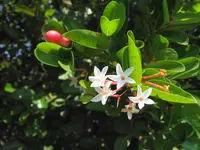
African basil Care (Ocimum gratissimum)

African basil

About African basil

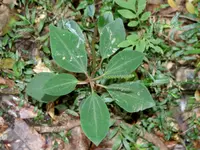
African basil (Ocimum gratissimum) is a fast-growing, aromatic herb in the mint family, valued for its strong clove-like scent and culinary use. It is a shrubby perennial in warm climates but often grown as an annual in cooler regions.

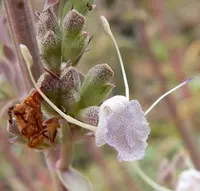
The plant typically forms a bushy clump with upright stems, textured green leaves, and tall flower spikes that attract pollinators. It is native to tropical Africa and parts of Asia but is now cultivated in many warm regions.

African basil is generally considered easy to grow, as it tolerates heat, recovers quickly from pruning, and thrives in well-drained soil. Understanding how to care for African basil mainly involves providing good light, moderate moisture, and protection from frost.

Main Plant Requirements

Care Difficulty

Moderate Care

Light Preference

Full Sun

Water Requirements

Moderate Water

Temperature Preference

Tropical / Frost Sensitive

Hardiness Zone

10–12

Soil Texture

Sandy, Loamy, Organic-rich

Soil pH

Acidic (5.5–6.5), Slightly acidic (6.5–7.0)

Soil Drainage

Moist but well-drained

Fertilization

Light (every 4–6 weeks)

Get Personalized Care Plan

Scan your plant to receive care tips personalized for your specific plant

Available on iOS and Android

How to Care for the African basil

Ocimum gratissimum needs strong light to form compact growth and aromatic leaves.

  • Provide 6–8 hours of direct sun daily, ideally with gentle morning sun and light afternoon shade, especially in hot climates.
  • Tolerates partial shade (4–5 hours sun) but foliage becomes looser and flavor weaker if light drops below this level.
  • In summer, protect African basil from harsh late-afternoon sun with filtered light; in winter, avoid deep shade from buildings, trees, or low sun angle.

This species prefers evenly moist, well-drained soil rather than extremes of drought or saturation.

  • Water when the top 2–4 cm of soil feels dry, applying enough water to moisten the root zone without leaving standing water.
  • In hot, windy periods, expect faster drying and more frequent watering; in cool or rainy seasons, extend intervals and rely more on soil feel than on a fixed schedule.
  • Wilting, dull leaves, and very light soil indicate thirst, while yellowing lower leaves, soft stems, or sour-smelling, soggy soil suggest overwatering and poor drainage for Ocimum gratissimum.

This warm-season herb grows best where temperatures stay consistently mild to warm.

  • Optimal growth occurs at 70–85°F (21–29°C); growth slows noticeably below 65°F (18°C).
  • The plant is very frost-sensitive; damage starts near 40°F (4°C) and it is usually killed at 32°F (0°C), so protect or harvest before first frost.
  • Tolerates brief heat up to about 95°F (35°C) if soil moisture is maintained, but prolonged heat above this can reduce leaf quality and increase stress.

This species grows best in moderately humid air but adapts to typical indoor conditions.

  • Aim for 40–60% humidity; it tolerates brief dips lower but growth may slow.
  • Dry air causes curled leaf edges, browning tips, and faster wilting between waterings.
  • Increase humidity by grouping pots, placing the container on a pebble tray with water below the pot base, or running a nearby humidifier.

This plant prefers loose, well-aerated soil that drains quickly but does not dry out instantly.

  • Use a mix of 40% peat- or coir-based potting mix, 40% compost, and 20% perlite or coarse sand for structure and drainage.
  • Aim for slightly acidic to neutral pH around 6.0–7.0 to support balanced nutrient uptake.
  • Avoid heavy clay, compacted ground, or mixes that stay waterlogged, which promote root rot and weak growth.
  • For practical Ocimum gratissimum care, regularly loosen the top 2–3 cm of soil to maintain aeration without disturbing deeper roots.

This species suits container growing when the pot supports its vigorous, upright habit.

  • Choose a pot at least 25–30 cm wide so the root system can anchor the tall, leafy stems without tipping.
  • Select heavier materials like terracotta or ceramic outdoors to stabilize the plant against wind as the canopy enlarges.
  • Raise the pot slightly on feet or bricks so drainage holes clear quickly after watering, preventing soggy lower roots.

Ocimum gratissimum responds well to moderate feeding during its warm growing season.

  • Use a balanced liquid fertilizer (for example 10-10-10) at 1/2 strength every 2–4 weeks in spring and summer.
  • Alternatively, apply a thin layer of mature compost around the root zone for slow nutrient release.
  • Reduce feeding to once every 6–8 weeks, or stop entirely, in fall and winter when growth slows.
  • For African basil in containers, flush the pot with plain water every 1–2 months to limit salt buildup.

Pruning helps Ocimum gratissimum stay compact, leafy, and productive.

  • Begin light pruning in mid to late spring once new growth is strong.
  • Pinch or cut soft tips above a leaf node to encourage branching and a bushier shape.
  • Remove dead, damaged, or crowded stems with clean scissors or hand pruners to improve airflow.
  • Trim off flower spikes if leaf harvest is the priority, since flowering can reduce foliage quality.

This species adapts well to both garden beds and containers when transplanted carefully.

  • Transplant or up-pot in spring after frost risk has passed and roots are lightly circling the container.
  • Plan on moving container plants to a 2–5 cm wider pot about every 1–2 years, depending on growth.
  • Check for signs like slow growth, wilting between waterings, or dense roots at drainage holes.
  • Water well before and after transplanting, keep roots shaded, and avoid root ball breakup to limit stress.

Ocimum gratissimum is commonly propagated from both stem cuttings and seed.

  • Take 8–12 cm softwood cuttings in late spring or early summer and remove lower leaves.
  • Place cuttings in moist, well-drained mix under bright, indirect light; optional rooting hormone improves success.
  • Sow fresh seed on the surface of warm (70–75°F) seed mix and keep evenly moist until germination.
  • Once roots are established or seedlings have 2–3 true leaves, pot on gently to avoid root damage.

Winter care is important in regions with frost, as this tropical basil is cold sensitive.

  • In USDA zones below 10, treat plants as annuals outdoors or overwinter cuttings indoors under bright light.
  • Move container plants indoors before night temperatures drop below 50°F and place in a warm, sunny spot.
  • For in-ground plants in mild climates, apply a 5–8 cm mulch layer around the base to insulate roots.
  • Reduce watering in winter so the soil stays slightly moist but never saturated in cool conditions.

Care Tips

Regular tip harvesting

Pinch 3–5 cm of stem tips every 1–2 weeks during active growth to keep plants compact, delay flowering, and encourage a steady flush of new aromatic leaves.

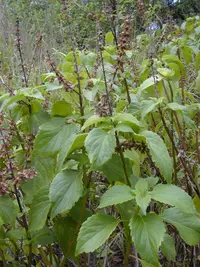
Flower spike management

As soon as flower spikes appear, remove them with clean scissors down to just above a leaf node to redirect energy into foliage production unless seed saving is a specific goal.

Controlled root pruning

For container plants, slide the root ball out every 4–6 months and trim back the outer 1–2 cm of densely circling roots before replanting in fresh mix to maintain vigorous growth and prevent the plant from stalling.

Targeted airflow planning

Space plants so mature leaves do not touch and position containers where they receive steady but gentle air movement, which helps foliage dry quickly after rain and reduces fungal leaf spot issues common when growing African basil in humid climates.

Sanitary harvest routine

Disinfect shears with 70% isopropyl alcohol before and after harvesting or pruning to limit the spread of bacterial leaf spots and fungal diseases between plants during Ocimum gratissimum plant care.

Common Pests and Diseases

Leaf spot

This disease causes round to irregular brown or black spots on leaves that may merge, leading to yellowing and early leaf drop, especially in warm, humid weather.

Solution

Remove and discard affected leaves, avoid overhead watering, and space plants to increase airflow; if the problem persists, apply a copper-based or chlorothalonil fungicide labeled for basil, following all label directions.

Downy mildew

This disease produces pale yellow patches on the upper leaf surface and a gray to purplish fuzzy growth on the undersides, often leading to distorted, unmarketable foliage.

Solution

Improve air circulation, water at the base early in the day, and avoid wetting foliage; promptly remove heavily affected plants and use a phosphonate or other downy-mildew-specific fungicide where labeled for basil to protect new growth.

Aphids

These insects cluster on tender shoots and leaf undersides, sucking sap and causing curling, sticky honeydew, and sometimes black sooty mold on leaves.

Solution

Spray plants with a firm stream of water to dislodge colonies, then treat remaining clusters with insecticidal soap or neem oil, repeating every 5–7 days until populations decline while monitoring beneficial insects.

Spider mites

This pest thrives in hot, dry conditions, causing fine stippling, dull or bronzed leaves, and delicate webbing between stems and leaves.

Solution

Increase humidity around plants, hose down foliage regularly to knock off mites, and apply insecticidal soap or horticultural oil to both sides of leaves, repeating applications as needed and avoiding use during high heat above 85°F.

Leaf miners

These insects create winding, pale tunnels inside leaves as larvae feed between leaf surfaces, reducing photosynthetic area and making foliage unattractive and less suitable for harvest when growing African basil.

Solution

Hand-remove and discard mined leaves as soon as trails appear, use floating row covers to exclude adult flies on outdoor plantings, and apply a spinosad-based product to young foliage if damage is persistent and label directions allow use on culinary herbs.

Interesting Facts

Strong clove-like aroma

The leaves of this species contain high levels of eugenol, the same aromatic compound that gives cloves their characteristic scent, which makes the plant notably stronger-smelling than many other basils.

Diverse local names

This plant is widely naturalized across tropical Africa and Asia, where it is known by many regional names and is commonly used as a flavoring herb in traditional cuisines.

Highly variable chemistry

Different wild and cultivated populations show distinct chemotypes, meaning the essential oil composition can vary greatly between regions, especially in the relative amounts of eugenol, thymol, and other aromatic compounds.

Botan icon

Did you know?

In some tropical regions, dense stands of this species act as important nectar sources for local pollinators, including bees that rely on its long flowering period when other nectar plants are scarce.

FAQs about African basil

Yellowing leaves usually result from overwatering, poor drainage, or nutrient deficiency, especially nitrogen. Check that the pot drains well, let the top soil dry slightly between waterings, and consider a light, balanced fertilizer during active growth.

Grow Healthy Plants with Botan Care

Keep your plants happy and healthy with plant identification, disease detection, and easy care guidance.

Botan plant care app — identify plants on mobile

Explore More Plants