Secure trunk base
Stake young plants with 2–3 sturdy bamboo canes placed around the trunk and tied loosely with soft ties, so the tall fronds and developing trunk stay stable in wind and do not rock and damage new roots.

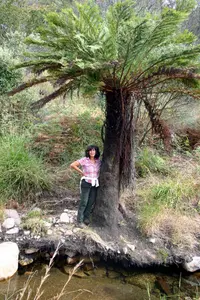
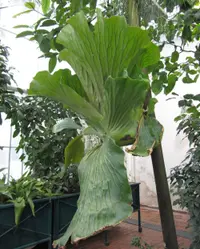
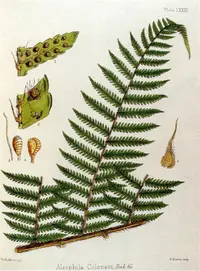
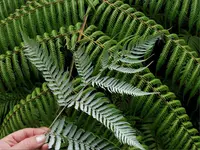
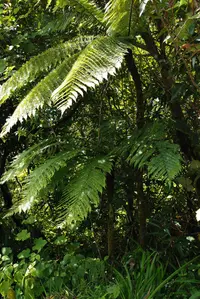
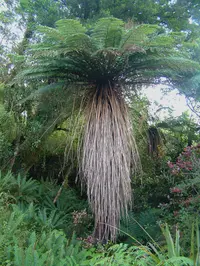
The common tree fern, Alsophila dregei, is a fast-growing, trunk-forming fern that develops a tall woody stem topped with a crown of graceful, arching fronds. It creates a strong vertical accent and a lush, tropical look as it matures.
This species is native to higher-altitude regions of southern Africa, where it grows in moist forests and along sheltered slopes. Its preference for cool, humid, and sheltered conditions can make it more demanding than typical houseplants.
Gardeners who care for common tree fern should note that it dislikes drying out or strong, hot sun and benefits from consistently moist, rich, well-drained soil.

Care Difficulty
Moderate Care

Light Preference
Partial Shade

Water Requirements
Keep Soil Moist

Temperature Preference
Warm Climate

Hardiness Zone
9–11

Soil Texture
Loamy, Peaty, Organic-rich

Soil pH
Acidic (5.5–6.5), Slightly acidic (6.5–7.0)

Soil Drainage
Moist but well-drained

Fertilization
Light (every 4–6 weeks)
Scan your plant to receive care tips personalized for your specific plant
Available on iOS and Android
This tree fern prefers bright, gentle light that mimics a forest understory.
This species needs consistently moist but not waterlogged soil around its fibrous trunk and roots.
This fern prefers mild, frost-free conditions with stable temperatures.
This fern needs consistently moist air to maintain healthy fronds.
Soil must be moisture-retentive yet airy to support this tree fern’s shallow roots.
This species adapts well to container growing when the pot supports its tall, top-heavy form.
This species responds well to light, consistent feeding rather than heavy doses.
Pruning Alsophila dregei focuses on hygiene and maintaining an open, symmetrical crown.
This tree fern prefers stable conditions, so repot or transplant only when clearly necessary.
Reproducing Alsophila dregei is possible mainly from spores but is slow and technically demanding.
Cold sensitivity means this tree fern needs thoughtful winter management in many climates.

Plant Health Check
Not sure what's wrong with your plant? Check your plant's health inside the app.
This species is native to higher-rainfall regions of southern Africa, especially misty mountain slopes and rocky stream valleys from South Africa north into neighboring countries, where it often forms scattered colonies rather than dense forests.
Its erect trunk is covered with dark, rough scales and old leaf bases that act as physical protection against herbivores and help reduce water loss along the stem in exposed, upland habitats.
Compared with many tropical tree ferns, it is unusually tolerant of cool conditions and light frosts, which is why growers in mild-climate regions often select it over more cold-sensitive relatives when aiming to grow Alsophila dregei outdoors.
In its native habitat, this tree fern often anchors its roots into crevices among rocks on steep slopes, allowing it to stabilize shallow mountain soils and contribute to gradual soil formation in otherwise erosion-prone sites.
Brown frond tips usually indicate low humidity, drying winds, or inconsistent moisture around the root zone and trunk. Increase humidity, shelter from wind, use mulch, and keep the root area evenly moist without waterlogging.
Keep your plants happy and healthy with plant identification, disease detection, and easy care guidance.