Wind-shaping young plants
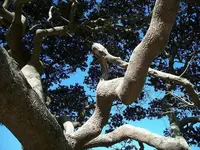
In the first 2–3 years, lightly stake young trees but allow some movement in the wind so the trunk thickens and develops strong anchoring roots instead of staying weak and top-heavy.

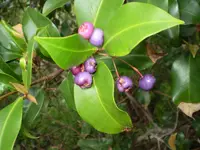
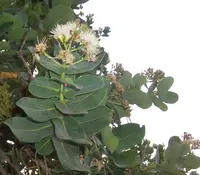
Blue lilly pilly, Syzygium oleosum, is an evergreen shrub or small tree valued for its dense foliage and ornamental berries. It usually forms a rounded crown with glossy leaves that can flush bronze or pink when young.
The plant is native to eastern Australia, where it grows in rainforests and moist woodlands. Its colorful fruits attract birds and can be used in jams or preserves.
This species is considered relatively easy to grow in mild climates, as it tolerates pruning and adapts to hedging or specimen planting. To care for Blue Lilly Pilly, provide consistent moisture, reasonably fertile soil, and light from full sun to bright partial shade.

Care Difficulty
Moderate Care

Light Preference
Full Sun

Water Requirements
Regular Water

Temperature Preference
Warm Climate

Hardiness Zone
9–11

Soil Texture
Sandy, Loamy, Organic-rich

Soil pH
Acidic (5.5–6.5), Slightly acidic (6.5–7.0)

Soil Drainage
Moist but well-drained

Fertilization
Minimal (feed rarely)
Scan your plant to receive care tips personalized for your specific plant
Available on iOS and Android
Syzygium oleosum prefers bright, gentle sun with some protection from harsh midday exposure.
This species prefers evenly moist, well-drained soil that never stays soggy for long periods.
This plant thrives in mild to warm, frost-free climates.
Syzygium oleosum prefers moderate humidity but adapts well to typical household conditions.
Syzygium oleosum grows best in moist, well-structured soil that stays aerated and free-draining.
This species suits container growing when the pot supports its woody root system and upright canopy.
Syzygium oleosum responds well to moderate feeding in containers or nutrient-poor soils, while established in-ground trees often need little fertilizer.
Pruning Syzygium oleosum helps maintain a dense canopy, healthy structure, and good air flow.
This species is often grown in the ground, but container plants and young hedging stock benefit from thoughtful transplanting.
Propagation of Syzygium oleosum is commonly done from semi-hardwood cuttings and seeds.
This subtropical tree has limited frost tolerance and benefits from basic winter protection in colder regions.

Plant Health Check
Not sure what's wrong with your plant? Check your plant's health inside the app.
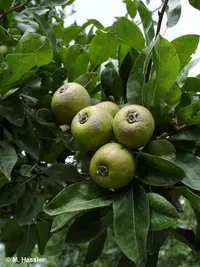
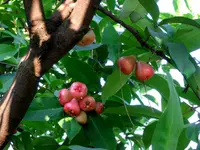
The ripe berries are an unusual natural blue to purple-blue color due to surface waxes and pigments, which is rare among edible rainforest fruits. This distinctive coloration helps distinguish it from many red-fruited Syzygium relatives.
This species is native to subtropical and warm temperate rainforests of eastern Australia, from southern New South Wales to northern Queensland. In its natural habitat it forms part of the mid‑story or canopy, often along moist, sheltered slopes and gullies.
The fleshy berries are eaten by various fruit-eating birds, which disperse the seeds through their droppings. This interaction helps maintain genetic exchange between scattered rainforest patches.

In suitable conditions this species can develop into a substantial tree over 20 m tall in its native Australian rainforests, yet it is also widely used as a pruned hedge or screen in cultivation, showing a high degree of size plasticity depending on management and environment.
Growth is moderately fast in suitable conditions. Young plants often add 30–60 cm per year once established. Rate depends on climate, soil fertility, moisture, and root space, and slows as the plant approaches its mature size.
Keep your plants happy and healthy with plant identification, disease detection, and easy care guidance.