wax apple Care (Syzygium samarangense)

Also known as: syzygium, Java rose apple, Samarang rose apple
wax apple

About wax apple

Wax apple (Syzygium samarangense) is a fast-growing tropical evergreen tree valued for its crisp, bell-shaped fruits and glossy foliage. It is commonly grown in home gardens and small orchards in Southeast Asia and other warm climates.

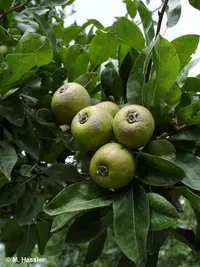
The tree has a rounded crown, smooth bark, and simple, leathery leaves that stay green year-round. Fruits range from pale green to deep red and are usually eaten fresh.

Syzygium samarangense prefers warm temperatures, consistent moisture, and well-drained soil, and it grows best in full sun. With suitable climate and access to pollinators, it is relatively straightforward to care for wax apple.

Main Plant Requirements

Care Difficulty

Moderate Care

Light Preference

Full Sun

Water Requirements

Regular Water

Temperature Preference

Tropical / Frost Sensitive

Hardiness Zone

10–12

Soil Texture

Sandy, Loamy, Organic-rich

Soil pH

Acidic (5.5–6.5), Slightly acidic (6.5–7.0)

Soil Drainage

Moist but well-drained

Fertilization

Moderate (every 2–4 weeks)

Get Personalized Care Plan

Scan your plant to receive care tips personalized for your specific plant

Available on iOS and Android

How to Care for the wax apple

Syzygium samarangense needs strong light to flower and fruit well outdoors in warm climates.

  • Provide 6–8 hours of direct sun daily, ideally with gentle morning sun and light afternoon shade in hot regions.
  • Tolerates partial shade (around 4 hours direct sun) but flowering and fruiting of wax apple decrease as shade increases.
  • In summer, protect from intense late-afternoon sun to reduce leaf scorch; in cooler months, choose the sunniest available position to maintain growth.

Syzygium samarangense prefers consistently moist but not waterlogged soil, especially during active growth and fruiting.

  • Water when the top 3–5 cm of soil feels dry, soaking the root zone deeply and allowing excess to drain away fully.
  • Use well-drained soil to limit root rot; signs of overwatering include yellowing leaves and soft, dark roots, while dry, curling leaves indicate underwatering.
  • Increase watering frequency in hot, dry weather and reduce during cooler or rainy seasons, always adjusting based on soil moisture rather than a fixed schedule.

This tropical fruit tree thrives in warm, frost-free conditions throughout the year.

  • Ideal growth occurs at 70–90°F (21–32°C), where flowering and fruit development are most reliable.
  • Short exposures down to about 40°F (4°C) may be survived but cause stress; tissue damage and dieback often occur near 32°F (0°C).
  • Handles brief heat up to 100°F (38°C) if soil moisture is maintained, but young trees need protection from hot, dry winds, especially during summer heat waves.

This species benefits from moderately high humidity to support healthy foliage and fruiting.

  • Aim for 50–70% humidity; it tolerates brief dips lower but prolonged very dry air slows growth and leaf expansion.
  • Dry air stress shows as leaf tip browning, curled young leaves, and stalled new shoots while soil moisture is adequate.
  • Increase humidity outdoors with nearby planting and mulch, or indoors by grouping plants, using a pebble tray, or a small humidifier near the wax apple.

Syzygium samarangense prefers deep, well-drained, fertile soil that holds moisture without becoming waterlogged.

  • Use a loamy, organic-rich mix combining roughly 50% composted material with 50% mineral components such as coarse sand and perlite.
  • Aim for slightly acidic to neutral pH around 6.0–7.0, avoiding strongly alkaline substrates that can reduce nutrient uptake.
  • Ensure rapid drainage by using coarse particles in the lower third of the mix and avoiding heavy clay or pure peat.
  • Improve aeration by incorporating chunky bark or coarse perlite so roots receive oxygen even after heavy watering.

This species can grow successfully in containers when given ample root space and stable conditions.

  • Choose a large, deep, heavy container to counterbalance the tree’s canopy and reduce tipping in wind or on balconies.
  • Select a pot material with moderate breathability, such as thick terracotta or fabric, to prevent chronic sogginess while still retaining some moisture.
  • Raise the container on pot feet so drainage holes stay clear, allowing excess water to exit quickly after heavy irrigation or rain.

Syzygium samarangense benefits from moderate, targeted feeding to support flowering and fruiting.

  • Use a balanced granular or slow-release NPK fertilizer or well-rotted compost at the start of the warm growing season.
  • Feed every 6–8 weeks during active growth, keeping fertilizer away from the trunk and watering in thoroughly.
  • Apply fertilizer at 1/2 the label strength for young or container-grown wax apple to avoid root burn.
  • Reduce or stop feeding in cooler months or any dormant period, especially where growth slows noticeably.

Pruning Syzygium samarangense helps maintain a strong framework and productive canopy.

  • Carry out main pruning in late winter or early spring before vigorous new growth begins.
  • Remove dead, diseased, crossing, or inward-growing branches using clean, sharp bypass pruners or loppers.
  • Thin crowded interior shoots to improve light penetration and air flow, which supports flowering and fruit quality.
  • Shorten overly long branches to shape the crown and keep the tree at a manageable height for harvesting.

Transplanting or container shifting helps maintain healthy growth when Syzygium samarangense becomes root-bound or outgrows its site.

  • Look for roots circling the pot, pushing through drainage holes, or slowed growth as signs it needs a larger container or ground planting.
  • Plan transplanting for late spring or early summer when soil is warm and the tree can re-establish quickly.
  • Move container plants every 2–3 years into a pot 5–8 cm wider, using a well-drained, slightly acidic to neutral mix.
  • Minimize root stress by watering well before and after transplanting, handling the rootball gently, and shading the tree for 3–7 days.

Syzygium samarangense is commonly propagated vegetatively to preserve fruit quality and known cultivars.

  • Use semi-hardwood cuttings taken in late spring or early summer, 10–15 cm long with 2–3 leaf nodes.
  • Dip the cut base in rooting hormone, then place in a sterile, well-drained medium kept at 75–80°F and high humidity.
  • Try air layering on healthy, pencil-thick branches where reliable clonal plants are needed.
  • Sow fresh seeds in warm conditions as a secondary method, understanding seedlings may differ from the parent tree.

This tropical tree is frost-sensitive and needs careful winter management in cooler climates.

  • In ground, mulch 5–8 cm around the root zone in late fall, keeping mulch slightly away from the trunk.
  • In areas near or below 32°F, wrap young trunks with breathable horticultural fleece or burlap.
  • Move container plants indoors or into a greenhouse when night temperatures approach 40°F, providing bright light and reduced watering.

Care Tips

Canopy thinning

Every 1–2 years, selectively remove crowded interior branches to open the canopy, which improves airflow, reduces fungal issues, and helps fruit ripen more evenly.

Fruit load management

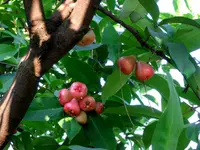
When the tree sets a heavy crop, thin out small or misshapen young fruits so the remaining ones size up better and reduce stress on branches that might otherwise snap.

Trunk and branch support

For young trees with heavy fruit clusters, use padded ties and sturdy stakes or props under main limbs to prevent splitting and to keep the canopy structure strong for future seasons.

Targeted root pruning

In containers, lightly root-prune and refresh the outer 2–4 in of the root ball every 2–3 years to control size, keep roots active, and maintain good drainage for healthier growth.

Preventive pest scouting

From spring through late summer, inspect tender shoots and developing fruit weekly for scale insects, aphids, and fruit borers so that any infestation can be managed early with pruning or appropriate treatments, which is central to effective caring for wax apple.

Common Pests and Diseases

Fruit fly

This pest lays eggs in developing fruit, leading to soft, discolored, and maggot-infested wax apples that drop prematurely.

Solution

Collect and destroy infested and fallen fruits, use fine mesh bagging on young fruits, and hang protein or pheromone traps to reduce adult populations; in outdoor orchards, integrate bait sprays or approved insecticides timed to fruit development following local extension guidelines.

Leaf gall psyllid

These insects cause swollen, blister-like galls on young leaves and shoots, which can curl, thicken, and become distorted, slowing growth.

Solution

Prune and dispose of heavily galled shoots, encourage natural predators by avoiding broad-spectrum insecticides, and, if needed, use targeted systemic insecticides or horticultural oils at early flushing stages to protect new growth.

Anthracnose

This disease produces dark, sunken lesions on leaves, twigs, flowers, and fruit, sometimes with pinkish spore masses and dieback of young tissue.

Solution

Remove and destroy infected leaves and mummified fruits, prune to improve canopy airflow, avoid overhead watering, and apply copper-based or other registered fungicides preventively during warm, wet periods according to local Syzygium samarangense care instructions.

Sooty mold

This disease appears as a black, soot-like coating on leaves and stems, growing on the sugary honeydew excreted by sap-feeding insects such as aphids, scale, or mealybugs.

Solution

First control the honeydew-producing insects with insecticidal soap, horticultural oil, or targeted systemic products, then gently wash affected foliage with water to remove the mold and improve light penetration and photosynthesis.

Scale insects

These pests appear as small, fixed bumps on stems, leaves, and fruit stalks, weakening the plant through sap removal and often leading to honeydew and sooty mold development.

Solution

Wipe or brush off small infestations manually, prune heavily infested twigs, and use horticultural oil or insecticidal soap thoroughly on stems and leaf undersides; for severe outdoor infestations, consider a systemic insecticide labeled for woody fruit species and apply during crawler stages.

Interesting Facts

Unusual bell-shaped fruit

The fruit has a characteristic hollow, bell-like shape with a waxy, smooth skin, which is why it is often called wax apple, water apple, or Java apple. Its flesh is crisp and very high in water content, making it closer in texture to a very juicy, crunchy vegetable than to most common fruits.

Highly variable fruit color

Cultivated forms show a wide color range, including white, pale green, pink, red, dark maroon, and almost black fruits. This color variation comes from different cultivated lines selected over time, especially in Southeast and South Asia.

Pollination by insects

The flowers are rich in nectar and produce many stamens, which attract bees and other insects that act as primary pollinators. The showy white to yellowish flowers typically open in clusters, increasing their visibility to pollinators in tropical orchards and home gardens.

Botan icon

Did you know?

In some regions of Southeast Asia, this species is commonly used as a living fence or boundary plant because it can be pruned into a dense hedge while still producing edible fruit, combining both structural and food-producing roles in traditional home gardens.

FAQs about wax apple

This species can grow well in large containers if given enough root space, regular pruning, and consistent feeding. Use a deep, sturdy pot, refresh the top soil periodically, and monitor moisture closely during hot weather.

Grow Healthy Plants with Botan Care

Keep your plants happy and healthy with plant identification, disease detection, and easy care guidance.

Botan plant care app — identify plants on mobile

Explore More Plants