Wind-firm training
In the first 3–4 years, stake the young tree on the windward side and remove lower stakes gradually so the trunk flexes slightly and develops stronger taper without snapping in storms.

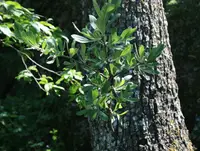
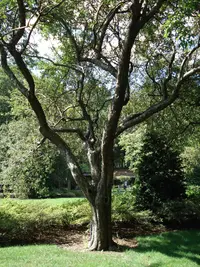
Pyrus elaeagrifolia, commonly called oleaster-leaved pear, is a small deciduous tree or large shrub from dry, rocky regions of southeastern Europe and western Asia. It is often used in landscapes and rootstock breeding programs rather than for eating fruit.
The plant has narrow, silvery-gray leaves and a naturally open, irregular crown that gives a light, airy look. White spring blossoms are followed by small, hard fruits that mainly attract wildlife.
This species is adapted to poor, well-drained soils and dry conditions, which makes it relatively low-maintenance once established. Understanding how to care for Oleaster-leaved Pear starts with providing plenty of sun and avoiding waterlogged ground.

Care Difficulty
Easy Care

Light Preference
Full Sun

Water Requirements
Low Water

Temperature Preference
Cold Hardy

Hardiness Zone
5–8

Soil Texture
Sandy, Loamy, Rocky

Soil pH
Slightly acidic (6.5–7.0), Slightly alkaline (7.0–7.5)

Soil Drainage
Well-drained

Fertilization
Minimal (feed rarely)
Scan your plant to receive care tips personalized for your specific plant
Available on iOS and Android
This drought-tolerant pear prefers bright, open conditions with plenty of direct sun.
This species is adapted to dry conditions and needs infrequent, deep watering once established.
This hardy pear tolerates a wide temperature range and is well suited to temperate climates.
Pyrus elaeagrifolia tolerates a wide humidity range and usually needs no special humidity management outdoors.
This drought-tolerant tree prefers lean, well-drained mineral soils rather than rich, heavy substrates.
This species can be grown in containers for some years, but it is better suited to long-term planting in open ground.
This drought-adapted tree needs only light feeding, as excessive nutrients can reduce its toughness.
Pyrus elaeagrifolia responds well to moderate, purposeful pruning that maintains a strong structure.
This species is usually grown in open ground, so focus on careful transplanting rather than frequent repotting.
Pyrus elaeagrifolia is generally propagated by seed or grafting, which are more advanced techniques than simple cuttings.
This tree is cold hardy in most temperate regions and usually needs minimal winter care once established.

Plant Health Check
Not sure what's wrong with your plant? Check your plant's health inside the app.
This species has narrow, lance-shaped leaves densely covered with silvery hairs, which reduce water loss and sunlight stress in its native dry, rocky habitats.
The tree naturally grows on arid slopes and limestone hills across southeastern Europe and western Asia, showing strong adaptation to poor, shallow, and dry soils compared with many other pear species.
In its native range it is sometimes used as a rootstock for cultivated pears, as it can confer improved drought and lime tolerance to grafted varieties.

The species provides important forage for wildlife and traditional livestock in its native regions, as goats, sheep, and wild herbivores browse its foliage and fallen fruits on marginal lands where few other tree crops can survive.
Growth is moderate rather than fast. In suitable outdoor conditions, it typically adds about 20–35 cm of height per year. Young trees may grow slightly quicker, then slow as they approach their mature size.
Keep your plants happy and healthy with plant identification, disease detection, and easy care guidance.