Graft For Vigor
Use a disease-resistant citrus or close relative rootstock and graft young wampi scions onto it to improve vigor, drought tolerance, and long-term productivity in marginal soils.

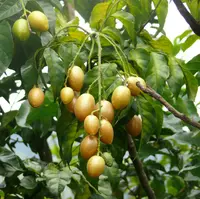
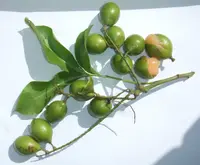
Wampi, Clausena lansium, is a small evergreen fruit tree in the citrus family, valued for its tangy, grape-sized berries. It typically forms a slender, airy canopy with glossy, divided leaves and clusters of small, fragrant flowers.
The species is native to southern China and Southeast Asia, where it is commonly grown in warm, humid climates. It is moderately demanding, as it needs steady warmth, good light, and protection from frost, so care for wampi is easier in mild or indoor-friendly regions.
The plant prefers bright light, well-drained but moisture-retentive soil, and consistent watering without long dry spells or waterlogging.

Care Difficulty
Moderate Care

Light Preference
Full Sun

Water Requirements
Moderate Water

Temperature Preference
Tropical / Frost Sensitive

Hardiness Zone
10–12

Soil Texture
Sandy, Loamy, Organic-rich

Soil pH
Acidic (5.5–6.5), Slightly acidic (6.5–7.0)

Soil Drainage
Well-drained

Fertilization
Light (every 4–6 weeks)
Scan your plant to receive care tips personalized for your specific plant
Available on iOS and Android
Clausena lansium benefits from bright, warm conditions that mimic a tropical-subtropical climate.
Clausena lansium prefers consistently moist but not saturated soil.
This species grows best in warm, frost-free climates with only moderate temperature swings.
This subtropical fruit tree prefers moderately humid air but tolerates brief drier spells if watered correctly.
Clausena lansium prefers deep, well-aerated, free-draining soil that still holds moderate moisture.
This species can be grown in containers when given a large, stable pot that manages moisture and root space well.
This subtropical fruit tree responds well to moderate feeding during active growth.
Thoughtful pruning keeps Clausena lansium healthy, productive, and easy to manage.
This species is usually grown in the ground, so focus on careful transplanting of young trees.
Clausena lansium is commonly propagated from seeds and semi-hardwood cuttings.
This subtropical tree is frost-sensitive and needs protection in cooler climates.

Plant Health Check
Not sure what's wrong with your plant? Check your plant's health inside the app.
This species belongs to the same subfamily as true citrus (Rutaceae: Aurantioideae) and produces berry-like fruits with a segmented, citruslike interior, but it is genetically and morphologically distinct from oranges, lemons, and limes.
The peel and leaves contain diverse essential oils, including monoterpenes and coumarins, which give the fruit a resinous, spicy, and somewhat musky aroma that differs from the cleaner scent of most common citrus fruits.
It has been cultivated in southern China and parts of Southeast Asia for many centuries as a small orchard tree, valued both for fresh eating and for use as a fragrant flavoring in some regional dishes and preserved fruit products.

In southern China, old wampi trees are sometimes maintained for generations in village gardens as living heirloom plants, with specific local landraces passed down through families for their distinctive fruit flavor and ripening time.
The fruit is edible and widely consumed fresh, pickled, or preserved. Flavor ranges from sweet to tangy, somewhat similar to citrus. Peel and seeds are usually not eaten. Only harvest from correctly identified, unsprayed plants.
Keep your plants happy and healthy with plant identification, disease detection, and easy care guidance.