


Root-zone warming
In cooler regions, place dark mulch or flat stones around the root zone to absorb heat and keep the soil slightly warmer, which encourages faster early-season growth and flowering.

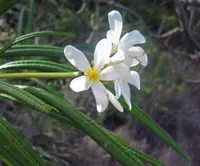
The nosegaytree, Plumeria alba, is a small tropical tree known for its thick, fleshy branches and strongly scented white flowers with yellow centers. It usually forms an open, rounded crown with clusters of broad, leathery leaves near the tips of its branches.
This species is native to the Caribbean and parts of tropical Central America, but is widely grown in warm climates as an ornamental. It is relatively easy to grow where winters are mild, as it tolerates heat, short dry periods, and poor, well-drained soils.
Successful care for nosegaytree relies on bright light, warmth, and avoiding waterlogged conditions, which can quickly damage its succulent roots and stems.

Care Difficulty
Moderate Care

Light Preference
Full Sun

Water Requirements
Moderate Water

Temperature Preference
Tropical / Frost Sensitive

Hardiness Zone
10–12

Soil Texture
Sandy, Loamy, Organic-rich

Soil pH
Acidic (5.5–6.5), Slightly acidic (6.5–7.0)

Soil Drainage
Well-drained

Fertilization
Light (every 4–6 weeks)
Scan your plant to receive care tips personalized for your specific plant
Available on iOS and Android
This sun-loving tropical tree needs strong light to bloom well and stay compact.
This drought-tolerant species prefers thorough, infrequent watering in fast-draining soil.
This tropical tree performs best in consistently warm conditions with protection from cold and frost.
Plumeria alba handles a wide humidity range but grows best with moderately moist air rather than extremes.
Plumeria alba prefers a sharply draining, airy substrate that mimics sandy, low-organic tropical soils.
This species is well suited to container growing, especially in cooler climates where winter protection is needed.
Plumeria alba benefits from moderate feeding during the warm growing season to support foliage and flower production.
Plumeria alba responds well to thoughtful pruning that manages height, branching, and flower display.
Container-grown plumeria and young landscape trees benefit from occasional transplanting to maintain healthy root systems.
Plumeria alba is most often propagated from cuttings, which maintain the traits of the parent plant.
This tropical species is frost-sensitive and needs specific winter care in cool climates.

Plant Health Check
Not sure what's wrong with your plant? Check your plant's health inside the app.
This species produces pure white flowers with a small yellow center, unlike many other plumerias that show pink or red pigments, making it easy to distinguish in mixed plantings.
In its native Caribbean and tropical American range, this tree often grows near coasts and tolerates saline winds and sandy soils better than many ornamentals, which is why it is common in seaside landscapes.
The flowers release a stronger, sweeter fragrance in the evening and at night, likely an adaptation to attract nocturnal pollinators such as moths rather than daytime insects.

Plumeria alba is the national flower of Nicaragua, known locally as sacuanjoche, and appears in traditional art, religious ceremonies, and cultural symbols across the country.
Sparse or absent flowers usually result from low light, excess nitrogen fertilizer, or insufficient warmth. Ensure strong sun exposure, avoid high-nitrogen feeds, and protect from cool nights. Pruning too hard in spring can also remove flowering wood.
Keep your plants happy and healthy with plant identification, disease detection, and easy care guidance.

Philodendron grandipes
Philodendron grandipes
New Mexico evening primrose
Oenothera neomexicana
Philodendron tripartitum
Philodendron tripartitum
spotted adromischus
Adromischus maculatus
paradisetree
Simarouba glauca
Spiderwort
Tradescantia 'Osprey'
Chinese pear
Pyrus ussuriensis
Kalanchoe citrina
Kalanchoe citrina