Calanthe tetragona Care

About Calanthe tetragona

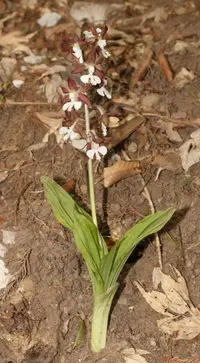
Calanthe tetragona is a terrestrial orchid, meaning it grows in soil rather than on trees. It forms clumps of pleated leaves from short, swollen stems called pseudobulbs. The plant produces upright spikes of star-shaped flowers, often white to pale yellow, giving it a delicate but structured look. In its natural range, it is found in cooler, moist forest habitats in parts of East Asia.

This species prefers cool to mild conditions, consistent moisture, and a loose, humus-rich substrate. It is considered moderately challenging, mostly because it dislikes heat, dry air, and long periods of drought. Growers who understand how to care for Calanthe tetragona usually succeed by providing stable conditions and avoiding extremes.

Main Plant Requirements

Care Difficulty

Moderate Care

Light Preference

Partial Shade

Water Requirements

Keep Soil Moist

Temperature Preference

Cool Climate

Hardiness Zone

7–9

Soil Texture

Loamy, Peaty, Organic-rich

Soil pH

Acidic (5.5–6.5)

Soil Drainage

Moist but well-drained

Fertilization

Light (every 4–6 weeks)

Get Personalized Care Plan

Scan your plant to receive care tips personalized for your specific plant

Available on iOS and Android

How to Care for the Calanthe tetragona

This terrestrial orchid prefers bright, gentle light that mimics a lightly shaded forest floor.

  • Provide 2–4 hours of soft morning sun with bright, dappled or filtered light the rest of the day; avoid harsh midday and afternoon sun that can scorch leaves.
  • Grow Calanthe tetragona in partial shade outdoors, such as under open shrubs or trees, ensuring it receives indirect light for 6–8 hours daily.
  • In summer, increase shade or add shade cloth during heatwaves; in winter, allow a bit more morning sun where frost and strong glare are not an issue.

This orchid prefers evenly moist conditions during active growth but reacts poorly to waterlogged soil.

  • During spring and summer, water when the top 2–3 cm of soil feels slightly dry, aiming to keep the root zone consistently moist but never soggy.
  • Use loose, well-drained, humus-rich soil so excess water can drain within a few seconds; prolonged puddling indicates poor drainage and high rot risk.
  • Reduce watering in late autumn and winter when growth slows or leaves die back, watching for shriveling pseudobulbs as a sign of underwatering and yellow, limp leaves as possible overwatering.

This species prefers mild, frost-free conditions with a noticeable cool period in winter.

  • Aim for 65–80°F (18–27°C) during active growth; short peaks to 85°F (29°C) are tolerated if shade and higher humidity are provided.
  • Avoid frost; growth declines below 50°F (10°C) and tissue damage can occur near 32°F (0°C), so protect plants with mulch or lift containers in cold climates.
  • Provide a cooler rest in winter around 50–60°F (10–16°C), keeping the plant drier; avoid placing it where sudden hot or cold drafts occur.

This orchid prefers moderately high, stable humidity to keep foliage and pseudobulbs hydrated.

  • Aim for 50–70% humidity; prolonged levels below 40% often lead to wrinkled pseudobulbs and limp leaves.
  • Dry indoor air causes brown leaf tips and poor flowering in Calanthe tetragona, especially near heating or air conditioning vents.
  • Increase humidity with a pebble tray under the pot, grouping plants, or a small humidifier rather than misting heavily.

This terrestrial orchid needs a loose, moisture-retentive yet fast-draining mix around its roots and pseudobulbs.

  • Use a mix of fine orchid bark, peat or coco coir, and perlite or pumice to create an airy, humus-rich substrate.
  • Aim for slightly acidic to neutral pH around 5.5–7.0, which supports nutrient uptake for Calanthe tetragona.
  • Ensure the mix drains freely so water runs through within seconds, preventing waterlogged conditions that rot pseudobulbs.
  • Improve aeration by including coarse particles (bark, pumice) and avoid heavy garden soil or unamended clay that compacts.

This species grows well in containers when root space, moisture control, and stability are managed carefully.

  • Choose a pot just wide enough for current growth and one season of expansion to avoid excess unused, soggy mix around roots.
  • Use a sturdy ceramic or heavy plastic pot to keep the plant stable when tall flowering spikes develop.
  • Select containers with generous drainage holes so water exits quickly, preventing cold, stagnant moisture around the pseudobulbs.

This orchid benefits from light, steady feeding during active growth but reacts poorly to heavy fertilizer applications.

  • Use a balanced orchid fertilizer (around 20-20-20) diluted to 1/4–1/2 strength for caring for Calanthe tetragona.
  • Feed every 2–3 weeks during spring and summer while producing new leaves and shoots.
  • Rinse the potting mix with plain water once a month to prevent salt buildup on roots.
  • Stop feeding in autumn and winter when growth slows or foliage dies back, resuming only as new shoots appear.

Pruning needs for Calanthe tetragona are minimal and focus on hygiene rather than shaping.

  • Cut spent flower spikes at the base after blooming using clean, sharp scissors or pruners.
  • Remove yellow, dead, or damaged leaves at their base to reduce disease risk and improve air movement.
  • Do not cut green, healthy foliage, as it supports energy storage in the pseudobulbs.
  • Disinfect tools before and after use to avoid spreading fungal or bacterial problems between plants.

Container-grown Calanthe tetragona benefits from occasional repotting to refresh its medium and keep roots healthy.

  • Check for crowded roots circling the pot, slow growth, or decomposed, sour-smelling mix as signs it needs repotting.
  • Plan to repot every 2–3 years in late winter or early spring, just before new shoots extend.
  • Gently loosen the root mass, remove old soft or rotten roots, and place the plant in fresh, well-drained orchid mix.
  • Water lightly after repotting, keep in bright shade for 1–2 weeks, and maintain even moisture to reduce transplant stress.

Calanthe tetragona is most reliably propagated by division of mature clumps rather than from seed.

  • Divide in late winter or early spring as new growth buds become visible but before strong root growth.
  • Lift the clump, shake off mix, and separate sections with at least 3–4 healthy pseudobulbs and visible buds.
  • Dust cut or broken areas with a fungicidal powder or cinnamon to limit infection risk.
  • Replant divisions in fresh, moisture-retentive orchid mix, keep evenly moist, and provide bright, indirect light until established.

This terrestrial orchid is only moderately frost tolerant and needs thoughtful winter care in colder climates.

  • In regions below about 25°F, grow in containers and move plants indoors to a cool, bright, frost-free space during winter.
  • Allow foliage to yellow and die back naturally in autumn, then cut it off at the base once dry.
  • Outdoors in mild climates, apply a 5–8 cm mulch over the root zone after dormancy begins to insulate pseudobulbs.
  • Keep dormant plants just slightly moist, avoiding both complete dryness and waterlogged soil during the coldest months.

Care Tips

Dormancy management

Allow the plant to enter a dry rest after flowering by gradually reducing water and keeping the pot slightly cooler, then resume normal watering only when new shoots are 2–3 cm tall to avoid rotting the new growths.

Divide at shoot stage

Plan division just as new shoots are 3–5 cm tall and roots are starting to emerge, cutting clumps so each division carries at least 3–4 healthy pseudobulbs to maintain vigor and stable flowering.

Shallow repotting

Set pseudobulbs just at or slightly above the medium surface and avoid burying the necks, as deep planting increases the risk of rot and weaker new growth.

Leaf and root inspection

Inspect the undersides of leaves and the root zone every 2–3 weeks so scale insects, spider mites, or rotting roots are caught early, using a soft brush or running water to remove pests before they spread when caring for Calanthe tetragona.

Outdoor summering

In mild climates, move the plant outdoors in late spring to a shaded, sheltered spot with good air movement and bring it back indoors before night temperatures drop below 50°F to strengthen growth and improve flowering the following season.

Common Pests and Diseases

Spider mites

This pest thrives in warm, dry air and can appear on older or stressed pseudobulbs and leaves, causing fine stippling and dull, grayish foliage. Symptoms include fine webbing on the undersides of leaves and along the midrib.

Solution

Increase humidity to 50–70%, rinse foliage and pseudobulbs thoroughly with lukewarm water, and wipe leaves with a soft cloth. For persistent infestations, apply a horticultural soap or neem oil to leaf undersides every 5–7 days until no new damage appears, and improve air movement around the plant.

Brown soft scale

These insects often settle along leaf midribs and on pseudobulbs, sucking sap and excreting sticky honeydew that can encourage sooty mold. Symptoms include brown, slightly raised bumps that do not rub off easily and a tacky film on leaves.

Solution

Manually remove adults by gently scraping with a cotton swab dipped in isopropyl alcohol and wash leaves to remove honeydew. Follow with 2–3 treatments of horticultural oil at 7–10 day intervals, making sure to coat stems, pseudobulbs, and leaf bases, and avoid overfertilizing, which can promote scale outbreaks.

Fusarium wilt

This disease can enter through damaged roots or cut surfaces on pseudobulbs and gradually blocks water transport, especially in plants kept in old, compacted media. Symptoms include slow decline, yellowing from leaf tips, and a purple or pink ring visible in cross‑sections of affected pseudobulbs or rhizomes.

Solution

Remove and discard affected pseudobulbs and any shriveled sections of rhizome, sterilizing cutting tools between cuts. Repot into fresh, free‑draining orchid mix, keep watering moderate so the medium dries lightly between waterings, and avoid overhead watering on cool days to limit spread.

Bacterial leaf spot

This disease develops readily on foliage that stays wet for long periods, especially in cool, stagnant air. Symptoms include water‑soaked, translucent lesions that enlarge, turn brown, and may have a yellow halo around the affected area.

Solution

Promptly remove and discard infected leaves, cutting into healthy tissue with sterilized tools. Improve air circulation, water at the base in the morning so leaves dry quickly, avoid splashing, and in valuable collections consider using an appropriate copper‑based bactericide according to orchid‑specific directions.

Slugs and snails

These pests are often attracted to moist orchid media and tender new shoots, especially when plants are grown cool and damp as is common when trying to grow Calanthe tetragona in outdoor shade beds. Symptoms include irregular holes in leaves and flowers and slime trails on the pot or bench surface.

Solution

Hand‑pick at night using a flashlight and remove hiding places such as dense debris around pots. Use physical barriers like copper tape around benches or pots and, if needed, place iron phosphate slug pellets away from direct root contact, keeping the medium only lightly moist instead of constantly wet.

Interesting Facts

Evergreen terrestrial habit

This orchid is an evergreen terrestrial species that keeps its pleated leaves year-round in mild conditions, unlike many Calanthe relatives that are seasonally deciduous. Its rhizomatous growth allows tight clumps to form in the forest understory soil rather than on trees.

Narrow floral range

Wild populations are naturally restricted to parts of southern Japan, including the Ryukyu Islands, and nearby regions of East Asia. This relatively narrow distribution reflects its preference for cool to mild, shaded, and humid woodland habitats with consistently moist, humus-rich soils.

Distinctive flower structure

The flowers show the typical Calanthe three-lobed lip, but in C. tetragona the lip and column are proportioned so that pollinators must contact the pollen masses precisely when reaching for nectar. This morphology improves pollination efficiency by guiding insects to a specific landing and feeding position.

FAQs about Calanthe tetragona

This species usually blooms in late winter to spring, depending on temperature and light. Flowering can last several weeks if conditions stay cool, evenly moist, and shaded from harsh sun, with spent spikes removed once they fade.

Grow Healthy Plants with Botan Care

Keep your plants happy and healthy with plant identification, disease detection, and easy care guidance.

Botan plant care app — identify plants on mobile

Explore More Plants