Laelia eyermaniana Care

About Laelia eyermaniana

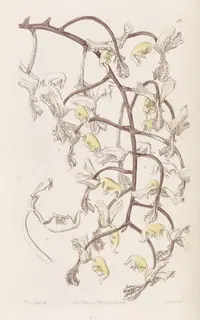
Laelia eyermaniana is an epiphytic orchid that grows on trees in its native habitats of Mexico and Central America. It forms clumps of slender pseudobulbs with narrow leaves. In season, it produces elegant flower spikes with showy, usually lilac to pink blooms that last a moderate time. The plant has a relatively compact growth habit, which suits bright indoor spaces or sheltered outdoor collections in mild climates. This species prefers strong filtered light, good air movement, and a free-draining, airy orchid mix. Once its basic needs are understood, it is considered of moderate difficulty, and learning how to care for Laelia eyermaniana helps improve flowering and long-term vigor.

Main Plant Requirements

Care Difficulty

Hard Care

Light Preference

Partial Sun

Water Requirements

Moderate Water

Temperature Preference

Tropical / Frost Sensitive

Hardiness Zone

11–13

Soil Texture

Sandy, Rocky, Organic-rich

Soil pH

Acidic (5.5–6.5)

Soil Drainage

Well-drained

Fertilization

Moderate (every 2–4 weeks)

Get Personalized Care Plan

Scan your plant to receive care tips personalized for your specific plant

Available on iOS and Android

How to Care for the Laelia eyermaniana

This orchid prefers bright, filtered light similar to high, lightly shaded tree canopies.

  • Provide 4–6 hours of bright, indirect light daily, with soft morning sun and protection from harsh midday and afternoon rays.
  • Outdoors, grow Laelia eyermaniana under 40–60% shade cloth or dappled canopy; indoors, place near an east or bright shaded south window.
  • Leaves turning yellow or scorched indicate too much sun, while dark, floppy growth and poor flowering signal insufficient light, especially in winter.

This species prefers moist, fast-draining conditions with a clear wet–dry cycle around the roots.

  • Water thoroughly, then allow the top 2–4 cm of mix or the roots on mounts to dry slightly before watering again.
  • Increase watering during active growth and warm months, reducing frequency in cooler seasons while never allowing roots to stay soggy.
  • Wrinkling pseudobulbs suggest underwatering, while blackened roots, sour smell, or constantly wet medium indicate overwatering and poor drainage.

This orchid grows best in intermediate to warm conditions with a distinct difference between day and night temperatures.

  • Aim for daytime temperatures of 70–80°F (21–27°C) and nighttime 55–65°F (13–18°C) during the main growing season.
  • Protect from cold; short dips to 45–50°F (7–10°C) may be tolerated if dry, but exposure near freezing can damage leaves and roots.
  • In hot spells above 85–90°F (29–32°C), increase air movement and shade slightly to prevent heat stress while maintaining the normal night drop.

This orchid prefers moderately humid air and reacts quickly to very dry conditions.

  • Aim for 50–70% humidity; it tolerates brief dips to 40% if watering is consistent.
  • Crisping leaf tips, accordion-like pleating, and blasted buds indicate humidity stress in Laelia eyermaniana.
  • Increase humidity with a pebble tray, grouping plants, or a small fan-assisted humidifier while keeping air moving to prevent fungal issues.

This epiphytic orchid needs a very open, airy medium rather than standard potting soil.

  • Use a coarse mix of medium orchid bark, chunky perlite or pumice, and a little sphagnum moss to retain some moisture without becoming dense.
  • Ensure extremely fast drainage; water should run through in seconds and the mix should dry quickly around the roots.
  • Keep pH slightly acidic to neutral (about 5.5–7.0), which suits most orchid-grade bark mixes used for Laelia eyermaniana.
  • Avoid fine peat-based mixes or compacted media that stay wet, as these reduce aeration and lead to root rot.

This species adapts well to container growing when the pot and medium prevent waterlogging.

  • Choose a shallow, wide pot or basket that allows roots to spread laterally and dry quickly between waterings.
  • Select breathable containers such as clay or slatted baskets to reduce moisture buildup around the pseudobulbs.
  • Secure the container or use a heavier base if mounted or basket-grown plants become top-heavy when in active growth.

This orchid benefits from light, balanced feeding during active growth but is sensitive to excess salts.

  • Use a balanced orchid fertilizer (such as 20-20-20) diluted to 1/4–1/2 strength in low-mineral water.
  • Feed Laelia eyermaniana every 2–3 weeks in spring and summer, applying to pre-watered media.
  • Reduce feeding to monthly or stop entirely in autumn and winter when growth slows.
  • Flush the pot with plain water every 3–4 weeks to remove accumulated fertilizer salts.

Pruning needs are minimal and focus on hygiene rather than reshaping this orchid.

  • In late winter or after flowering, remove spent flower spikes at the base with sterilized scissors.
  • Trim only dead, shriveled, or blackened pseudobulbs and leaves to limit disease spread.
  • Leave firm green pseudobulbs, as they store water and nutrients for new growth and flowering.
  • Disinfect cutting tools with alcohol between plants to reduce transmission of pathogens.

Repotting focuses on refreshing the orchid bark and maintaining healthy roots rather than giving a larger pot.

  • Check for crowded roots, declining vigor, or decomposed, sour-smelling bark as signs repotting is needed.
  • Repot every 2–3 years in late winter or just as new root tips appear to support recovery.
  • Use a snug pot with free drainage and fresh medium-grade orchid bark, optionally with perlite or charcoal.
  • Gently remove old mix, trim dead roots, then keep the plant slightly shaded and evenly moist for 1–2 weeks to reduce stress.

Propagation of this species is typically done by division rather than from seed in home conditions.

  • Divide clumps in spring when new growth and root tips are emerging and the plant is vigorous.
  • Ensure each division has at least 3–4 healthy pseudobulbs to support stable re-establishment.
  • Plant divisions in fresh orchid bark, keeping roots just covered and the rhizome slightly above the medium.
  • Maintain bright, indirect light, high humidity (60–70%), and gentle air movement to encourage new roots.

This orchid is not frost hardy and needs cool, frost-free conditions in winter.

  • Keep temperatures around 50–60°F at night and 60–70°F by day during winter rest.
  • Move outdoor containers indoors or into a greenhouse before temperatures drop near 40°F.
  • Water less often but do not let pseudobulbs shrivel; allow the medium to dry slightly between waterings.
  • Provide bright, indirect light and good air movement to reduce rot in cooler conditions.

Care Tips

Mounting strategy

Mount plants on cork or hardwood with a thin pad of sphagnum only around the roots, and angle the rhizome slightly downward so new growths have space to extend and dry quickly after watering.

Air movement control

Use a small, oscillating fan set on low and not pointed directly at the leaves to keep the leaf surface dry and reduce fungal issues without excessively dehydrating the thin roots.

Dry rest scheduling

In late fall and winter, reduce watering to short morning soakings followed by complete drying, and resume more frequent soaks only when new root tips and growths clearly extend in spring.

Fertilizer flushing routine

Once every 3–4 weeks, rinse the mount or pot thoroughly with plain, low-mineral water to flush built-up salts that can burn fine roots and reduce flowering over time, which is essential when caring for Laelia eyermaniana.

Light acclimation steps

Shift plants toward higher light in stages over 2–3 weeks, moving them a little closer to the light source each few days while checking leaves for any yellowing or rough, bleached spots as early warning signs of excess exposure.

Common Pests and Diseases

Scale insects

This pest often settles on pseudobulbs and leaf bases, sucking sap and weakening plants, especially in warm, drier collections. Symptoms include sticky honeydew, sooty mold on leaves, and small brown or white bumps that do not rub off easily.

Solution

Isolate the plant, then gently scrub infested areas with cotton pads or a soft brush dipped in isopropyl alcohol, taking care around buds and new roots. Improve air movement, avoid overfertilizing with high nitrogen, and repeat spot treatments weekly until new growth appears clean; in heavier cases, use a labeled horticultural oil spray compatible with orchids.

Spider mites

These insects favor Laelia foliage grown under high light with low humidity, feeding on leaf undersides. Symptoms include fine stippling, dull or silvery patches, and, in advanced cases, very fine webbing between leaves and around sheaths.

Solution

Increase humidity and airflow, then rinse foliage thoroughly under lukewarm water, focusing on leaf undersides. Follow with repeated applications of an orchid-safe miticide or insecticidal soap at 5–7 day intervals, and avoid letting plants dry excessively between waterings to reduce future outbreaks.

Bacterial brown spot

This disease develops as water-soggy, translucent patches on leaves or pseudobulbs that quickly turn brown and sunken, often with a yellow halo. Warm temperatures combined with water standing on foliage promote rapid spread across Laelia plants on the same bench.

Solution

Immediately cut out affected tissue with a sterile blade, keeping at least 1–2 cm into healthy tissue, and discard all debris. Keep leaves dry, improve spacing and airflow, and apply a labeled copper-based or other orchid-safe bactericide to remaining tissue and nearby plants according to directions.

Leaf anthracnose

This disease appears as small pale or yellow spots on leaves that enlarge, turn tan to dark brown, and may develop concentric rings or a target-like pattern. In humid orchid houses it can spread along older leaves, leading to premature leaf drop and weakened pseudobulbs.

Solution

Remove and discard affected leaves or leaf sections, sterilizing cutting tools between plants, and avoid overhead watering late in the day. Improve ventilation, keep humidity moderate, and apply an appropriate fungicide labeled for orchid anthracnose if new spots continue to appear, rotating products as directed.

Orchid mealybugs

This pest hides in leaf axils, flower sheaths, and roots of Laelia plants, feeding on sap and excreting honeydew that encourages sooty mold. Infestations often cause distorted new growth and poor flowering in collections growing Laelia eyermaniana indoors or in greenhouses.

Solution

Inspect all tight crevices, then remove visible insects with cotton swabs dipped in isopropyl alcohol and rinse the plant thoroughly, including roots at repotting. Repeat alcohol spot treatments weekly, discard heavily infested media, and, if needed, use a systemic insecticide labeled for ornamental orchids to control hidden populations.

Interesting Facts

Mexican montane habitat

This species is native to montane forests of Mexico, where it grows as an epiphyte on trees at relatively high elevations with pronounced dry and cool seasons.

Seasonal growth rhythm

In its native range it produces new growths and flower spikes in response to the end of the drier, cooler period, reflecting adaptation to a marked seasonal climate rather than continuously warm, wet conditions.

Fragrant white blooms

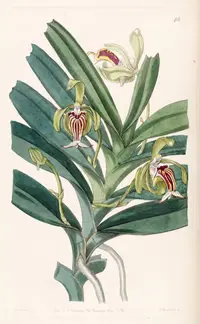
It bears white, star-shaped flowers with a contrasting lip that are known for a noticeable fragrance, an adaptation that helps attract specific insect pollinators in its native habitat.

FAQs about Laelia eyermaniana

Lack of blooms usually relates to insufficient light, too-warm nights, or inadequate winter rest. Provide bright but indirect light, slightly cooler and drier conditions in winter, and avoid heavy nitrogen fertilization, which favors leaf growth over flowers.

Grow Healthy Plants with Botan Care

Keep your plants happy and healthy with plant identification, disease detection, and easy care guidance.

Botan plant care app — identify plants on mobile

Explore More Plants