Pinch Early Shoots
Pinch back the top 2–3 cm of young stems in spring to encourage bushier plants with more flowering spikes instead of a few tall, floppy stems.

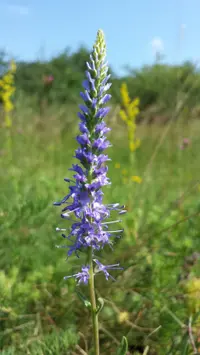
Spiked speedwell (Veronica spicata) is a compact, herbaceous perennial grown mainly for its dense spikes of small, tube-shaped flowers. It forms neat clumps of narrow, serrated leaves that create a tidy base for the vertical flower stems.
In the wild, it occurs in open meadows, rocky slopes, and grasslands across parts of Europe and western Asia. This background makes it generally resilient, cold-hardy, and suitable for many temperate gardens.
Spiked speedwell is considered easy to grow because it tolerates a range of soils, provided drainage is good, and adapts well to full sun in most climates. Gardeners who care for Spiked speedwell value its long flowering season and its ability to attract pollinators with relatively low maintenance needs.

Care Difficulty
Easy Care

Light Preference
Full Sun

Water Requirements
Moderate Water

Temperature Preference
Cold Hardy

Hardiness Zone
3–8

Soil Texture
Sandy, Loamy, Rocky

Soil pH
Acidic (5.5–6.5), Slightly acidic (6.5–7.0)

Soil Drainage
Well-drained

Fertilization
Minimal (feed rarely)
Scan your plant to receive care tips personalized for your specific plant
Available on iOS and Android
This sun-loving perennial flowers best with strong, consistent light exposure outdoors.
This plant prefers moderately moist, well-drained soil rather than constant wet conditions.
This hardy perennial tolerates a wide outdoor temperature range but grows best in mild conditions.
This species thrives in typical outdoor humidity and rarely needs special humidity management.
This perennial prefers moderately fertile, well-structured soil that drains quickly yet holds light, even moisture.
This species adapts well to container growing when given stable drainage and enough root depth.
Veronica spicata grows well in average soil but benefits from light, targeted feeding in containers or poor ground.
Pruning helps Veronica spicata stay compact and flower for a longer period.
This species is more often grown in garden beds, with transplanting done only as needed.
Veronica spicata is commonly propagated by division, cuttings, or seeds.
This hardy perennial tolerates typical winters in most temperate climates with minimal intervention.

Plant Health Check
Not sure what's wrong with your plant? Check your plant's health inside the app.
This species occurs naturally in dry meadows, open woodland edges, and rocky slopes across much of Europe and parts of western Asia, where it is adapted to relatively poor, well-drained soils and seasonal summer dryness.
Its dense vertical inflorescences can remain attractive for many weeks in summer, continuously producing small new flowers from the bottom upward, which provides a prolonged nectar source for bees, hoverflies, and butterflies.
Although wild plants typically bear blue to violet flowers, horticultural selections have expanded its color range to white, pale pink, and deep purple while retaining the narrow, upright spike form valued in ornamental borders.

In some European grassland conservation projects, this species is used as an indicator plant for traditionally managed, species-rich meadows, because stable populations often signal long-term continuity of low-intensity land use and relatively undisturbed soil conditions.
Lack of flowers is usually due to too much shade, excess nitrogen fertilizer, or old, unpruned stems. Ensure several hours of direct light, use balanced fertilizer, and shear or deadhead spent spikes to encourage new buds.
Keep your plants happy and healthy with plant identification, disease detection, and easy care guidance.