Orchid basket mounting
Grow this terrestrial orchid in a shallow slatted basket or mesh pot packed with a fine, humus-rich mix so that short stolons can wander and form a tighter colony without becoming waterlogged in deep containers.

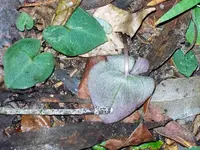
Pixie caps (Acianthus fornicatus) is a small terrestrial orchid native to eastern Australia, where it grows in open forests and heathlands. It forms low rosettes of heart-shaped leaves close to the ground.
In season, it sends up slender stems with translucent, hooded flowers that give the plant its common name. The growth habit is delicate but fairly resilient when basic needs are met.
This species prefers cool to mild conditions, dappled light, and evenly moist, well-drained, humus-rich soil. Understanding these natural conditions helps plant owners learn how to care for Pixie caps successfully.

Care Difficulty
Hard Care

Light Preference
Partial Shade

Water Requirements
Regular Water

Temperature Preference
Cool Climate

Hardiness Zone
Unknown

Soil Texture
Sandy, Loamy, Organic-rich

Soil pH
Acidic (5.5–6.5)

Soil Drainage
Moist but well-drained

Fertilization
Minimal (feed rarely)
Scan your plant to receive care tips personalized for your specific plant
Available on iOS and Android
Acianthus fornicatus prefers soft woodland light that mimics its native forest floor habitat.
This terrestrial orchid prefers evenly moist conditions but reacts poorly to both drought and waterlogging.
This species grows best in mild, frost-free conditions similar to cool coastal or forested climates.
This terrestrial orchid prefers moderately moist air rather than very dry conditions.
This species prefers a loose, humus‑rich mix that mimics a moist forest floor.
This orchid can be grown in containers if the setup mimics its shallow, humus‑rich forest habitat.
Acianthus fornicatus is a small terrestrial orchid that benefits from light, targeted feeding in active growth.
Acianthus fornicatus needs only minimal pruning, mainly to keep the plant clean and healthy.
This species is usually grown in situ or in small pots and dislikes frequent disturbance.
Multiplying Acianthus fornicatus is feasible but slow, mainly through division of tubers.
This Australian woodland orchid prefers mild, frost-free winters and needs some protection in colder climates.

Plant Health Check
Not sure what's wrong with your plant? Check your plant's health inside the app.
This species has translucent, hooded flowers with a dark, insect-like labellum that is thought to visually mimic small invertebrates, helping attract tiny flies and gnats as pollinators in its native habitats of eastern Australia.
It typically grows in leaf litter on shaded forest floors, often among mosses and decaying wood, relying on this cool, moist microhabitat rather than open or exposed sites.
The plant usually produces a single, heart-shaped basal leaf before sending up its slender flowering stem in the cooler months, then can become far less conspicuous outside its flowering period.
This terrestrial orchid usually flowers in late winter to early spring, producing small hooded flowers on short spikes. Individual blooms are subtle but interesting, with translucent petals and darker markings that attract tiny native pollinating insects.
Keep your plants happy and healthy with plant identification, disease detection, and easy care guidance.