Encourage Bushy Growth
Pinch back soft shoot tips once plants reach 10–15 cm tall to promote branching and a denser, more floriferous mound rather than a few lanky stems.

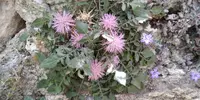
Centaurea raphanina is a perennial herbaceous plant from rocky, often limestone-rich habitats in parts of southeastern Europe and the eastern Mediterranean. It forms low clumps with divided, often gray-green foliage that helps it tolerate sun and dry conditions.
The plant produces thistle-like flower heads, usually in shades of purple, held on sturdy stems above the foliage. Its compact, tufted growth habit suits rock gardens, dry borders, and naturalistic plantings.
Gardeners find it moderately easy to grow where winters are cool and soils drain sharply. A sunny site, relatively poor, gritty soil, and careful watering are the main points to consider when learning how to care for Centaurea raphanina.

Care Difficulty
Moderate Care

Light Preference
Full Sun

Water Requirements
Moderate Water

Temperature Preference
Cool Climate

Hardiness Zone
6–9

Soil Texture
Sandy, Loamy, Rocky

Soil pH
Slightly acidic (6.5–7.0), Neutral (7.0)

Soil Drainage
Well-drained

Fertilization
Minimal (feed rarely)
Scan your plant to receive care tips personalized for your specific plant
Available on iOS and Android
This sun-loving perennial performs best in bright, open conditions with protection from extreme afternoon heat.
This plant prefers dry to moderately moist soil and is sensitive to waterlogged conditions.
This Mediterranean species prefers mild conditions but tolerates both cool and warm temperate climates.
This species is adapted to dry climates, so humidity management is usually not critical for Centaurea raphanina.
This plant prefers lean, mineral-rich soil that drains very quickly.
This species can be grown in containers if the pot is set up to mimic dry, rocky conditions.
This drought-tolerant perennial generally needs only light feeding in average garden soil.
Light, timely pruning helps keep Centaurea raphanina compact and flowering well.
This species is usually grown in the ground and dislikes frequent disturbance of its root system.
Centaurea raphanina is commonly propagated by seed or division under suitable conditions.
In many temperate climates this hardy perennial needs only modest winter attention outdoors.

Plant Health Check
Not sure what's wrong with your plant? Check your plant's health inside the app.
This species is native to rocky slopes and cliffs in mainland Greece, especially in central and northern mountain ranges, where it grows in very shallow, stony soils exposed to strong sun and wind.
Its gray‑green leaves are thick, leathery, and strongly divided into narrow lobes, an adaptation that reduces water loss and helps the plant cope with high light and summer drought in its natural habitat.
The plant forms thistle‑like flower heads with purple florets that are rich in nectar and pollen, making it highly attractive to bees and other pollinating insects in its native ecosystems.
This species is better suited to outdoor rock gardens or sunny borders. Indoors, light levels and airflow are often too low, leading to weak growth and rot. It is usually not recommended for long-term indoor decoration.
Keep your plants happy and healthy with plant identification, disease detection, and easy care guidance.