Rhizome handling
Lift the small scaly rhizomes gently at the end of the growing season, label cultivars clearly, and store them dry in paper bags or mesh trays in a dark place at 50–60°F to secure reliable regrowth next year.

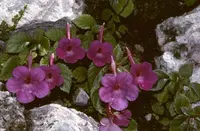
Achimenes grandiflora is a tropical flowering perennial in the African violet family, grown mainly for its showy, tubular blooms and soft, hairy foliage. It usually forms trailing or arching stems, which makes it well suited to hanging baskets and tall containers.
This species is native to Central America and Mexico, where it grows in warm, humid, partially shaded habitats. In cultivation it can be moderately easy if its need for consistent moisture, airy soil, and protection from cold is respected.
Gardeners who learn how to care for Achimenes grandiflora often value it as a seasonal accent plant that produces heavy flowering during warm months, then rests as small scaly rhizomes.

Care Difficulty
Moderate Care

Light Preference
Partial Shade

Water Requirements
Keep Soil Moist

Temperature Preference
Tropical / Frost Sensitive

Hardiness Zone
10–11

Soil Texture
Loamy, Peaty, Organic-rich

Soil pH
Acidic (5.5–6.5), Slightly acidic (6.5–7.0)

Soil Drainage
Moist but well-drained

Fertilization
Moderate (every 2–4 weeks)
Scan your plant to receive care tips personalized for your specific plant
Available on iOS and Android
This flowering rhizomatous perennial prefers bright, gentle light that avoids harsh midday sun.
This plant prefers evenly moist, fast-draining soil during active growth but reacts poorly to waterlogging.
This species grows best in warm, frost-free conditions typical of a mild to warm summer climate.
This species needs moderate to high humidity to keep foliage and flowers in good condition.
This tuberous species prefers a loose, airy, organic-rich medium that drains quickly but holds some moisture.
This species is very suitable for container growing due to its compact, tuberous root system and trailing stems.
During active growth, this flowering rhizomatous plant responds well to light, consistent feeding.
Pruning is mainly used to keep growth compact and flowering stems productive rather than to control size drastically.
This species grows from small scaly rhizomes that benefit from periodic division and a fresh, airy substrate.
This ornamental gesneriad is commonly propagated from rhizomes and soft stem cuttings for uniform new plants.
This warm-season plant is frost tender and survives winter best as dormant rhizomes in cool, dry conditions.

Plant Health Check
Not sure what's wrong with your plant? Check your plant's health inside the app.
This species is native to humid montane forests from Mexico to Central America, where it often grows as an epiphyte or on rocky banks, rooted in leaf litter rather than deep soil.
It survives seasonal drought in the wild through small scaly underground tubers that enter a marked dry dormancy, then resprout rapidly with the return of rains and higher humidity.
Its long tubular, vivid purple to magenta flowers with contrasting throats are adapted for hummingbird pollination, matching the birds’ bill shape and visual preferences in its native range.

The species has been used extensively in hybridization programs within the Gesneriaceae family, contributing strong flower color, large corolla size, and free-flowering habits to many modern Achimenes cultivars grown by collectors and specialty growers.
This species usually blooms from mid-summer into early fall, often for 8–12 weeks. In suitable warmth and light, new flower buds keep forming, so the plant can appear in near-continuous bloom through the growing season.
Keep your plants happy and healthy with plant identification, disease detection, and easy care guidance.