intermediate cattleya Care (Cattleya intermedia)

intermediate cattleya

About intermediate cattleya

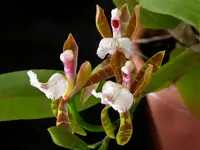
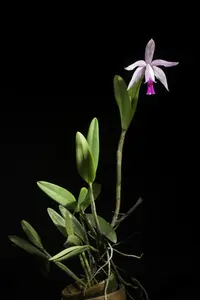
Cattleya intermedia is an epiphytic orchid, usually growing on trees, with firm, upright pseudobulbs and showy, waxy flowers in shades of white, pink, or lavender. Blooms often have a contrasting lip, giving the plant a refined, sculpted look that appeals to collectors and indoor growers.

In nature, this species occurs in Brazil, Uruguay, and nearby regions, where it experiences bright light, good air movement, and regular moisture followed by slight drying. It is considered moderately demanding, so learning how to care for intermediate cattleya helps owners provide stable light, humidity, and temperature.

When its light and airflow needs are met, C. intermedia adapts well to pots, baskets, or mounts and can flower reliably in typical home or greenhouse conditions.

Main Plant Requirements

Care Difficulty

Moderate Care

Light Preference

Partial Sun

Water Requirements

Moderate Water

Temperature Preference

Tropical / Frost Sensitive

Hardiness Zone

11–12

Soil Texture

Sandy, Rocky, Organic-rich

Soil pH

Acidic (5.5–6.5)

Soil Drainage

Well-drained

Fertilization

Moderate (every 2–4 weeks)

Get Personalized Care Plan

Scan your plant to receive care tips personalized for your specific plant

Available on iOS and Android

How to Care for the intermediate cattleya

This orchid prefers bright, filtered light that balances sun exposure with protection from scorch.

  • Provide 4–6 hours of bright, indirect light daily, with gentle morning sun and protection from harsh midday rays behind a sheer curtain or light shade.
  • Allow light dappled shade outdoors; leaves should be medium green, not dark (too little light) or yellow with reddish patches (too much light).
  • In winter, move intermediate cattleya to the brightest spot available, as lower sun angle and shorter days reduce light intensity.

Watering should allow Cattleya intermedia roots to dry slightly between thorough soakings.

  • Water when the potting mix is dry around the roots and feels barely damp rather than wet; do not follow a strict calendar schedule.
  • Use a very free-draining orchid mix so water runs through within seconds; empty any saucers to prevent roots standing in water, which encourages rot and sour smell.
  • In active growth and warm weather, drying time shortens; in cooler seasons or lower light, extend intervals and watch for wrinkling pseudobulbs as a sign of underwatering.

This species prefers intermediate temperatures with a clear difference between day and night.

  • Aim for 65–80°F (18–27°C) by day and 55–65°F (13–18°C) at night to support steady growth and flowering.
  • Avoid temperatures below 50°F (10°C); brief dips to 45°F (7°C) may be tolerated if dry, but frost quickly damages leaves and pseudobulbs.
  • In hot spells above 85°F (29°C), increase air movement and shade slightly to reduce leaf temperature and prevent heat stress, leaf yellowing, and bud blast.

This orchid prefers moderately humid air and reacts quickly to very dry conditions.

  • Aim for 50–70% humidity; below 40% often leads to shriveled pseudobulbs and wrinkled leaves in intermediate cattleya.
  • Dry indoor air causes slow growth and buds to blast, especially near heaters or strong drafts.
  • Increase humidity with a nearby tray of water and stones, grouping plants, or a room humidifier rather than misting heavily.

Cattleya intermedia is epiphytic and needs a very open, fast-draining potting mix rather than normal garden soil.

  • Use a chunky orchid mix based on medium bark with added perlite and a little sphagnum moss for moisture balance and aeration.
  • Ensure the mix drains completely within seconds; water should not pool or leave the potting media soggy.
  • Aim for slightly acidic conditions, roughly pH 5.5–6.5, which supports nutrient uptake in bark-based mixes.
  • Avoid compact peat-heavy or garden soils that smother roots, stay wet, and promote root rot.

This species is well suited to container growing when the pot supports its epiphytic roots and upright growth.

  • Choose a slightly snug, shallow orchid pot so roots can anchor without a large volume of mix staying wet.
  • Use slotted or net pots to boost airflow around roots while still holding chunky orchid media in place.
  • Select heavier clay or ceramic containers if the plant becomes top-heavy so the pot does not tip when new growth elongates.

Balanced, dilute feeding supports steady flowering and healthy pseudobulbs in Cattleya intermedia.

  • Use a balanced orchid fertilizer (around 20-20-20) at 1/4–1/2 strength in water-soluble form.
  • Feed every 2–3 weeks during active growth in spring–early fall, skipping one watering with plain water monthly.
  • Reduce feeding to 1x month or stop entirely in late fall–winter when growth slows.
  • Avoid compost and heavy slow-release products that can stay wet; use airy bark-based media instead.

Pruning Cattleya intermedia focuses on hygiene rather than shaping the plant.

  • Best time is after flowering and during active growth so new pseudobulbs can mature.
  • Use sterilized, sharp scissors or pruners to remove dead sheaths, spent flower spikes, and rotted or shriveled pseudobulbs.
  • Cut only clearly dead or diseased tissue at the base to limit infection spread and improve air flow.
  • Light grooming of old, dry leaves and sheaths enhances appearance without reducing future flowering.

Repotting Cattleya intermedia maintains root health and air flow around the rhizome.

  • Repot every 2–3 years, or when roots spill over the pot edge, medium breaks down, or growth slows.
  • Best timing is just as new roots start from fresh pseudobulbs, usually late winter to early spring.
  • Gently remove old medium, trimming dead roots with sterile tools while keeping firm, white roots intact.
  • Set the rhizome slightly above fresh, coarse orchid bark, water lightly at first, and keep shaded until roots re-establish.

Cattleya intermedia is most reliably propagated by division of mature clumps.

  • Divide in late winter–spring when new root tips appear, aligning with repotting time.
  • Unpot the plant and gently separate the rhizome into sections with at least 3–4 healthy pseudobulbs each.
  • Dust cut surfaces with fungicidal powder or ground cinnamon, then pot divisions in fresh, coarse bark.
  • Provide bright, filtered light, 65–80°F temperatures, and slightly higher humidity to encourage new root growth.

Winter care for Cattleya intermedia is essential in climates with cool or freezing conditions.

  • This orchid is frost-sensitive and should be kept above 50°F, ideally 60–65°F at night.
  • Move outdoor plants indoors or to a heated greenhouse before nights drop near 50°F.
  • Provide bright, indirect light and good air circulation while slightly reducing watering and feeding.
  • Avoid cold drafts on leaves and keep roots in a well-drained, non-soggy bark mix to prevent rot.

Care Tips

Optimize air movement

Place a small oscillating fan on a low setting near the plant to keep air gently moving around the leaves and roots, which reduces fungal issues and helps pseudobulbs mature with stronger growth.

Time repotting correctly

Repot only when new roots are just emerging from the latest growth, as this timing allows the plant to anchor quickly into fresh medium and minimizes transplant stress.

Maximize light safely

Use a sheer curtain or 30–40% shade cloth and gradually shift the plant closer to the brightest spot over 2–3 weeks to build leaf tolerance and increase flowering without sunburn.

Use graded potting mix

Place coarser bark or LECA at the bottom of the pot and finer pieces around the root zone so that large roots drain well while young roots stay slightly more evenly moist.

Monitor pseudobulb firmness

Check pseudobulbs weekly and adjust care if they start to wrinkle, using this as a practical indicator to fine-tune watering, air movement, and overall Cattleya intermedia plant care.

Common Pests and Diseases

Spider mites

This pest thrives on Cattleya foliage in warm, dry, low‑airflow conditions and feeds on leaf cells, causing stippling and dull, silvery patches. Symptoms include fine webbing along leaf undersides and between pseudobulbs and leaves.

Solution

Rinse leaves thoroughly with a firm stream of lukewarm water, focusing on undersides, then increase humidity and airflow while avoiding leaf wetness overnight. For persistent infestations, apply an insecticidal soap or horticultural oil labeled for orchids at reduced strength, repeating every 7–10 days and isolating the plant from others until new growth appears clean.

Scale insects

These insects attach to pseudobulbs, leaf bases, and under sheaths, sucking sap and causing yellow spotting, shriveled bulbs, and sticky honeydew that can lead to sooty mold. Infestations often hide under old sheaths on Cattleya-type orchids.

Solution

Remove old dried sheaths, then manually wipe visible scale with cotton pads or swabs dipped in isopropyl alcohol, taking care not to saturate the roots. Follow with 2–3 rounds of insecticidal soap or a light horticultural oil on all above‑ground parts at 7–10 day intervals and keep the plant isolated and monitored for new crawlers.

Bacterial brown rot

This disease causes water‑soaked, rapidly spreading brown lesions on leaves and pseudobulbs, often starting from a wound or water sitting in the crown. Symptoms include a foul smell and soft, collapsing tissue that can move quickly through a Cattleya clump.

Solution

Cut out all affected tissue well into healthy, firm tissue using sterile tools, then dust cuts with cinnamon or a bactericide labeled for orchids and keep the plant drier and warmer with strong airflow. Avoid overhead watering, keep water out of new growths and leaf axils, and discard severely affected plants to protect nearby orchids.

Black rot (Phytophthora)

This disease attacks new growths, rhizomes, and roots, turning them black and mushy, often after cool, wet conditions or poorly drained media. Symptoms include blackened bases of new shoots, rapid collapse of leaves, and spread from one pseudobulb to the next along the rhizome.

Solution

Remove the plant from its pot, cut away all black or soft tissue with sterilized tools, and repot into fresh, fast‑draining orchid mix, keeping the plant on the dry side until new roots form. Improve drainage, avoid standing water around pseudobulb bases, maintain good airflow, and use a systemic fungicide labeled for Phytophthora on the whole collection if multiple orchids show symptoms.

Orchid viruses

This disease complex, often orchid fleck or Cymbidium mosaic virus, can cause distorted flowers, reduced vigor, and sometimes faint streaks or mottling on Cattleya leaves, though plants may look nearly normal. Symptoms include poor flowering over time and reduced growth despite otherwise correct culture.

Solution

Isolate any suspicious plant, then confirm infection through a virus test kit if possible; there is no cure once infected. Destroy confirmed virus‑positive plants or keep them strictly separate, disinfect cutting tools between every plant, avoid reusing potting mix, and control sap‑sucking insects like aphids and thrips, which spread viruses while you grow Cattleya intermedia with other orchids.

Interesting Facts

Natural Brazilian hybrid zones

This species occurs in the coastal Atlantic Forest of Brazil, where different color forms and natural hybrids arise where its range overlaps with related Cattleya species, making it a classic model for studying natural orchid hybridization.

Strong salt-tolerant roots

In parts of its native range it grows on seaside trees and rocks that receive ocean spray, and its thick, velamen-covered roots tolerate higher salt exposure than many inland orchids.

Distinct cool-season blooming

In the wild it typically flowers from late winter to early spring in the Southern Hemisphere, responding to seasonal shifts in temperature and day length rather than to heavy rainfall patterns.

Botan icon

Did you know?

Historical records from 19th‑century orchid collections show that Cattleya intermedia was one of the earliest Brazilian cattleyas exported to Europe, and its many stable color forms, such as the aquinii type with splashed petals, played a key role in the development of modern large-flowered Cattleya hybrids.

FAQs about intermediate cattleya

Lack of blooms usually comes from insufficient light, inadequate day–night temperature difference, or too few mature pseudobulbs. Slightly cooler, drier rest after growth, plus bright filtered light, often restores flowering in this species.

Grow Healthy Plants with Botan Care

Keep your plants happy and healthy with plant identification, disease detection, and easy care guidance.


Botan plant care app — identify plants on mobile

Explore More Plants