Mounted culture setup
Mount the plant on cork or hardwood with a thin pad of sphagnum moss if you can maintain high humidity, which allows roots to dry quickly between waterings and reduces rot risk compared with cramped plastic pots.

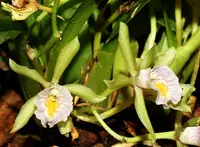
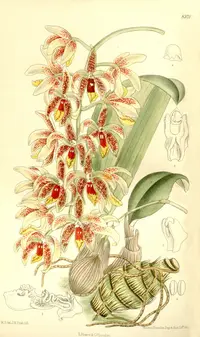
Cischweinfia dasyandra is a small epiphytic orchid that usually grows on trees in humid tropical forests of Central and South America. It forms compact clumps with short pseudobulbs, narrow leaves, and delicate, often yellow to brown flowers on arching stems.
In cultivation it is valued for its refined, airy look rather than big, showy blooms. The plant prefers stable warmth, high humidity, and good air movement, which makes it better suited to experienced growers or those using an orchid cabinet or greenhouse.
Understanding how to care for Cischweinfia dasyandra starts with providing bright filtered light, even moisture around the roots, and a fine, fast-draining orchid mix or mounted setup.

Care Difficulty
Hard Care

Light Preference
Bright Indirect Light

Water Requirements
Keep Soil Moist

Temperature Preference
Tropical / Frost Sensitive

Hardiness Zone
12–13

Soil Texture
Sandy, Organic-rich

Soil pH
Acidic (5.5–6.5)

Soil Drainage
Well-drained

Fertilization
Moderate (every 2–4 weeks)
Scan your plant to receive care tips personalized for your specific plant
Available on iOS and Android
This orchid prefers bright, filtered light that mimics high-canopy forest conditions.
Watering should keep the roots evenly moist but never stagnant or waterlogged.
Stable intermediate to warm temperatures support healthy growth and flowering.
This orchid prefers consistently high humidity to maintain healthy foliage and roots.
This epiphytic orchid needs a very airy, fast-draining medium rather than regular potting soil.
This species adapts well to container growing when moisture and airflow are balanced at the roots.
Light, diluted feeding supports healthy growth and flowering for Cischweinfia dasyandra in cultivation.
Pruning needs are minimal and focus on cleanliness and supporting future blooms on this orchid.
Repotting focuses on refreshing the orchid medium before it breaks down and damages roots.
Propagation is usually done by careful division rather than from seed, which is complex and lab-dependent.
This orchid is not frost tolerant and requires mild, stable indoor conditions in winter.

Plant Health Check
Not sure what's wrong with your plant? Check your plant's health inside the app.
This species is native to cool, moist montane forests in Ecuador, where it often grows as an epiphyte on mossy tree branches in high humidity and gentle air movement.
Its name dasyandra refers to a densely hairy reproductive column in the flower, a distinctive morphological trait that helps botanists separate it from closely related species.
It produces relatively small inflorescences with only a few flowers per spike, a pattern typical of many small epiphytic orchids adapted to shaded, resource-limited forest canopies.
Lack of flowers usually comes from insufficient light, too little day–night temperature drop, or depleted nutrients. Provide bright filtered light, a cooler night period, regular weak fertilization, and avoid repotting or disturbing roots right before the expected blooming season.
Keep your plants happy and healthy with plant identification, disease detection, and easy care guidance.