


Provide strong supports
Install durable trellis, wires, or chain-link panels before planting, then loosely tie new shoots with soft ties every 20–30 cm to guide the vine and prevent stems from cutting into the bark as they thicken.

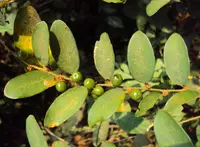
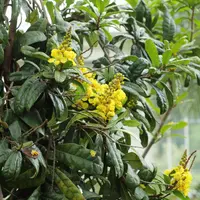
Climbing Bridelia (Bridelia stipularis) is a woody evergreen vine native to tropical Asia, often found scrambling over trees and shrubs in warm, humid forests. It has slender, twining stems with simple green leaves and can form dense, leafy curtains when given support.
This species is vigorous and can become quite large outdoors in suitable climates, while remaining more compact in containers. It prefers consistently warm conditions, moderate to bright light, and evenly moist but well-drained soil. Gardeners who wish to care for Climbing Bridelia should be prepared to manage its rapid growth and provide a sturdy structure for climbing.

Care Difficulty
Moderate Care

Light Preference
Partial Sun

Water Requirements
Moderate Water

Temperature Preference
Tropical / Frost Sensitive

Hardiness Zone
11–12

Soil Texture
Sandy, Loamy, Organic-rich

Soil pH
Acidic (5.5–6.5), Slightly acidic (6.5–7.0)

Soil Drainage
Moist but well-drained

Fertilization
Minimal (feed rarely)
Scan your plant to receive care tips personalized for your specific plant
Available on iOS and Android
This vigorous climber prefers bright, warm conditions similar to its native tropical habitats.
This species prefers evenly moist, well‑drained soil and does not tolerate prolonged waterlogging.
This tropical climber grows best in consistently warm, frost‑free conditions.
This species prefers moderately humid air but usually adapts to typical indoor levels if not extremely dry.
Bridelia stipularis grows best in a loose, draining, moderately rich substrate that does not stay waterlogged.
This vine is suitable for container growing when the pot supports its climbing, top-heavy habit.
This vigorous climber usually needs only modest feeding in garden soil, but light fertilization supports steady growth in containers.
Thoughtful pruning keeps Bridelia stipularis manageable, encourages branching, and maintains safe support structures.
This species is more often grown in the ground, but young plants and nursery stock respond well to careful transplanting.
Bridelia stipularis is usually propagated by semi-hardwood cuttings or seeds when conditions are warm and stable.
This tropical climber dislikes frost and needs protection in regions with cold winters.

Plant Health Check
Not sure what's wrong with your plant? Check your plant's health inside the app.
This species starts as a flexible vine that twines around supports, but older stems gradually become woody and liana-like, allowing it to climb high into forest canopies in tropical Asia.
The plant often develops small swollen areas or hollows near leaves and stems that can shelter ants, creating a simple ant-plant association that may help protect young shoots from herbivores.
Caterpillars of certain South and Southeast Asian butterflies, including some castor and cruiser species, feed on its leaves, making the plant an important larval host in local forest and scrub ecosystems.

In parts of India and Southeast Asia, traditional agroforestry systems sometimes train this vigorous climber along field boundaries or over living fences, using its dense growth both as a natural barrier and as structural support for other useful climbing plants.
This species is a true climber that scrambles and twines through surrounding vegetation. It uses flexible stems to ascend supports but can also sprawl as a dense tangle if no vertical structure is available.
Keep your plants happy and healthy with plant identification, disease detection, and easy care guidance.

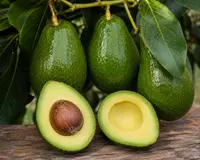
Alligator Pear
Persea americana 'Fuerte'
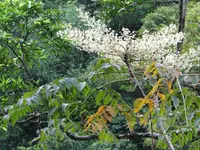
Aralia decaisneana
Aralia decaisneana
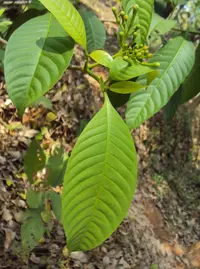
alternate-leaved crape jasmine
Tabernaemontana alternifolia
hairy blueberry
Vaccinium hirsutum
Chinese box-orange
Atalantia buxifolia
Barbados gooseberry
Pereskia aculeata
California wild grape
Vitis californica
moth-fruit
Acridocarpus natalitius