Chinese box-orange Care (Atalantia buxifolia)

Also known as: Box-leaved Atalantia
Chinese box-orange

About Chinese box-orange

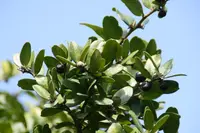
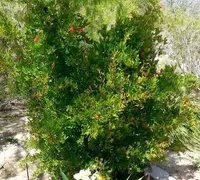
Chinese box-orange, Atalantia buxifolia, is a small evergreen shrub from the citrus family, usually grown for its dense, boxwood-like foliage. It typically forms compact, finely branched mounds with small, glossy, dark green leaves and occasional small white flowers followed by tiny aromatic fruits.

In the wild it occurs in coastal and subtropical regions of East Asia, often in sunny, well-drained sites. Its slow to moderate growth, tolerance of pruning, and adaptable habit make it suitable for containers, bonsai, and low hedging.

Light, free-draining soil, and moderate moisture support healthy growth and make it easier to care for Chinese box-orange.

Main Plant Requirements

Care Difficulty

Moderate Care

Light Preference

Full Sun

Water Requirements

Moderate Water

Temperature Preference

Warm Climate

Hardiness Zone

9–11

Soil Texture

Sandy, Loamy, Organic-rich

Soil pH

Acidic (5.5–6.5), Slightly acidic (6.5–7.0)

Soil Drainage

Well-drained

Fertilization

Light (every 4–6 weeks)

Get Personalized Care Plan

Scan your plant to receive care tips personalized for your specific plant

Available on iOS and Android

How to Care for the Chinese box-orange

This compact citrus relative prefers bright light with some protection from harsh midday sun.

  • Provide 4–6 hours of direct morning sun plus bright, filtered light for the rest of the day for best growth and flowering in Chinese box-orange.
  • Tolerates light afternoon sun in cooler climates; in hotter areas, give dappled shade after 12–2 p.m. to prevent leaf scorch and pale, crispy edges.
  • If stems elongate and leaves darken and thin, light is too low; in winter, shift the plant to a brighter, south- or west-facing spot outdoors if temperatures allow.

This species prefers evenly moist, sharply drained soil rather than constant wetness.

  • Water when the top 3–5 cm of soil feel dry, soaking the root zone thoroughly, then let excess drain away to avoid standing water around Atalantia buxifolia.
  • In spring and summer, expect to water more often during active growth and hot, windy weather; reduce frequency in cooler months when growth slows.
  • Yellowing, soft leaves and a sour smell signal overwatering, while dull, curling leaves and dry, hard soil indicate underwatering and the need for a deep soak.

This hardy citrus shrub prefers mild, frost-free conditions but tolerates brief light cold.

  • Aim for 60–80°F (16–27°C) during active growth; it handles short heat up to about 90°F (32°C) if soil moisture is stable and roots are mulched.
  • Protect from frost, as damage occurs near 28–30°F (-2 to -1°C); extended freezes below 26°F (-3°C) can kill young shoots and fine roots.
  • In cooler regions, choose a sheltered microclimate such as a south-facing wall, and avoid hot, reflective sites where foliage can overheat during summer heatwaves.

This species prefers moderate, stable humidity but tolerates typical indoor levels if not extremely dry.

  • Aim for 40–60% humidity; it copes with brief drops but prolonged very dry air can stress Chinese box-orange.
  • Watch for crisp leaf edges, tip browning, and slowed growth as signs of low humidity stress.
  • Increase humidity by grouping plants, placing the pot on a pebble tray with water below the base, or running a small nearby humidifier.

Atalantia buxifolia grows best in loose, sharply drained, slightly acidic to neutral soil.

  • Use a sandy-loam mix with 1 part potting soil, 1 part coarse sand, and 1 part perlite or fine bark for strong aeration.
  • Target pH around 6.0–7.0; avoid strongly alkaline mixes that can reduce nutrient availability and cause chlorosis, or yellowing leaves.
  • Ensure water drains through quickly and the mix never stays waterlogged, as constant saturation promotes root rot in this citrus relative.
  • Improve drainage in heavy or compacted ground by raising the planting area and blending in coarse sand and fine bark before planting.

This species is well suited to container growing when given stable root conditions and careful moisture control.

  • Choose a deep, heavy pot that resists tipping as the woody top growth becomes denser and more wind-sensitive outdoors.
  • Select a container material that matches your climate, such as terracotta for drier, faster-drying conditions or plastic for hotter, drying sites.
  • Leave a clear gap between the soil surface and pot rim so top-watering does not overflow and can flush salts efficiently.

Fertilizing supports steady growth and fruiting for Chinese box-orange grown in containers or nutrient-poor soils.

  • Use a balanced NPK fertilizer (such as 10-10-10) at half strength every 4–6 weeks during spring and summer.
  • Alternatively, apply a slow-release citrus fertilizer once in spring, following label rates for pot size or planting area.
  • Supplement with a thin layer of compost over the root zone annually, keeping it away from the trunk.
  • Stop feeding in fall and winter to avoid forcing soft, cold-sensitive growth.

Pruning Atalantia buxifolia helps maintain a compact, branching structure and keeps the plant healthy.

  • Best time for structural pruning is late winter to early spring, before strong new growth begins.
  • Remove dead, diseased, crossing, or inward-growing branches using clean, sharp bypass pruners.
  • Shorten overly long shoots to an outward-facing bud to encourage a denser canopy and more flowering spurs.
  • Limit summer cuts to light shaping so the plant still has enough foliage for energy production.

Transplanting or repotting keeps this slow-growing shrub healthy by preventing root congestion and soil exhaustion.

  • Check for roots circling the pot, pushing through drainage holes, or for declining vigor as signs it needs more space.
  • Plan repotting or outdoor transplanting for early spring, just before active growth starts.
  • Move container plants every 2–3 years into a pot 2–5 cm wider, using a free-draining, slightly acidic mix.
  • Handle the root ball gently, loosen only the outer roots, water thoroughly afterward, and keep in bright shade for 3–5 days to reduce stress.

Propagation of this species is most reliable from semi-hardwood cuttings, with seeds as a slower option.

  • Take semi-hardwood cuttings in late summer, 8–12 cm long, from non-flowering shoots.
  • Remove lower leaves, dip the cut base in rooting hormone, and place in a moist, free-draining medium under high humidity.
  • Maintain bottom warmth around 70–75°F and bright, indirect light to encourage rooting over several weeks.
  • Sow fresh seeds in spring in a citrus seed mix, keeping them evenly moist and warm for slow but steady germination.

This citrus relative is only moderately cold hardy and benefits from simple winter protection in cooler climates.

  • In-ground plants tolerate brief light frosts but may suffer below about 20°F, especially when young.
  • Apply a 5–8 cm mulch layer around the root zone in late fall, keeping it slightly away from the stem.
  • For container plants, move pots indoors or into an unheated bright space before hard freezes arrive.
  • Reduce watering in winter, allowing the top soil to dry more deeply while the plant is less active.

Care Tips

Structured root pruning

In containers, root prune every 2–3 years by slicing away a 1–2 cm outer ring of roots and soil, then repotting in fresh mix to keep the plant compact and productive rather than simply upsizing the pot.

Fruit load management

Thin developing fruits so clusters are spaced 5–8 cm apart, which reduces stress on branches, improves fruit size and quality, and helps the plant maintain dense foliage.

Clip-and-pin training

For a tight hedge or bonsai style, clip soft new growth lightly and pin or tie young shoots to a simple wire frame, guiding them horizontally to encourage dense side branching.

Preventive pest scouting

Inspect the inner canopy and lower leaf surfaces every 1–2 weeks with a hand lens, and treat early signs of scale or mites with a targeted horticultural oil spray before populations build up.

Gradual outdoor hardening

When moving a potted plant outdoors for summer, increase its sun and wind exposure over 7–10 days and rotate the container weekly so branches lignify evenly and stems do not lean or snap.

Common Pests and Diseases

Citrus leaf miner

This pest tunnels inside young leaves, causing silvery, winding trails and distorted new growth on tender shoots.

Solution

Prune and discard heavily damaged young shoots, avoid excessive nitrogen that pushes very soft growth, and use horticultural oil sprays on new flushes to deter egg‑laying. In outdoor plantings, encourage beneficial wasps by avoiding broad‑spectrum insecticides on surrounding vegetation.

Citrus psyllid

These insects feed on new shoots, causing curling leaves, distorted tips, and sticky honeydew that can lead to sooty mold development.

Solution

Regularly inspect new growth, prune out and destroy infested shoot tips, and use a strong water spray to dislodge nymphs. In regions where citrus greening disease occurs, follow local monitoring and control recommendations carefully, as this pest is the main vector.

Citrus scale

This pest appears as small, shell‑like bumps on stems and leaf undersides, often accompanied by sticky honeydew and possible yellowing or decline in vigor.

Solution

Wipe stems and leaves with a cloth dipped in mild soapy water to remove scales, then rinse foliage. For heavier infestations, apply a horticultural oil thoroughly to stems and leaf undersides, repeating as needed to cover newly hatched crawlers.

Greasy spot

This disease produces yellow speckling on older leaves that later turn dark, slightly raised, and oily looking on the underside, leading to premature leaf drop in warm, humid conditions.

Solution

Collect and dispose of fallen leaves to reduce fungal spores, provide good spacing and airflow, and avoid frequent overhead watering. In areas where the disease is common, apply a labeled copper or systemic fungicide preventively during warm, humid periods, following local extension guidance as part of broader Atalantia buxifolia plant care.

Sooty mold

This disease shows as a black, soot‑like coating on leaves and stems that grows on honeydew excreted by sap‑feeding insects, reducing light reaching the foliage.

Solution

Control the underlying pests such as scale, aphids, or psyllids, then gently wash affected leaves with lukewarm water and a small amount of mild soap to remove the mold. Improve air circulation and light exposure so new foliage stays clean once honeydew sources are managed.

Interesting Facts

Miniature citrus relative

This species is a small, slow-growing member of the citrus family Rutaceae, forming dense, twiggy shrubs with tiny, boxwood-like leaves that inspired its common name Chinese box-orange.

Spiny structural defense

Its short but sharp branch spines are modified shoots that help protect the plant from browsing animals, a common adaptation in many citrus relatives.

Tiny fragrant blossoms

The plant produces very small white flowers with a light citrus fragrance, which are followed by pea-sized orange fruits that turn bright orange when ripe and attract small frugivorous animals in its native range.

Botan icon

Did you know?

In parts of East Asia, this shrub has been traditionally used as a dwarf ornamental and training subject for bonsai-style container culture because its naturally compact growth, small leaves, and fine branching structure scale down well over many years.

FAQs about Chinese box-orange

Lack of blooms usually comes from insufficient light, heavy pruning at the wrong time, or nutrient imbalance with too much nitrogen. Mild root restriction and a balanced, low-nitrogen fertilizer often improve flowering over the next season.

Grow Healthy Plants with Botan Care

Keep your plants happy and healthy with plant identification, disease detection, and easy care guidance.

Botan plant care app — identify plants on mobile

Explore More Plants