Eve's needle Care (Yucca faxoniana)

Also known as: Faxon Yucca, Spanish Bayonet
Eve's needle

About Eve's needle

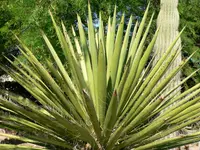
Eve's needle (Yucca faxoniana) is a large, architectural desert shrub or small tree from northern Mexico and the southwestern United States. It forms a stout trunk topped with a dense rosette of long, stiff, sharp-tipped leaves.

The foliage is blue-green to gray-green and creates a strong vertical accent in dry gardens or large containers. Mature plants produce tall flower spikes with creamy white blossoms.

This species is adapted to hot, arid conditions and poor, rocky soils, which makes it drought tolerant but sensitive to overwatering and heavy, soggy ground. Full sun, good drainage, and minimal watering are the key points in how to care for Eve's needle.

Main Plant Requirements

Care Difficulty

Easy Care

Light Preference

Full Sun

Water Requirements

Low Water

Temperature Preference

Cold Hardy

Hardiness Zone

6–11

Soil Texture

Sandy, Loamy, Rocky

Soil pH

Slightly acidic (6.5–7.0), Slightly alkaline (7.0–7.5)

Soil Drainage

Well-drained

Fertilization

Minimal (feed rarely)

Get Personalized Care Plan

Scan your plant to receive care tips personalized for your specific plant

Available on iOS and Android

How to Care for the Eve's needle

This desert yucca needs strong, direct light to stay compact and healthy.

  • Provide full sun for 6–10 hours daily; open south- or west-facing exposures suit Eve's needle best.
  • It tolerates light partial shade, but prolonged shade causes stretched growth and weak, floppy leaves.
  • In very hot regions, allow full morning sun and light afternoon shade to reduce leaf scorch, especially for young plants in summer.

This arid-climate shrub prefers infrequent, deep watering and very fast-draining soil.

  • Outdoors in the ground, water only when the top 5–8 cm of soil is completely dry and the lower soil feels barely moist.
  • Use rocky, sandy, sharply draining soil so excess water runs off quickly and roots are not submerged.
  • Overwatering shows as yellowing, soft leaves and crown rot; underwatering appears as wrinkled, bending leaves but is usually easier for Yucca faxoniana to recover from.

This hardy yucca tolerates wide temperature swings but grows best in warm, dry conditions.

  • Optimal growth occurs around 70–90°F (21–32°C) during the growing season with low humidity.
  • Mature plants can survive brief drops near 0°F (-18°C) if soil is dry, but young plants are safer above 15–20°F (-9–(-7)°C).
  • It handles intense summer heat above 100°F (38°C) if roots are established, but extended cold, wet winters increase risk of rot and tissue damage.

This desert species tolerates very dry air and rarely needs humidity adjustment, even when caring for Eve's needle indoors.

Yucca faxoniana grows best in very fast-draining, mineral-based soil that prevents water from sitting around the roots.

  • Use a coarse, sandy mix with 50–70% mineral content such as pumice, gravel, or coarse sand and only light organic matter.
  • Aim for slightly acidic to slightly alkaline pH (6.0–7.5), which most cactus or succulent mixes already provide.
  • Improve aeration by adding extra pumice or perlite to any commercial cactus mix until it feels gritty and loose, not fluffy or dense.
  • Avoid clay-heavy, compacted, or water-retentive mixes with peat that stays wet for more than 1–2 days after watering.

This species can be grown in large outdoor containers if the pot stays stable and drains very quickly.

  • Select a heavy, wide-based pot (concrete, ceramic, or thick terracotta) to counterbalance the tall, top-heavy growth in strong winds.
  • Choose a deep container so the long taproot can extend downward without coiling tightly against the base.
  • Raise the pot on feet or bricks so drainage holes stay clear and runoff water leaves the container area rapidly after rain.

Yucca faxoniana grows well in lean soil and needs only light, occasional feeding in containers or poor ground conditions.

  • Use a balanced, low-dose slow-release fertilizer or very diluted liquid feed (about 1/4 strength).
  • Apply once in spring and, if growth is weak, again in midsummer during active growth.
  • Avoid feeding in fall and winter when growth slows or stops.
  • For caring for Eve's needle in the landscape, rely mainly on well-drained soil rather than rich fertilization.

Pruning Yucca faxoniana is mainly cosmetic and for safety, not for shaping like typical shrubs.

  • Best time is late winter to early spring, before strong new growth.
  • Remove dead, damaged, or crossing leaves and any dried flower stalks with clean, sharp loppers or a pruning saw.
  • Trim only outer, lower leaves to maintain a clear trunk and safe clearance around walkways.
  • Avoid cutting the main growing tip, since this can permanently alter or stunt the plant’s form.

This species is usually grown in the ground, and transplanting should be infrequent and planned carefully.

  • Transplant in late spring to early summer once soil is warm and danger of hard frost has passed.
  • Look for roots circling the container, poor drainage, or slowed growth as signs a potted plant needs a larger pot or ground planting.
  • Move no more often than every few years to limit root disturbance, choosing a permanent, sunny, very well-drained site.
  • Minimize root stress by watering the day before, keeping the root ball intact, replanting at the same depth, and watering lightly afterward.

Propagation of Yucca faxoniana is possible but slower than for many common houseplants or shrubs.

  • Use offsets (pups) at the base, stem cuttings, or seeds as primary methods.
  • Take offsets or cuttings in late spring to early summer when temperatures are warm and growth is active.
  • Allow cut surfaces to callus for several days, then plant in a gritty, sharply drained mix and keep barely moist.
  • For seeds, provide bright light, warmth around 70–80°F, and patience, as germination and early growth are slow.

Mature Yucca faxoniana is quite cold hardy and usually needs little winter care in its suitable climate range.

  • Established plants tolerate significant frost and short cold spells when soil drains well.
  • In colder or marginal areas, apply a 5–8 cm layer of dry mulch around the root zone, keeping it off the trunk.
  • For container plants in regions with prolonged freezes, move pots to an unheated but frost-free, very bright location.

Care Tips

Improve Root Anchorage

When planting in windy sites, slightly mound the soil and mix in coarse gravel around the root zone to encourage deeper anchoring roots and reduce the risk of the plant heaving or leaning over time.

Trunk Sun-Hardening

If moving a plant from shade or nursery conditions into full sun, shade the trunk and leaf bases with 30–40% shade cloth for 2–3 weeks, then gradually remove it to prevent sunscald on previously sheltered tissue.

Snow And Ice Management

In cold regions, gently knock heavy snow from the leaves with a soft broom and avoid allowing ice to build up in the crown, which can cause structural breakage and rot at the growing point.

Rodent And Borer Protection

In rural or desert-edge areas, install a loose wire mesh collar 5–8 cm away from the trunk base and regularly check for chewing damage or holes, which can signal rodent activity or boring insects.

Safe Access Planning

When planting near walkways or drives, set the plant at least 1.5–2 m back from high-traffic areas so the stiff, sharp leaves do not injure people or pets and so future maintenance when caring for Eve's needle remains safe and manageable.

Common Pests and Diseases

yucca weevil

This pest tunnels into the base and trunk, causing yellowing, wilting, and eventual collapse of the rosette. Symptoms include frass (sawdust-like debris) and soft, rotting tissue at the crown.

Solution

Remove and destroy heavily infested plants, then dig out and dispose of any larvae or pupae in the surrounding soil. For remaining plants, keep the crown area dry, avoid fresh wounds at the base, and use a systemic insecticide labeled for borers in arid ornamentals if adult activity is detected.

scale insects

These insects attach to leaves and stems, sucking sap and leading to yellow stippling, loss of vigor, and sticky honeydew that can encourage sooty mold. Infestations often start along the midrib and leaf bases where they are less visible.

Solution

Physically remove scales from leaves and trunk with a soft brush or cloth dipped in soapy water, then rinse well. For persistent problems, apply horticultural oil thoroughly to all leaf surfaces in mild weather, and repeat as needed according to label directions as part of broader Yucca faxoniana plant care.

yucca leaf spot

This disease causes tan to brown spots with darker margins on older leaves, sometimes coalescing into larger blotches that make foliage look tired and patchy. Symptoms include premature browning and shedding of lower leaves in prolonged humid or wet conditions.

Solution

Prune and discard affected lower leaves to improve air movement through the rosette and reduce inoculum. Avoid overhead watering, water early in the day so foliage dries quickly, and if conditions stay humid, apply a copper- or chlorothalonil-based fungicide labeled for ornamental leaf spots according to directions.

soft crown rot

This disease starts at the crown where water collects, causing soft, mushy tissue and a foul smell, often following prolonged wet or poorly drained conditions. Symptoms include sudden collapse of the central growing point while some outer leaves may still look green at first.

Solution

Cut out all soft, discolored tissue from the crown with a sterile knife, dust exposed areas with a sulfur or copper fungicide, and allow the plant to dry thoroughly. Improve drainage by amending or mounding soil, avoid watering directly into the rosette, and in containers ensure a very gritty mix with large drainage holes.

mealybugs

These insects appear as white, cottony clusters in leaf axils and along the trunk, feeding on sap and causing distorted new growth and sticky honeydew. This pest can be more common when plants are stressed or grown in containers with poor airflow, especially in Eve's needle indoor care situations nearby.

Solution

Wipe off visible mealybugs with cotton swabs dipped in isopropyl alcohol and rinse the plant to remove residues. For ongoing infestations, use repeated applications of insecticidal soap or horticultural oil, ensuring thorough coverage of hidden areas where mealybugs cluster, and isolate affected plants until populations are controlled.

Interesting Facts

Desert trunk specialist

In its native Chihuahuan Desert, this species develops a thick, woody trunk that can exceed 4–5 m in height, allowing the growing point and leaves to sit above ground-level frost and grazing animals.

Rigorous leaf armor

Its rigid, bayonet-like leaves have tough fibers and sharp tips that reduce water loss and deter herbivores, an adaptation to intense sun, drought, and browsing pressure in arid habitats.

Night-blooming bat partner

The tall flower spikes open mainly at night and produce strong scent, attracting nectar-feeding bats that act as important pollinators across its desert range.

Botan icon

Did you know?

In exposed desert sites this species often forms scattered, park-like stands on rocky limestone slopes and mesas, making it a key visual indicator of Chihuahuan Desert upland plant communities and local soil conditions.

FAQs about Eve's needle

This desert species often needs many years to reach flowering age and requires strong, consistent sun plus warmth. Lack of maturity, insufficient light, or recent transplanting are the most common reasons for absent flower spikes.

Grow Healthy Plants with Botan Care

Keep your plants happy and healthy with plant identification, disease detection, and easy care guidance.

Botan plant care app — identify plants on mobile

Explore More Plants