Luculia gratissima Care

Luculia gratissima

About Luculia gratissima

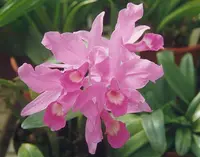
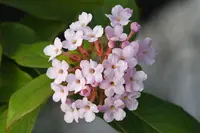
Luculia gratissima is an evergreen shrub or small tree valued for its strongly fragrant, clustered pink to white flowers. It has glossy green leaves and a rounded, bushy habit that can become quite tall in mild climates.

This species is native to the Himalayan region and nearby parts of Southeast Asia, where it grows in warm, humid, upland environments. Flowering is often strongest in cooler months, which makes it attractive for winter interest in frost-free areas.

It can be moderately challenging to grow, as it dislikes hard frosts, cold winds, and prolonged drought. For those who want to care for Luculia gratissima successfully, it generally prefers bright light, mild temperatures, evenly moist soil, and good drainage.

Main Plant Requirements

Care Difficulty

Hard Care

Light Preference

Partial Sun

Water Requirements

Regular Water

Temperature Preference

Tropical / Frost Sensitive

Hardiness Zone

10–11

Soil Texture

Loamy, Sandy, Organic-rich

Soil pH

Acidic (5.5–6.5), Slightly acidic (6.5–7.0)

Soil Drainage

Moist but well-drained

Fertilization

Light (every 4–6 weeks)

Get Personalized Care Plan

Scan your plant to receive care tips personalized for your specific plant

Available on iOS and Android

How to Care for the Luculia gratissima

This shrub needs bright, gentle light to flower well without leaf scorch.

  • Provide 4–6 hours of morning sun with light afternoon shade; east or southeast exposure suits Luculia gratissima best in mild climates.
  • In hotter areas, give dappled or filtered light after 11 a.m. to prevent leaf burn, pale foliage, and crispy edges from excessive radiation and heat.
  • If stems stretch, leaves darken, and flowering is sparse, increase light by thinning overhead shade or moving to a brighter, but still sheltered, position.

This plant prefers evenly moist but never waterlogged soil, especially during active growth and flowering.

  • Allow the top 3–5 cm of soil to dry before deep watering, then soak the root zone so moisture reaches 15–20 cm depth.
  • In spring and summer, monitor more often during heat or wind; in fall and winter, extend intervals and water mainly when the upper soil begins to feel dry and lighter in color.
  • Improve drainage with organic matter and avoid standing water; yellowing, soft leaves suggest overwatering, while drooping, dry-edged leaves point to underwatering.

Stable mild temperatures support growth, flowering, and overall Luculia gratissima health.

  • Aim for 60–75°F (16–24°C) during the growing season; growth slows below 55°F (13°C).
  • Protect from frost; damage often occurs below 30°F (-1°C), and hard freezes can kill stems or the whole shrub.
  • In hot climates, plants tolerate brief periods up to 90°F (32°C) if roots are mulched, soil stays slightly moist, and the canopy is shaded during the hottest afternoon hours.

This shrub prefers fairly moist air and reacts quickly to dry indoor conditions.

  • Aim for 50–70% humidity, as Luculia gratissima flowers and foliage decline in prolonged dry air.
  • Watch for crisp leaf edges, folding leaves, and bud drop as common signs of low humidity stress.
  • Increase humidity with a pebble tray under the pot or a nearby humidifier rather than frequent misting.

This species grows best in loose, moisture-retentive but free-draining soil.

  • Use a loamy mix with high organic matter, such as 2 parts peat-free compost, 1 part fine bark, and 1 part perlite or coarse sand.
  • Ensure fast drainage so water does not pool around the roots, which encourages root rot and fungal problems.
  • Aim for slightly acidic to neutral pH around 6.0–7.0 for balanced nutrient availability and healthy growth in Luculia gratissima.
  • Improve aeration by incorporating chunky bark or perlite rather than compacting the surface with fine mulches.

This shrub can adapt well to large containers when root space and stability are carefully managed.

  • Choose a deep, heavy pot that resists tipping, as the upright woody growth can become top-heavy in windy sites.
  • Select containers with multiple drainage holes so excess water exits quickly and does not stagnate around the fine feeder roots.
  • Use a slightly wider than deep container to balance the canopy weight and reduce the risk of the pot shifting or leaning over time.

Thoughtful feeding supports strong growth and abundant flowers in Luculia gratissima.

  • Use a balanced liquid fertilizer (around 10-10-10 or 14-14-14) at 1/2 strength on moist soil.
  • Feed every 3–4 weeks during spring and summer while the plant is actively growing.
  • Reduce feeding to once in late autumn and stop during winter dormancy.
  • In beds, supplement with a thin layer of well-rotted compost each spring instead of frequent liquid feeding.

Pruning helps maintain size, structure, and flowering performance for Luculia gratissima.

  • Use clean, sharp hand pruners to prevent tearing and disease entry.
  • Prune lightly after main flowering, removing spent flower clusters and weak, spindly stems.
  • Cut out dead, damaged, crossing, or inward-growing branches to open the canopy to light and air.
  • Shorten overly long shoots by up to 1/3 to control height and encourage bushier new growth.

Container-grown or newly planted Luculia gratissima benefits from careful timing and gentle handling when moved.

  • Check for roots circling the pot, crowded drainage holes, or slowed growth as signals to repot.
  • Plan repotting or transplanting for early spring, just before strong new growth begins.
  • Repot every 2–3 years into a container 2–5 cm wider using a free-draining, rich mix.
  • Loosen circling roots gently, keep the root ball slightly moist, and shade the plant for several days to limit transplant shock.

Gardeners most often increase Luculia gratissima through semi-ripe cuttings rather than seed.

  • Take 8–10 cm semi-ripe stem cuttings in late summer with 2–3 leaf nodes.
  • Remove lower leaves, dip the base in rooting hormone, and insert into a sterile, free-draining mix.
  • Maintain high humidity, gentle bottom warmth (70–75°F), and bright, indirect light for rooting.
  • Sow seeds in warm spring conditions in a fine seed mix, keeping the surface just moist until germination.

Luculia gratissima is frost sensitive and needs thoughtful winter protection in most temperate climates.

  • In USDA zones warmer than 9, add a 5–8 cm mulch layer around the root zone, keeping it off the stems.
  • Wrap young outdoor plants with breathable horticultural fleece during forecast freezes.
  • Move container plants indoors or into a cool, bright greenhouse before temperatures drop below 40°F.
  • Water sparingly in winter, allowing the top mix to dry slightly to avoid cold, wet roots.

Care Tips

Stake Young Framework

Install a sturdy stake or small trellis when the plant is still young and loosely tie the main stems with soft ties to keep the shrub upright and reduce wind damage as the wood matures.

Cool-Night Bud Setting

Move container plants to a spot with bright light and cooler nights around 45–55°F in late autumn to encourage strong flower bud formation without exposing them to frost.

Root-Zone Mulching

Apply a 5–8 cm layer of fine bark or leaf mold around the root zone, keeping it a few cm away from the stems, to buffer soil temperature and moisture during hot or cold spells.

Controlled Pot Sizing

Repot only one container size up at a time and choose deep, heavy pots, which help stabilize the top-heavy shrub and prevent excessive leafy growth at the expense of flowers.

Post-Flowering Renewal

After the main flowering flush, selectively remove a few of the oldest flowering stems back to younger side shoots to maintain a balanced framework and improve future bloom quality when caring for Luculia gratissima.

Common Pests and Diseases

Spider mites

This pest often appears in warm, dry indoor air and on stressed plants, causing fine webbing on leaf undersides and pale, speckled foliage. Symptoms include gradual yellowing and leaf drop if populations are high.

Solution

Rinse foliage thoroughly with a strong but controlled stream of lukewarm water, including leaf undersides, and repeat weekly until numbers drop. Increase humidity around the plant, isolate it from others, and use insecticidal soap or horticultural oil labeled for mites, applied according to directions, to protect new growth while caring for Luculia gratissima in stable conditions.

Scale insects

These insects latch onto stems and leaf veins as small, dome-shaped bumps and feed on sap, weakening the shrub. Symptoms include sticky honeydew, sooty mold growth, and distorted new shoots.

Solution

Physically remove visible scales by gently scraping with a fingernail or cotton swab dipped in isopropyl alcohol, then prune heavily infested twigs. Improve air movement, avoid overfertilizing soft new growth, and apply a light horticultural oil spray to thoroughly coat stems and leaves, repeating as directed to target emerging crawlers.

Aphids

These insects cluster on tender shoot tips and flower buds, sucking sap and causing curling, puckered leaves and deformed flower clusters. Symptoms include sticky honeydew that can lead to sooty mold on foliage below.

Solution

Dislodge colonies with a firm stream of water, focusing on new growth and flower buds, and repeat every few days until controlled. For persistent infestations, use insecticidal soap or a low-toxicity horticultural oil on all above-ground parts, applying in the early morning or evening to avoid leaf scorch and monitoring new growth closely.

Leaf spot

This disease causes small brown, tan, or purplish spots on leaves, sometimes with yellow halos, which can merge and lead to premature leaf drop in humid or poorly ventilated conditions. Symptoms include thinning foliage and reduced flowering on stressed plants.

Solution

Remove and discard affected leaves and any fallen debris around the base to reduce sources of infection, and avoid wetting foliage when watering. Improve air circulation, space plants so leaves dry quickly, and if the problem recurs, use a suitable ornamental shrub fungicide according to label directions, starting treatments at the first sign of spotting.

Powdery mildew

This disease appears as a white, powdery film on leaves, young stems, and flower buds, especially in warm days and cool, humid nights. Symptoms include distorted new growth, reduced vigor, and poor flowering if the infection becomes heavy.

Solution

Prune to thin dense growth and remove heavily infected shoots, then dispose of clippings rather than composting. Improve light and airflow, avoid overhead watering in the evening, and apply a labeled fungicide for powdery mildew or a horticultural oil spray at the earliest signs to protect new foliage.

Interesting Facts

Winter-blooming shrub

In its native Himalayan range, this species flowers in the cool season, often from late autumn into winter, providing nectar and fragrance when few other shrubs bloom.

Strongly scented corollas

The tubular pink flowers produce a powerful sweet fragrance, especially in the evening, which helps attract moth pollinators that can reach the nectar deep inside the long floral tube.

High-altitude origin

The species is naturally found on forest edges and slopes at mid to high elevations in Nepal, Bhutan, and surrounding regions, where conditions are bright, cool, and humid compared with many tropical ornamentals.

Botan icon

Did you know?

Luculia gratissima was introduced into European horticulture in the 19th century and quickly became valued for greenhouse cultivation because its intense winter fragrance allowed plant collectors to maintain scented displays even when most other ornamental shrubs were dormant.

FAQs about Luculia gratissima

Lack of flowers usually comes from insufficient light, pruning at the wrong time, or excess nitrogen fertilizer. Cool autumn nights and consistent care help trigger bud formation and are key for growing Luculia gratissima successfully.

Grow Healthy Plants with Botan Care

Keep your plants happy and healthy with plant identification, disease detection, and easy care guidance.

Botan plant care app — identify plants on mobile

Explore More Plants